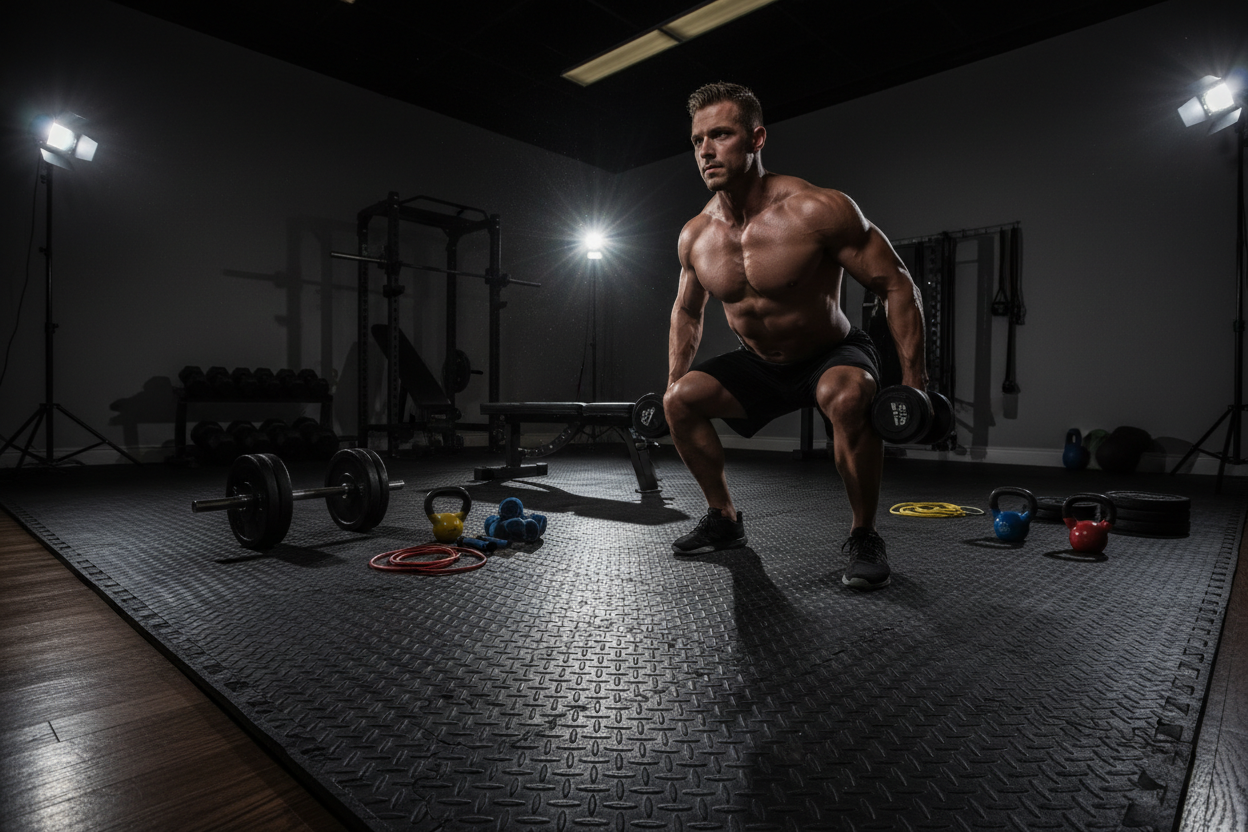
Gym Mats Home Gym Guide: Don't Ruin Your Floors
It is the sound every home lifter dreads: the sharp, unforgiving crack of a barbell hitting unprotected concrete. Whether you are building out a two-car garage or carving out a small corner in your basement, your foundation dictates how hard you can train. Investing in proper gym mats home gym flooring isn't just about aesthetics; it is about protecting your equipment, your property, and your joints.
In this guide, we will walk you through exactly how to choose the right foundation so you can drop weights with confidence and keep your space looking pristine.
Key Takeaways
- Thickness matters: Aim for at least 3/8-inch to 1/2-inch thickness for general lifting, and 3/4-inch for heavy deadlifts.
- Material dictates function: Vulcanized rubber is king for durability, while EVA foam is best reserved for stretching and bodyweight work.
- Interlocking vs. Rolled: Interlocking tiles are easier to install in small rooms, while rolled rubber offers a seamless look for larger garage gyms.
- Moisture control: Always account for basement or garage humidity to prevent mold buildup under your mats.
Choosing the Right Material for Your Space
Not all floor mats for home gym setups are created equal. The material you choose will completely dictate what kind of workouts your space can handle.
Rubber vs. Foam
If you are moving heavy iron, rubber is non-negotiable. High-density vulcanized rubber absorbs shock, dampens the deafening sound of dropped plates, and resists tearing. On the flip side, home gym foam flooring (usually made of EVA foam) is incredibly popular for budget setups. However, foam compresses under heavy racks and will permanently dent if you leave a treadmill sitting on it. Reserve foam for yoga, mobility work, or light dumbbell circuits.
Space Planning and Installation
Fitting floor mats home gym style into a typical North American floorplan requires a bit of math. A standard power rack requires at least an 8x8 foot footprint if you plan on lifting outside the cage.
Garage vs. Basement Considerations
If you are laying at home gym floor mats in a garage, temperature fluctuations can cause rubber to expand and contract. Leave a quarter-inch gap around the edges of the room to prevent the mats from buckling in the summer heat. For basements, moisture is your biggest enemy. We highly recommend laying a dimpled underlayment beneath your rubber mats to allow concrete floors to breathe and prevent trapped condensation.
From Our Gym: Honest Take
We have tested dozens of flooring options over the years in our own facility, and I can tell you firsthand: do not cheap out on thickness if you deadlift. I once tried to get away with 1/4-inch rolled rubber in my personal garage gym to save a few bucks. After six months of heavy rack pulls and dropped 45-pound bumper plates, the concrete underneath developed hairline fractures.
We immediately upgraded to 3/4-inch horse stall mats. They are heavy, cumbersome to move, and they smell like a tire shop for the first two weeks—which is the major caveat here. You will need to mop them with a mild degreaser and keep your windows open initially. But since that upgrade, my chalked grip can slip on a heavy single, the bar can crash to the floor, and I don't flinch. The peace of mind is worth every penny.
Frequently Asked Questions
How thick should floor mats for home gym be?
For general fitness and machine use, 3/8-inch is standard. If you are doing Olympic weightlifting, CrossFit, or heavy deadlifts, you need at least 1/2-inch to 3/4-inch rubber to adequately protect your subfloor.
Does home gym foam flooring work for heavy lifting?
No. Foam flooring will compress under heavy loads, creating an unstable lifting surface that can lead to injury. It will also permanently indent under the weight of a power rack or heavy dumbbells.
How do I keep my at home gym floor mats from sliding?
Heavy 3/4-inch rubber mats rarely slide due to their sheer weight (often 100 lbs per 4x6 sheet). For lighter interlocking tiles or rolled rubber, use double-sided carpet tape around the perimeter to lock them firmly in place.