Build Massive Legs With The Best Exercises for Quads at Home
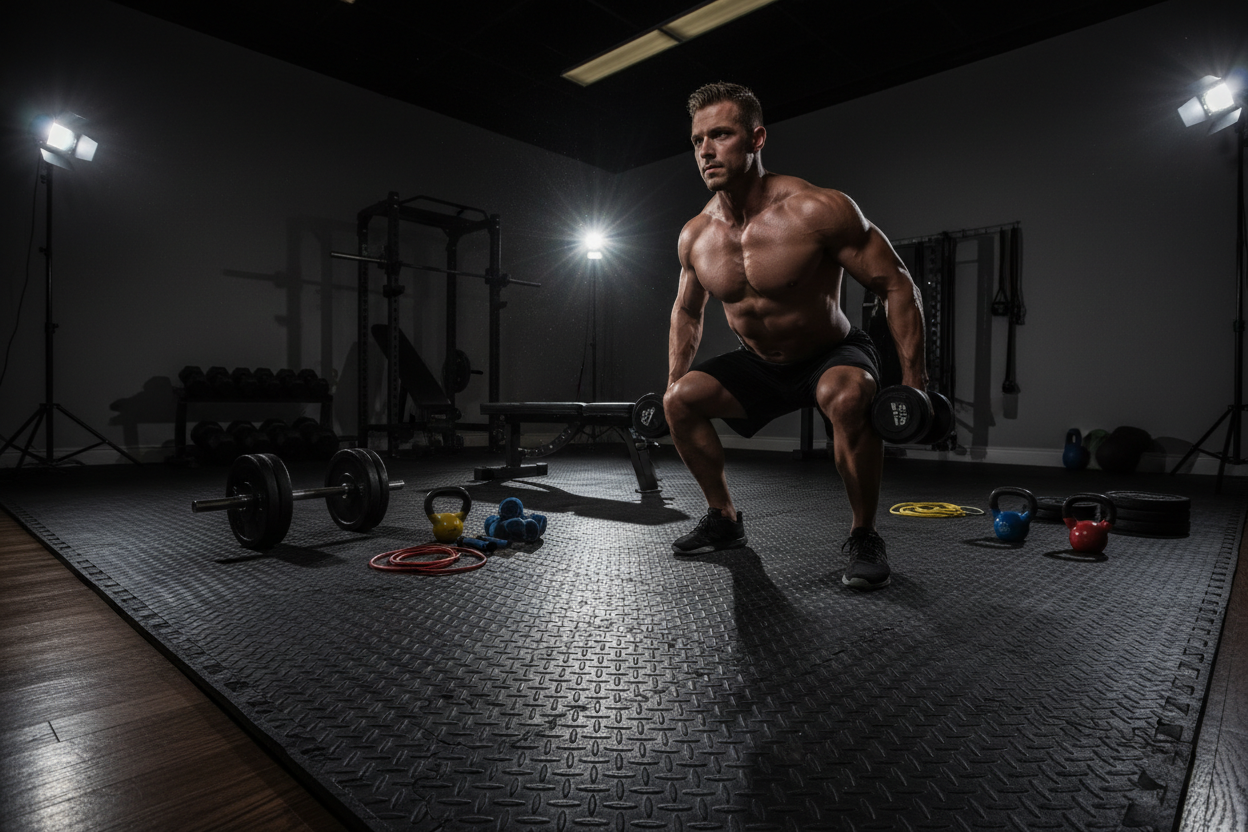
Most people believe you cannot build impressive legs without a squat rack or a leg press machine. They are wrong. While heavy weights make the process straightforward, mechanical tension and metabolic stress are what actually drive muscle growth. You can achieve both right in your living room.
If you execute the best exercises for quads at home with high intensity and perfect form, you will see growth. It isn't about how much weight is on the bar; it is about how much tension is on the muscle fibers. Let’s look at how to turn a simple home workout into a leg-torching session.
Quick Summary: The Top Movements
If you are looking for the most effective movements to target your quadriceps without heavy machinery, focus on these staples:
- Bulgarian Split Squats: The ultimate unilateral exercise for mass and balance.
- Heels-Elevated Squats (Cyclist Squats): Shifts focus entirely to the quads by removing ankle mobility constraints.
- Sissy Squats: Mimics the leg extension machine using only bodyweight.
- Step-Ups: Functional strength that targets the rectus femoris.
- Reverse Lunges: Knee-friendly option that maintains high tension.
The Science of Home Leg Growth
Your quads don't know if you are holding a barbell or a backpack full of books. They only understand tension. To stimulate hypertrophy (muscle growth) at home, we have to manipulate variables other than absolute load.
We use a concept called progressive overload. Since we can't always add more weight, we increase the time under tension, reduce rest periods, or increase the range of motion. This forces the muscle to adapt, resulting in size and strength gains.
The Elite Home Quad Movements
Forget doing hundreds of air squats. That is cardio, not bodybuilding. To build tissue, you need exercises that provide a high stimulus.
1. The Bulgarian Split Squat
This is arguably the single most effective leg exercise in existence, gym or not. By taking one leg out of the equation, you double the load on the working leg. It also challenges your stability, forcing the quad to work harder.
The Fix: Keep your torso upright. Leaning forward engages the glutes, but staying vertical puts the stress squarely on the quads. Lower yourself slowly for a count of three.
2. Heels-Elevated "Cyclist" Squat
Place a thick book or a couple of weight plates under your heels. Keep your feet close together (about 6 inches apart). Elevating the heels removes the need for extreme ankle flexibility and allows your knees to travel far over your toes.
This deep knee flexion creates a massive stretch in the muscle belly. It is essentially the best quad workout at home for isolating the "teardrop" muscle just above the knee.
3. The Bodyweight Sissy Squat
Don't let the name fool you. This is a humiliatingly difficult exercise. Hold onto a doorframe for balance, rise onto your toes, and lean your torso back while pushing your knees forward.
Your body should form a straight line from knees to neck. This mimics the mechanics of a leg extension machine, providing pure isolation without any equipment.
Structuring Your Routine
To get the most out of these movements, do not rush. Since the weight is lighter, your execution must be stricter.
Aim for a tempo of 3-1-1. That means three seconds down, a one-second pause at the bottom (killing all momentum), and one second up. This tempo makes 20lbs feel like 100lbs.
Frequently Asked Questions
Can I really get big legs without heavy weights?
Yes. Hypertrophy occurs through mechanical tension and metabolic stress. By using unilateral exercises (single-leg) and slow tempos, you can create enough stimulus to force growth without a barbell.
How often should I train quads at home?
Because home workouts often cause less systemic fatigue (central nervous system drainage) than heavy spinal loading, you can train more frequently. 2 to 3 times per week is ideal for most lifters.
What if I have bad knees?
Start with reverse lunges rather than forward lunges. The backward motion places less shear force on the knee joint while still effectively loading the quadriceps. Always control the descent; never drop into the movement.