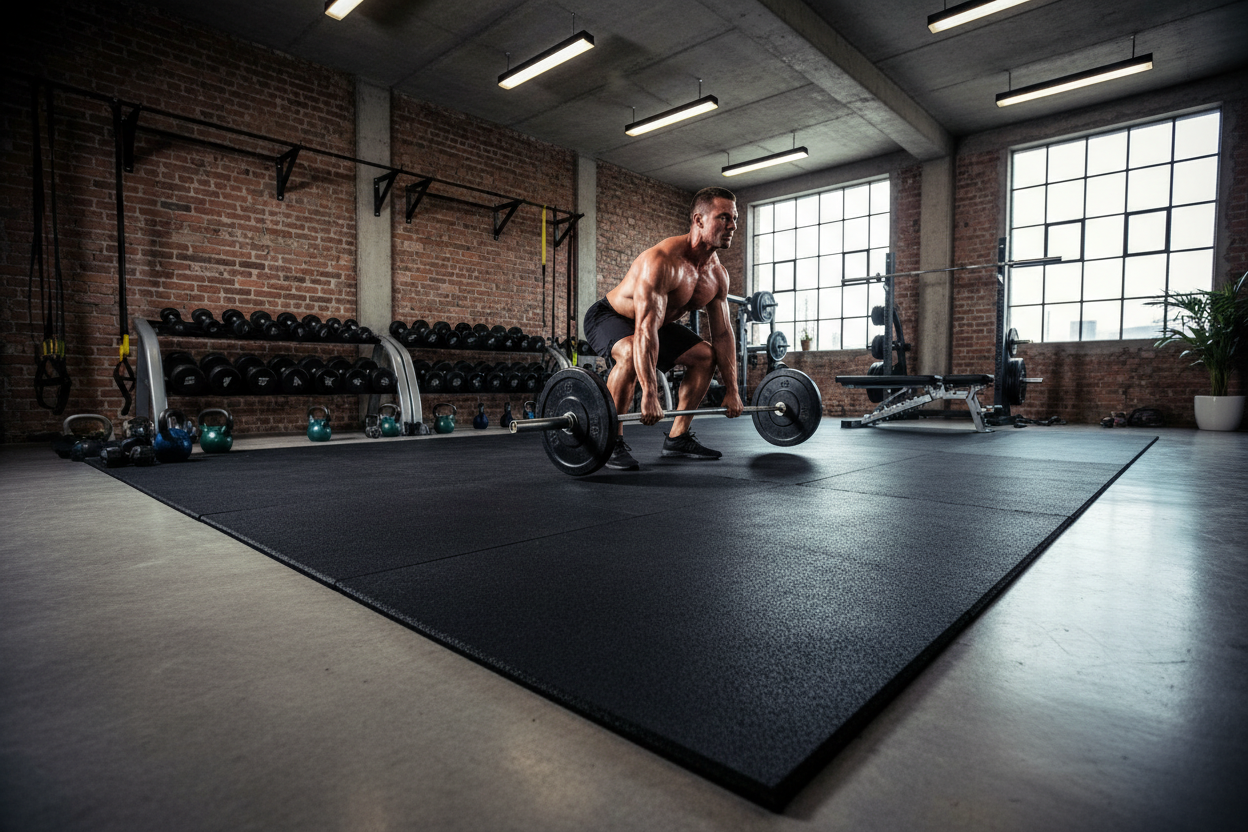
Gym Mat Big Enough? The Complete Buyer's Guide for 2025
We've all been there: you're halfway through a grueling set of mountain climbers, and suddenly your standard-sized yoga mat slides across the living room floor. Or worse, you're looking at permanent scuff marks from your kettlebells. If you are finally looking for a gym mat big enough to handle serious training, you are making one of the most important investments in your home gym.
Upgrading to an exercise mat large enough to support dynamic movements and heavy lifting transforms a cramped corner into a legitimate training zone. Let's dive into what actually matters when sizing up your floor protection.
Key Takeaways
- Thickness dictates function: 8mm is great for cardio; 3/4-inch is mandatory for heavy barbell drops.
- Material matters: High-density vulcanized rubber outlasts EVA foam by decades.
- Measure twice: Always account for a 12-inch buffer zone around your largest piece of equipment.
- Traction is safety: Look for textured surfaces that provide grip even when drenched in sweat.
Choosing the Right Specs for Your Space
High-Density Rubber vs. Interlocking Foam
When shopping for exercise floor mats large enough to cover a garage or basement, you'll primarily choose between EVA foam and high-density rubber. Foam is budget-friendly and excellent for bodyweight exercises, but it compresses permanently under heavy power racks. Rubber, specifically horse stall mats or commercial roll-out rubber, offers superior shock absorption and won't dent under your cast iron plates.
Space Planning and Dimensions
Most North American garage gyms require at least an 8x8 foot dedicated lifting space. If you're buying individual mats, standard 4x6 foot rubber stall mats are the gold standard. For spare bedroom setups, a single 6x8 foot oversized mat often provides enough coverage for HIIT, kettlebell flows, and dumbbell work without requiring permanent installation.
From Our Gym: Honest Take
When we first built out our two-car garage testing facility, we tried to save money by using 1/2-inch interlocking foam tiles. Big mistake. Within three months, the foam had completely flattened under our squat stand, and the seams constantly pulled apart during sled pushes.
We swapped them out for a seamless 8x10 foot, 8mm thick vulcanized rubber mat. The difference was night and day. My chalked lifters actually grip the floor during heavy deadlifts, and dropping a 45-pound bumper plate from hip height barely makes a sound. The only downside? Moving a 150-pound roll of rubber into the garage required two people and a lot of swearing. It's heavy, but that weight is exactly why it stays perfectly flat.
Frequently Asked Questions
How thick should my home gym flooring be?
For general fitness, yoga, and light dumbbells, 8mm (about 5/16 inch) is sufficient. If you are dropping heavy barbells or using heavy cardio equipment, you need at least 1/2-inch to 3/4-inch thickness to protect your subfloor.
Can I put heavy equipment on a large exercise mat?
Yes, but only if it's made of high-density rubber. Heavy racks and treadmills will permanently indent and tear EVA foam mats. Always use solid rubber under heavy stationary equipment.
How do I stop my large gym mats from sliding?
Heavy rubber mats rarely slide due to their own weight. However, if you're using lighter mats on smooth concrete or hardwood, double-sided carpet tape or a non-slip rug pad underneath works wonders to keep them anchored.