Gym Machine Types: The Definitive Guide for 2025
Walking onto the fitness floor for the first time often feels like stepping into the cockpit of an alien spaceship. You see levers, pulleys, stacks of metal, and people contorting themselves into strange positions. It’s overwhelming. But understanding gym machine types is the quickest way to kill that anxiety and build an effective workout routine.
Machines aren't just for beginners who are afraid of barbells. They are precision tools designed to isolate muscles, provide stability, and help you train to failure safely without a spotter. Whether you are looking to build mass or tone up, knowing the difference between a selectorized stack and a plate-loaded lever is crucial for your progress.
Key Takeaways: Quick Summary
- Selectorized (Pin-Loaded) Machines: Ideal for beginners and quick circuit changes; uses a pin to select weight from a stack.
- Plate-Loaded Machines: Uses round weight plates; mimics natural strength curves and allows for heavier lifting.
- Cable Machines: Provides constant tension throughout the movement; highly versatile for functional training.
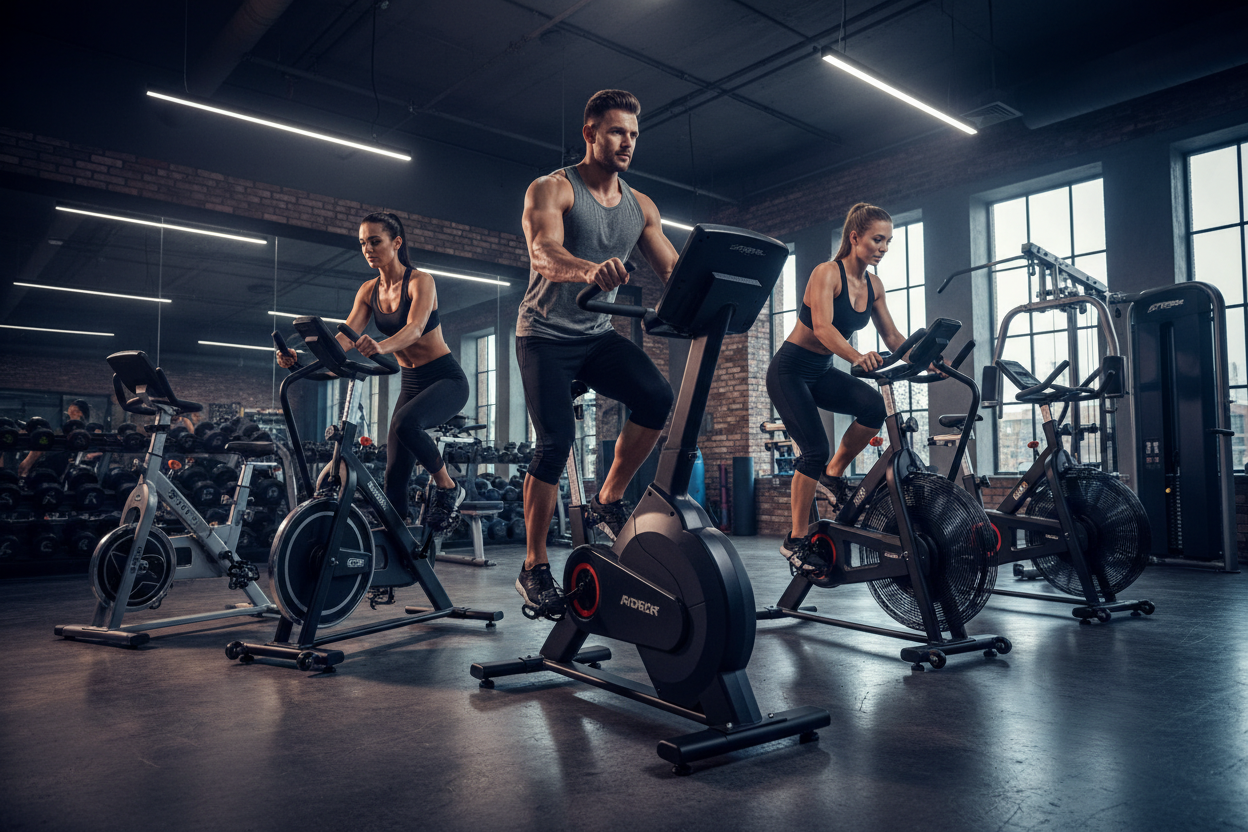
- Cardio Equipment: Treadmills, ellipticals, and rowers designed strictly for heart rate training and endurance.
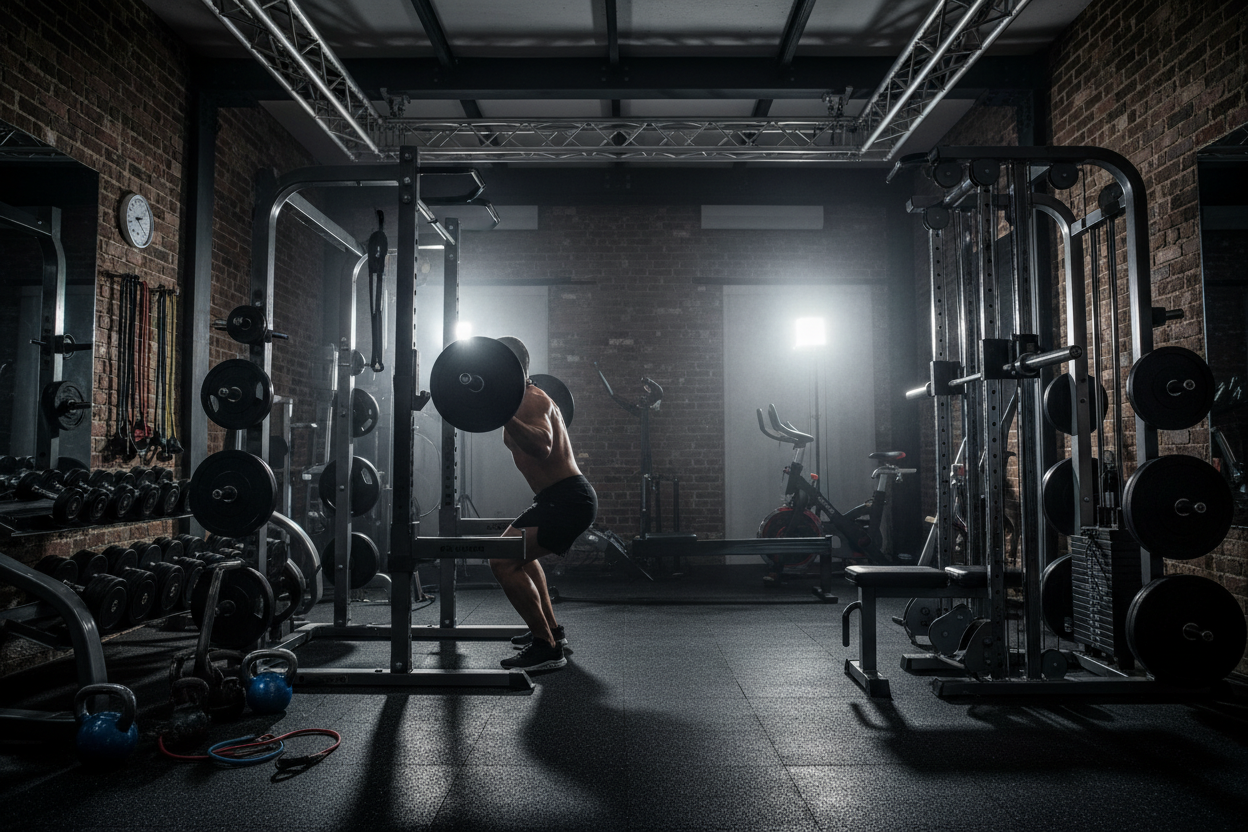
- Smith Machines: A barbell fixed on vertical rails; offers safety for squats and presses but limits natural movement paths.
Understanding the Mechanics: How Machines Work
Before we memorize specific names, you need to understand the two main categories of resistance you will encounter. This distinction changes how the weight feels during the rep.
Selectorized (Pin-Loaded) Machines
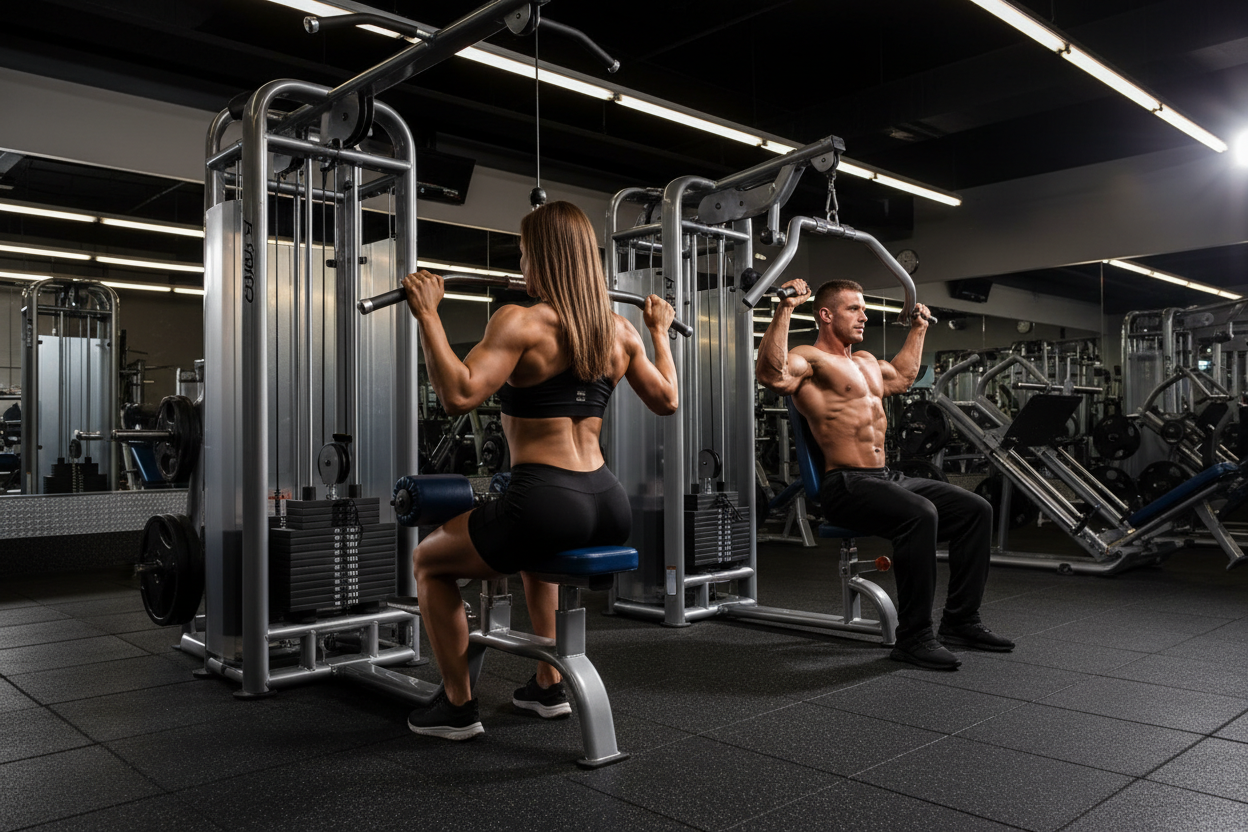
These are the most common types of weight machines in commercial gyms. You sit down, adjust the seat, and stick a pin in a rectangular stack of weights. The beauty here is convenience.
Mechanically, these use a cam—a kidney-shaped wheel—that alters the resistance curve. This means the machine helps you where you are weakest and makes it harder where you are strongest. It ensures your muscle is challenged evenly through the full range of motion.
Plate-Loaded Machines
Often referred to by brand names like "Hammer Strength," these require you to manually load round iron plates onto the machine. These are different gym machines because they move on a fixed lever arm rather than a cable and pulley system.
The feel is distinct. You are moving the actual dead weight. These are superior for heavy pressing movements because if you fail, the safety stops catch the weight, not your chest.
Upper Body Machines and What They Do
Let's break down the exercise machines types you will use to build a strong torso.
The Lat Pulldown (Vertical Pull)
If you have ever searched for the "gym machine where you sit and pull," this is it. It mimics a pull-up but allows you to adjust the weight.
The Science: It targets the Latissimus Dorsi (the big back muscles). By locking your knees under the pad, you remove the need for core stabilization, allowing you to direct 100% of your energy into driving your elbows down and contracting the back.
The Chest Press Machine
This is the machine alternative to the bench press. You will find different variations: flat, incline (upper chest), and decline (lower chest).
Why use it? Free weight bench pressing requires significant shoulder stability. If your stabilizers are weak, your chest won't get a full workout. The chest press machine removes the wobble, letting you push to absolute failure safely.
The Pec Deck / Fly Machine
This machine involves sitting with your arms out to the sides and bringing them together. It is an isolation movement, meaning only one joint (the shoulder) is moving.
The Function: It targets the chest fibers near the sternum. It provides tension at the very top of the rep, something dumbbells cannot do effectively due to gravity.
Lower Body: Different Workout Machines for Legs
Leg day is where machines truly shine, as they allow for high-volume training without the systemic fatigue of heavy barbell squats.
The Leg Press
Among the most popular weight lifting machine types, the leg press involves pushing a sled away from your body with your feet. It hits the quads, hamstrings, and glutes.
Strategic Use: Foot placement matters. Place your feet high on the platform to bias the glutes and hamstrings. Place them lower to target the quads.
Leg Extension and Leg Curl
These are "open kinetic chain" exercises, meaning your foot moves freely rather than being planted against a solid surface like the floor.
Leg Extension: The only exercise that fully isolates the quadriceps. Use this for finishing off the legs after heavy pressing.
Leg Curl: Targets the hamstrings. You will find seated and lying variations. The seated version is scientifically superior for hypertrophy because it stretches the hamstring at the hip joint while contracting it at the knee.
The Cable Station: The Versatile Giant
When discussing different types of machines in the gym, the cable crossover station is unique. It isn't a fixed-path machine. It allows you to move in three dimensions.
Cables provide "constant tension." Unlike a dumbbell curl where the weight is easy at the top (resting on the joint), a cable tries to pull your arm back down even at the peak of the movement. This creates metabolic stress, which is a key driver for muscle growth.
My Training Log: Real Talk on Machine Fit
I want to be honest about something the brochures don't tell you. Machines are built for the "average" human, and if you don't fit that mold, things get weird. I remember vividly when I started using the lying leg curl machine regularly.
I'm slightly taller than average, and I could never get the pivot point of the machine (the red dot usually on the side of the cam) to line up perfectly with my knee joint. Every time I curled the weight up past 90 degrees, the calf pad would roll up my leg and pinch my skin against my sock. It was distracting enough that I couldn't focus on the hamstring contraction.
I learned that I had to physically pull my hips off the bench slightly or adjust the ankle pad to be higher on my calf than recommended to stop the sliding. The lesson? Don't blindly trust the diagram on the machine. If the movement feels disjointed or the pad is sliding against your skin, the setup is wrong for your body mechanics. Adjust it until the machine feels like an extension of your limb, not an obstacle you're fighting against.
Conclusion
Mastering different gym machines isn't about memorizing a catalog; it's about understanding the tool for the job. Use selectorized machines when you are learning the movement pattern. Graduate to plate-loaded equipment when you want to move heavy loads safely. Use cables to refine and sculpt.
Don't stick to one type. The most aesthetic and functional physiques are built by mixing the stability of machines with the raw challenge of free weights.
Frequently Asked Questions
What are weight machines called officially?
Most weight machines are named after the body part they target or the movement they mimic (e.g., Leg Press, Chest Fly). However, they are technically categorized by their resistance mechanism: Selectorized (pin-loaded), Plate-Loaded (leverage), or Pneumatic (air resistance).
Are machines better than free weights for beginners?
Machines are generally safer for beginners because they dictate the path of motion. This prevents bad form and reduces the risk of injury while you build a baseline of strength. However, beginners should eventually incorporate free weights to build stabilizer muscles.
What is the gym machine with the ropes called?
That is called a Cable Crossover machine or a Functional Trainer. It uses a pulley system with adjustable heights, allowing for hundreds of different exercises ranging from tricep pushdowns to woodchoppers.