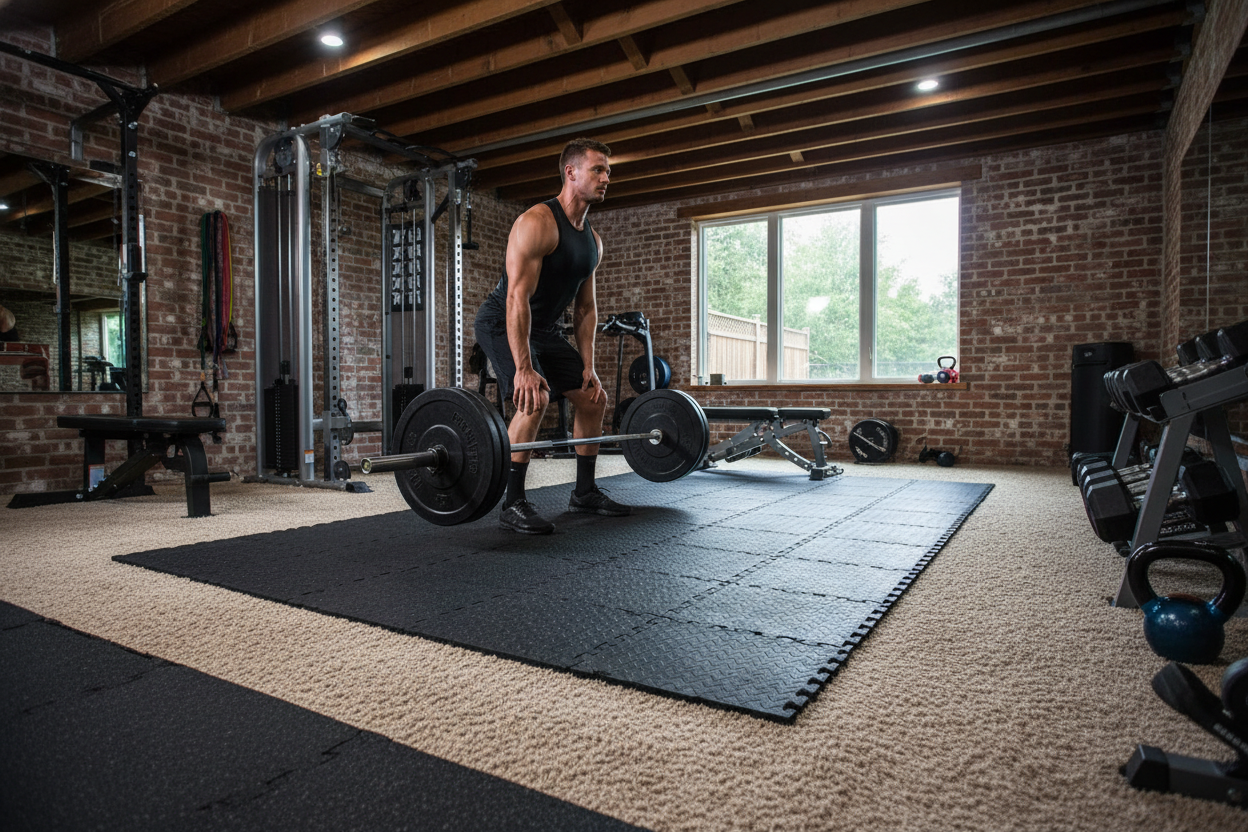
Gym Flooring on Top of Carpet: What to Know Before You Buy
If you are setting up a home gym in a spare bedroom, basement, or rental unit, you have probably stared down your plush flooring and wondered how on earth you are going to deadlift on it. The combination of heavy iron and soft fabric is a recipe for rolled ankles, damaged subfloors, and ruined security deposits. Laying gym flooring on top of carpet is one of the most common challenges North American home gym owners face, but getting it right requires more than just throwing down a cheap yoga mat.
Whether you are building a dedicated powerlifting haven or a simple cardio corner, this guide will help you build a stable, safe, and floor-protecting foundation without ripping up your existing carpet.
Key Takeaways
- Stability is safety: Soft carpets create a dangerous, unstable surface for heavy lifting; a rigid middle layer is often required.
- Thickness matters: Aim for at least 3/8-inch to 3/4-inch thick rubber mats depending on your equipment weight.
- Beware of color bleed: Direct contact between cheap rubber and light carpet can cause permanent staining.
- Interlocking tiles vs. rolls: Heavy, thick tiles or mats are superior to lightweight foam, which will compress and disconnect under load.
The Foundation: Understanding Home Gym Carpet Flooring
Not all carpets are created equal. The approach you take for your workout room flooring over carpet depends heavily on the pile (thickness) of your existing floor.
Low-Pile vs. High-Pile Challenges
If you have a tight, low-pile commercial carpet (like you would find in a finished basement), you can often lay heavy rubber mats directly on top with minimal issues. The compression is low, meaning your squat rack will not wobble excessively. However, if you are dealing with thick, high-pile residential carpet with a plush foam pad underneath, placing exercise flooring over carpet directly will result in a trampoline effect. This squishy instability is disastrous for your joints during heavy squats or Olympic lifts.
Choosing the Right Over Carpet Gym Flooring
When selecting your protective layer, material choice dictates performance. Here is how the most common options stack up when used as a workout floor over carpet.
EVA Foam vs. Vulcanized Rubber
Lightweight EVA foam interlocking tiles are cheap and easy to find, but they are terrible for heavy equipment. Place a 500-pound treadmill or a loaded barbell on foam, and it will permanently compress, warp, and disconnect at the seams. Instead, opt for vulcanized rubber. Heavy-duty gym floor tiles over carpet (usually 3/8-inch to 3/4-inch thick) provide the dense, shock-absorbing qualities needed to protect the carpet fibers and the wooden subfloor beneath them.
The Plywood Subfloor Trick (For Heavy Lifters)
If you are pushing serious weight on plush carpet, you need a rigid bridge. The gold standard for flooring for home gym over carpet involves a three-layer system: your carpet, a layer of 5/8-inch or 3/4-inch rigid plywood (or OSB board), and a top layer of heavy rubber stall mats. The plywood distributes the point load of heavy racks and dropped weights across a wider surface area, completely eliminating the dangerous wobble caused by the carpet pad.
From Our Gym: Honest Take
When I first set up my spare-bedroom gym, I made the rookie mistake of dropping 3/4-inch horse stall mats directly over thick residential carpet. The first time I unracked a 315-pound squat, my feet sank unevenly, and the entire power rack leaned forward. It was terrifying.
I ended up pulling the mats up, laying down a moisture barrier (a cheap plastic tarp to prevent the rubber smell and potential dye bleed from reaching the carpet), and dropping two sheets of 5/8-inch OSB plywood on top. I then placed the heavy rubber mats over the wood. The difference was night and day. My chalked grip felt secure, my footing was as solid as a commercial gym concrete floor, and when I moved out two years later, the carpet underneath looked brand new. One caveat: this setup raises your floor height by over an inch, so if you are 6-foot-2 like me, double-check your ceiling clearance for overhead presses!
Frequently Asked Questions
Can I put a treadmill or power rack directly on carpet?
While you physically can, it is highly discouraged. Heavy equipment will permanently crush the carpet fibers and pad, and the internal motors of cardio machines can suck up carpet dust, leading to overheating. Always use a rigid mat or wood-and-rubber platform.
Will rubber gym mats stain my carpet?
Yes, they can. Many recycled rubber mats contain oils and dyes that can leach into light-colored carpets over time, especially in warm or humid rooms. Always place a barrier, such as a thin plastic sheet or rosin paper, between the carpet and the rubber.
Are interlocking foam tiles good for a home gym?
Foam tiles are only suitable for bodyweight exercises, yoga, or light dumbbell work. If you plan to use heavy kettlebells, barbells, or cardio machines, foam will sink, separate, and fail to protect the floor underneath.