Flat Belly Workout Explained: What Actually Works at Home
If you have ever spent hours doing endless crunches on a thin, uncomfortable mat in your basement, only to see zero changes to your midsection, you are not alone. The fitness industry is notorious for pushing quick-fix gadgets and isolated movements that overpromise and underdeliver. To build a strong, functional core, you need a comprehensive flat belly workout that pairs the right movements with high-quality, supportive home gym equipment.
Whether you are training in a cramped apartment corner or a fully outfitted garage gym, optimizing your core routine comes down to proper mechanics, adequate recovery, and the right gear. Let us break down exactly what it takes to effectively target your midsection and build lasting core strength.
Key Takeaways
- Equipment matters: A high-density mat and a sturdy ab roller provide better core activation than floor crunches alone.
- Compound movements win: The best stomach exercises for flat stomach results engage the entire trunk, not just the upper abs.
- Nutrition is the foundation: No amount of tummy exercise can out-train a poor diet; body fat reduction happens in the kitchen.
- Consistency over intensity: A structured flat stomach routine 3-4 days a week yields better results than sporadic, grueling sessions.
Core Training Mechanics
Moving Beyond the Crunch
When most people want to exercise flat tummy muscles, they immediately default to sit-ups. However, your core is a complex cylinder of muscles designed to stabilize your spine, not just flex it forward. To truly get a flat stomach exercises must include anti-extension (like planks or ab wheel rollouts), anti-rotation (like Pallof presses with resistance bands), and dynamic stabilization.
Integrating Equipment for Better Activation
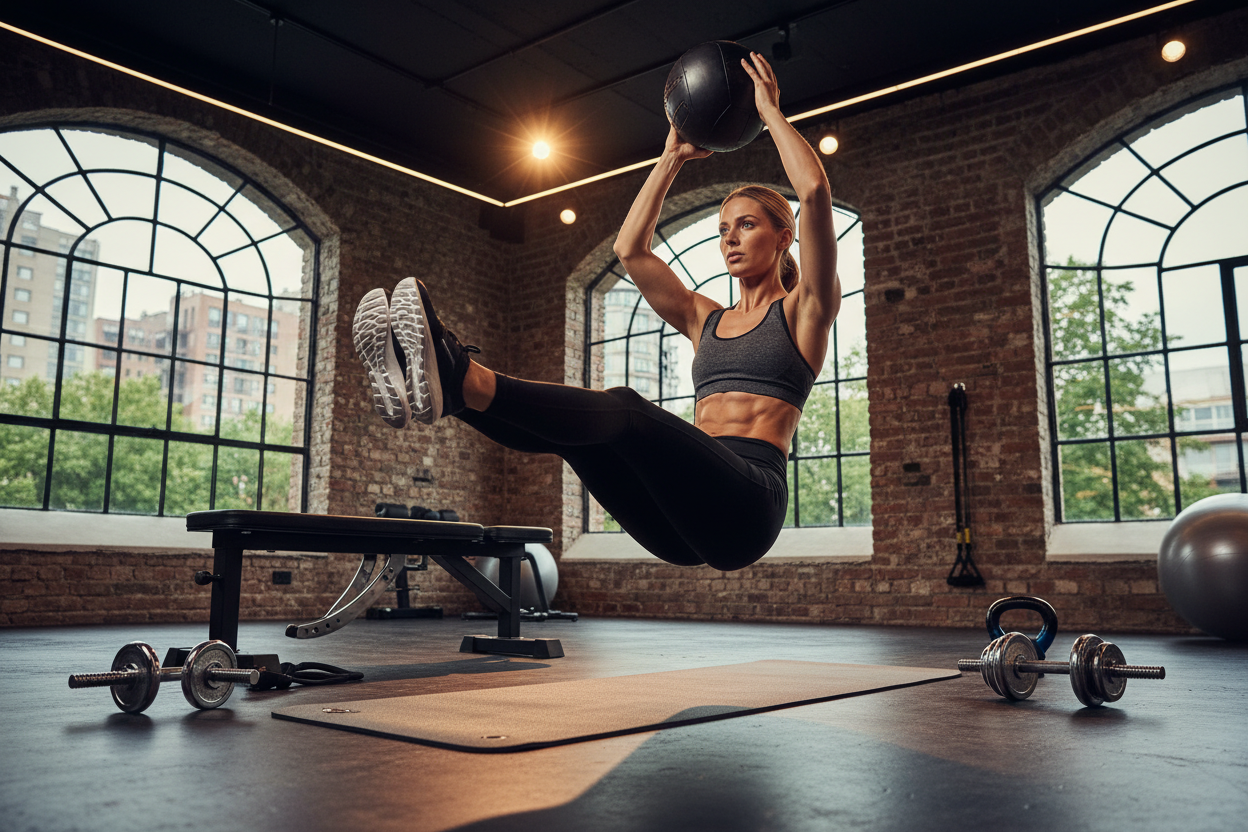
Using the right tools can elevate a basic bodyweight circuit into a highly effective workout stomach session. An adjustable decline bench, for example, allows you to increase the resistance on reverse crunches and Russian twists. Similarly, hanging leg raises from a power rack pull-up bar target the lower abdominals far more effectively than lying floor raises.
Space Planning & Essential Gear
Building Your Core Corner
You do not need a massive garage gym to execute a killer exercise for flat tummy goals. A dedicated core station can fit into a 6x4 foot space. The foundation is a commercial-grade, high-density exercise mat. Cheap yoga mats compress too easily, leading to bruised tailbones during V-ups or hollow body holds. Pair a good mat with a dual-wheel ab roller and a set of heavy-duty resistance bands, and you have a complete core-torching setup that slides right under your bed.
From Our Gym: Honest Take
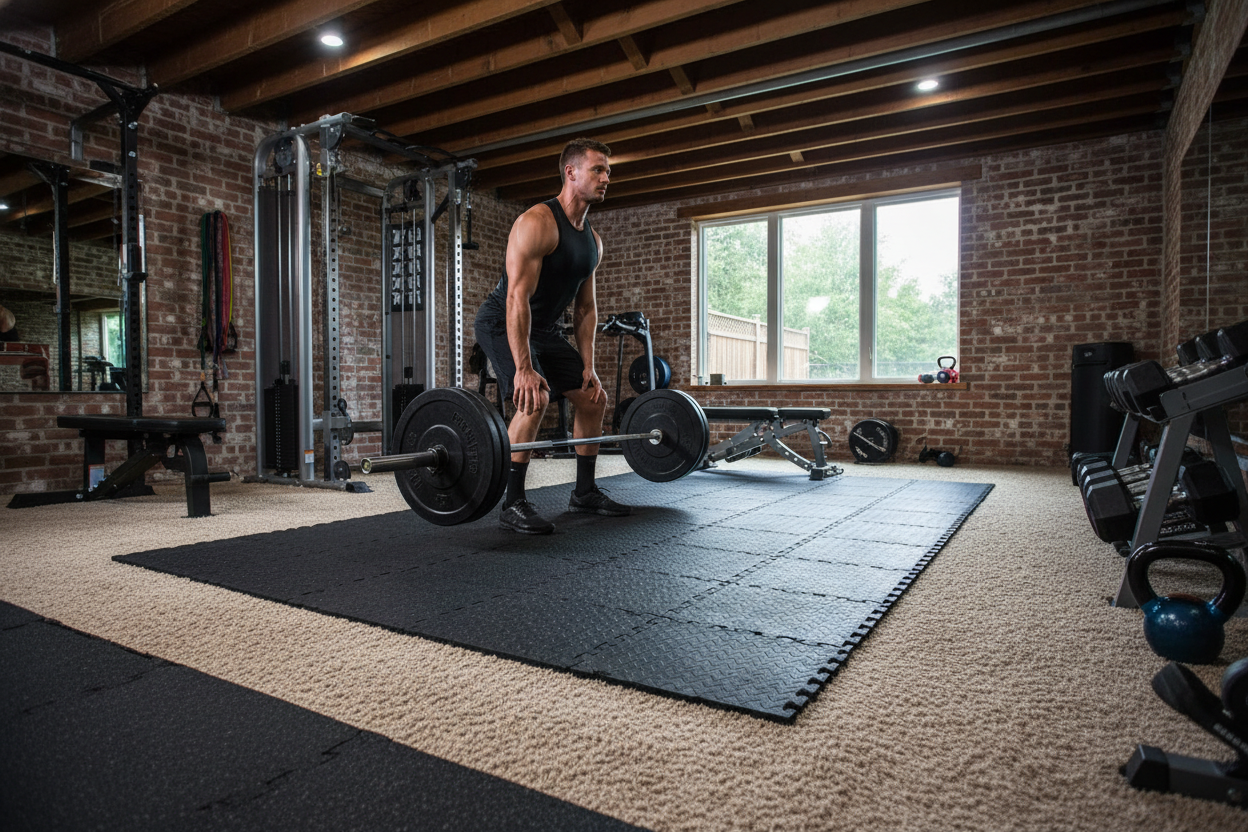
We test dozens of core gadgets every year, and I can confidently say that 90% of them are gimmicks. When I was refining my own routine last winter in my unheated garage gym, I realized how much a quality mat impacts training. At 6 foot 2, trying to do full ab wheel roll-outs on a standard 68-inch mat left my knees bruised on the freezing concrete. Upgrading to an 84-inch, 8mm thick high-density mat was a game changer. It allowed me to fully extend during the stomach in exercise movements without breaking form to protect my joints. If you are going to invest in any core equipment, skip the infomercial gadgets and buy a premium mat and a solid ab wheel with actual ball bearings.
Frequently Asked Questions
What is the most effective tummy exercise for home gyms?
The ab wheel rollout is arguably the king of core exercises. It forces your entire abdominal wall to work in unison to prevent your lower back from sagging, making it highly effective for building dense, visible core muscle.
How often should I do a flat stomach routine?
Treat your core like any other muscle group. Training it 3 to 4 times a week with adequate rest days is ideal. Daily training can lead to fatigue and poor form, which increases the risk of lower back injury.
Do I need heavy weights to exercise flat tummy muscles?
Not necessarily, but progressive overload is key. Once bodyweight planks and leg raises become too easy, incorporating a medicine ball, a dumbbell, or resistance bands is the best way to continue challenging your core.