Gym Floor Installers Explained: What to Know Before Hiring
Every home gym owner eventually faces the dreaded floor shift. You drop a heavy deadlift, and your cheap puzzle mats separate, exposing your pristine concrete to a cracked fate. If you are upgrading to a serious setup, hiring professional gym floor installers might be the smartest investment you make for your home training space.
While DIY stall mats work for a basic garage setup, premium spaces require precision. This guide will walk you through exactly what to expect, how to avoid shady contractors, and whether bringing in the pros is the right move for your specific space and budget.
Key Takeaways
- Professional installation guarantees seamless edges, reducing trip hazards during heavy lifts and sled pushes.
- Proper subfloor leveling is the hidden secret of top-tier gym flooring companies.
- Rolled rubber and vulcanized tiles require specific industrial adhesives that are highly prone to DIY errors.
- Always verify if the installation warranty covers moisture damage, concrete sweating, and adhesive failure.
Do You Really Need Pro Gym Flooring Companies?
Many garage gym athletes start with horse stall mats because they are cheap and virtually indestructible. But if you are building a premium basement gym, a multi-use garage, or a commercial-style training studio, DIY mats can look sloppy, trap moisture, and shift under heavy equipment.
The DIY vs. Professional Divide
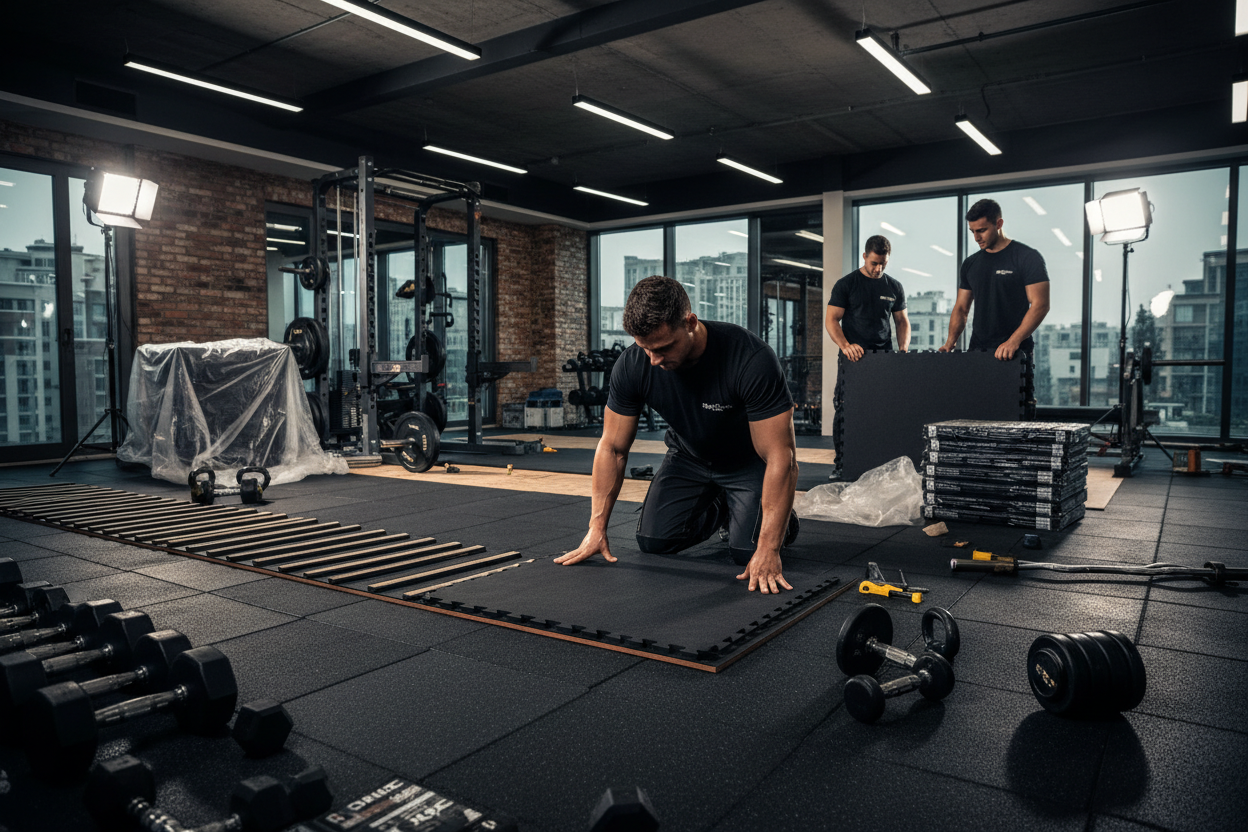
If you are just throwing down heavy interlocking tiles, save your money and do it yourself. But if you are gluing down 8mm rolled rubber across a 500-square-foot basement with uneven concrete, gym floor installation companies will save you days of frustration. They ensure the seams do not peel up after a month of aggressive training, and they know how to perfectly cut around complex power rack footprints and structural pillars.
How to Vet Gym Floor Contractors
Not all flooring experts understand the unique, high-impact demands of a weight room. A standard carpet or tile installer will likely not know how to handle deadlift drop zones or the density requirements needed to support a 1,000-pound power rack without permanent indentation.
Crucial Questions for Your Installer
When interviewing gym flooring contractors, ask about their experience with moisture barriers. Concrete sweats, and trapped moisture under thick rubber will destroy your floor and create mold. Ask for examples of past athletic facilities or premium home gyms they have completed, and confirm they use two-part polyurethane adhesives designed specifically for athletic flooring.
From Our Gym: Honest Take
When we upgraded our 600-square-foot testing facility, we initially tried to DIY 8mm rolled rubber. It was a nightmare. The rolls weighed over 200 pounds each, and cutting them perfectly straight around the power rack posts with a utility knife left jagged, ugly edges. We eventually swallowed our pride and hired local gym floor installers to rip it up and do it right.
The difference was night and day. They used a weighted roller that made the seams practically invisible. My chalked lifting shoes now grip the floor perfectly during heavy squats without any mat shifting whatsoever. The only minor con? The industrial glue they used off-gassed for about a week, so we had to keep the garage doors wide open and delay our training schedule slightly. If you are sensitive to chemical smells, definitely plan for a few days of ventilation.
Frequently Asked Questions
How much do gym floor contractors charge?
Prices vary wildly based on your region and the specific material. Generally, expect to pay between $2 to $5 per square foot for labor alone, not including the cost of the rubber or turf. Complex room shapes with many cuts will drive up the final price.
How long does a professional installation take?
For a standard two-car garage or basement setup (around 400 to 500 square feet), a professional crew can usually prep the subfloor, lay the moisture barrier, and glue down the rubber in one to two days. However, you will need to wait 48 to 72 hours for the adhesive to fully cure before dropping weights or moving your heavy equipment back in.
Do I need to empty my gym before they arrive?
Yes. Installers need a completely clear, broom-swept room to assess the concrete and lay the flooring seamlessly. You will need to break down your power rack, clear out the dumbbells, and move all heavy equipment into another room or a temporary storage pod.