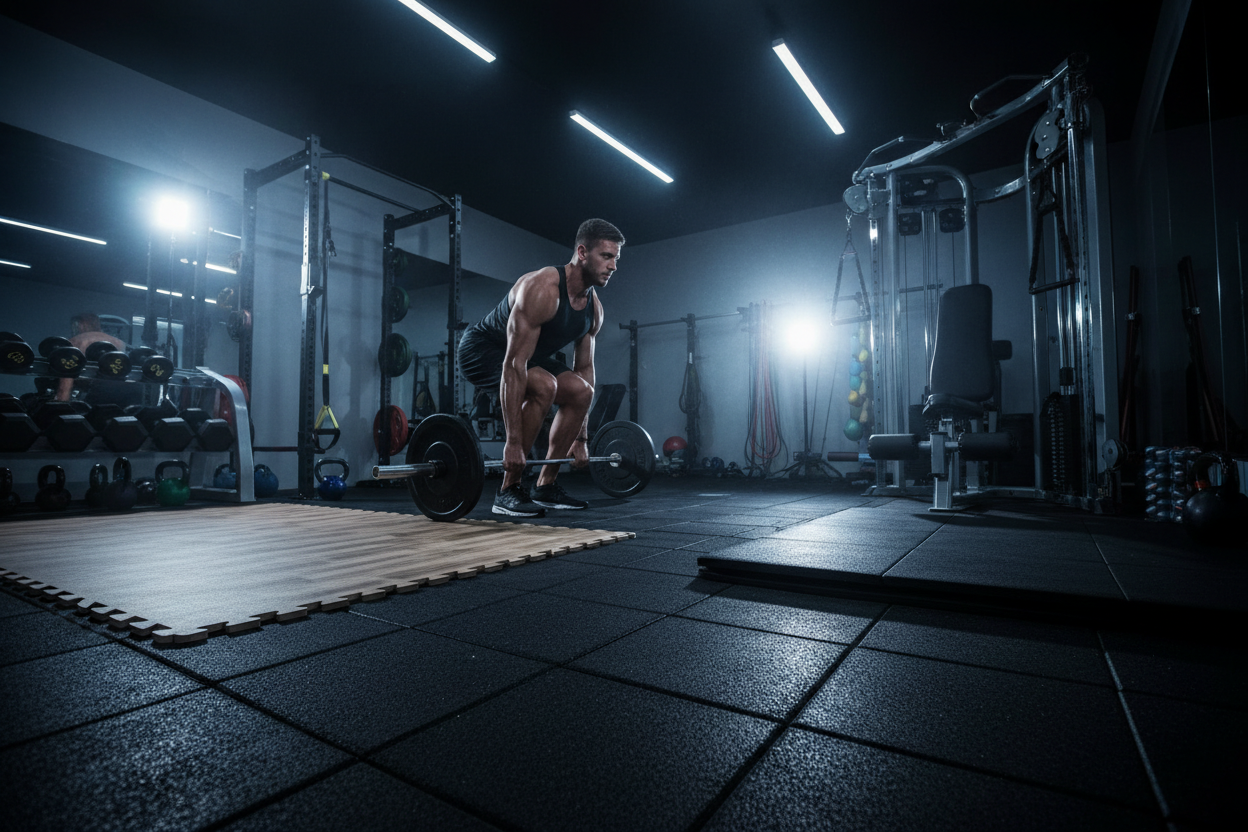
Gym Equipment Flooring Explained: What to Know Before You Buy
Nothing shatters the excitement of a new home gym quite like the sound of a 45-pound plate cracking your garage's concrete foundation. Whether you are dealing with echoing noise that wakes up the whole house, or you simply want a stable, safe surface for heavy squats, your foundation matters. Investing in the right gym equipment flooring is arguably the most important decision you will make for your training space.
In this guide, we will break down exactly how to choose the right materials, thickness, and layout to protect your home and elevate your workouts.
Key Takeaways
- Thickness dictates function: 3/8-inch rubber is standard for general use, while 3/4-inch is mandatory for heavy deadlifts and Olympic lifting.
- Material is everything: Vulcanized rubber dominates for durability, while EVA foam should be avoided for heavy equipment.
- Protect the subfloor: Proper flooring prevents structural damage to concrete and hardwood from dropped weights.
- Consider the off-gassing: New rubber flooring will have a distinct smell that requires proper ventilation during the first few weeks of installation.
Choosing the Right Material for Your Space
The market is flooded with flooring options, but not all are created equal when it comes to supporting heavy iron and cardio machines.
Rubber vs. Foam
High-density rubber is the gold standard. It absorbs impact, dampens sound, and provides the necessary grip for heavy lifts. EVA foam puzzle mats, while cheap and easy to find, are a recipe for disaster under power racks. Foam compresses under heavy loads, creating an unstable lifting surface and leaving permanent indentations. When planning your layout, the synergy between your gym equipment and flooring is crucial—always prioritize high-density rubber for anything heavier than a yoga mat.
Interlocking Tiles vs. Rolled Rubber vs. Stall Mats
Interlocking tiles are DIY-friendly and great for spare bedrooms. Rolled rubber offers a seamless, professional look but can be incredibly heavy to install. Horse stall mats (typically 4x6 feet and 3/4-inch thick) are the budget-friendly darling of the garage gym community, offering commercial-grade protection at a fraction of the cost.
Thickness Matters: Matching Flooring to Your Gear
Buying flooring that is too thin will leave your subfloor vulnerable, while buying flooring that is too thick might be an unnecessary drain on your budget.
Cardio Machines and General Fitness
If your space primarily houses a treadmill, an exercise bike, or a rack of light dumbbells, a 1/4-inch to 3/8-inch rubber mat is perfectly sufficient. It will protect your floor from scratches and reduce the vibration noise of motorized equipment.
Heavy Lifting and Power Racks
If you plan on dropping barbells or loading up a power rack, 3/4-inch thickness is non-negotiable. This thickness absorbs the shock of a dropped deadlift, preventing micro-fractures in your concrete. High-quality gym flooring equipment acts as an insurance policy for your home's foundation.
From Our Gym: Honest Take
When I first built out my two-car garage gym, I tried to save money by using 1/2-inch interlocking foam mats I found online. Within three months, my power rack had sunken into the foam, making my squats feel dangerously wobbly, and a dropped 25-pound plate punched right through to the concrete.
I ripped it all out and upgraded to 3/4-inch vulcanized rubber stall mats. The difference was night and day. My chalked lifters actually grip the floor now, and I can drop 405-pound deadlifts without holding my breath. The only caveat? The new tire smell was intense. I had to leave the garage doors open with industrial fans running for about two weeks before the off-gassing subsided. It is a minor annoyance, but absolutely worth the lifetime durability.
Frequently Asked Questions
Is gym equipment flooring worth the investment?
Absolutely. Replacing a cracked concrete slab or ruined hardwood floor costs thousands of dollars. Proper rubber flooring usually costs a few hundred dollars and lasts a lifetime, making it the best ROI in your home gym.
How much space do I need to cover?
You do not necessarily need to cover your entire room. Many lifters build an 8x8 foot lifting platform for their rack and barbell work, leaving the rest of the room bare or covered in thinner, cheaper material for stretching and cardio.
Do I need to glue down rubber gym flooring?
For most home gyms, no. Heavy 3/4-inch rubber mats weigh around 100 pounds each. Once laid tight against each other and weighed down by your equipment, they will not shift. Double-sided carpet tape can be used at the seams if you experience minor creeping.