Gym Carpets: What to Know Before Upgrading Your Floor
If you have ever winced at the sound of a heavy dumbbell crashing onto your garage floor, or slipped on a cheap foam puzzle mat mid-squat, you know that flooring can make or break a workout space. Too often, we invest thousands in racks and barbells, only to neglect the very foundation we stand on.
Enter gym carpets. Unlike the plush, high-pile carpeting in your living room, purpose-built fitness carpeting offers a unique blend of traction, noise reduction, and durability. In this guide, we will break down exactly what you need to know to choose the perfect foundation for your home gym.
Key Takeaways
- Gym carpets provide superior traction for heavy lifts compared to bare concrete or slick foam.
- Look for low-pile, high-density materials with a rubberized backing to prevent slipping.
- They excel at dampening acoustics, making them ideal for shared spaces and basement gyms.
- Proper maintenance, including regular vacuuming and chalk management, extends their lifespan significantly.
Choosing the Right Material
Not all flooring is created equal. When shopping for gym rugs, the material dictates both performance and longevity. You want something that resists compression under heavy loads while providing enough grip for dynamic movements.
High-Density vs. Standard Pile
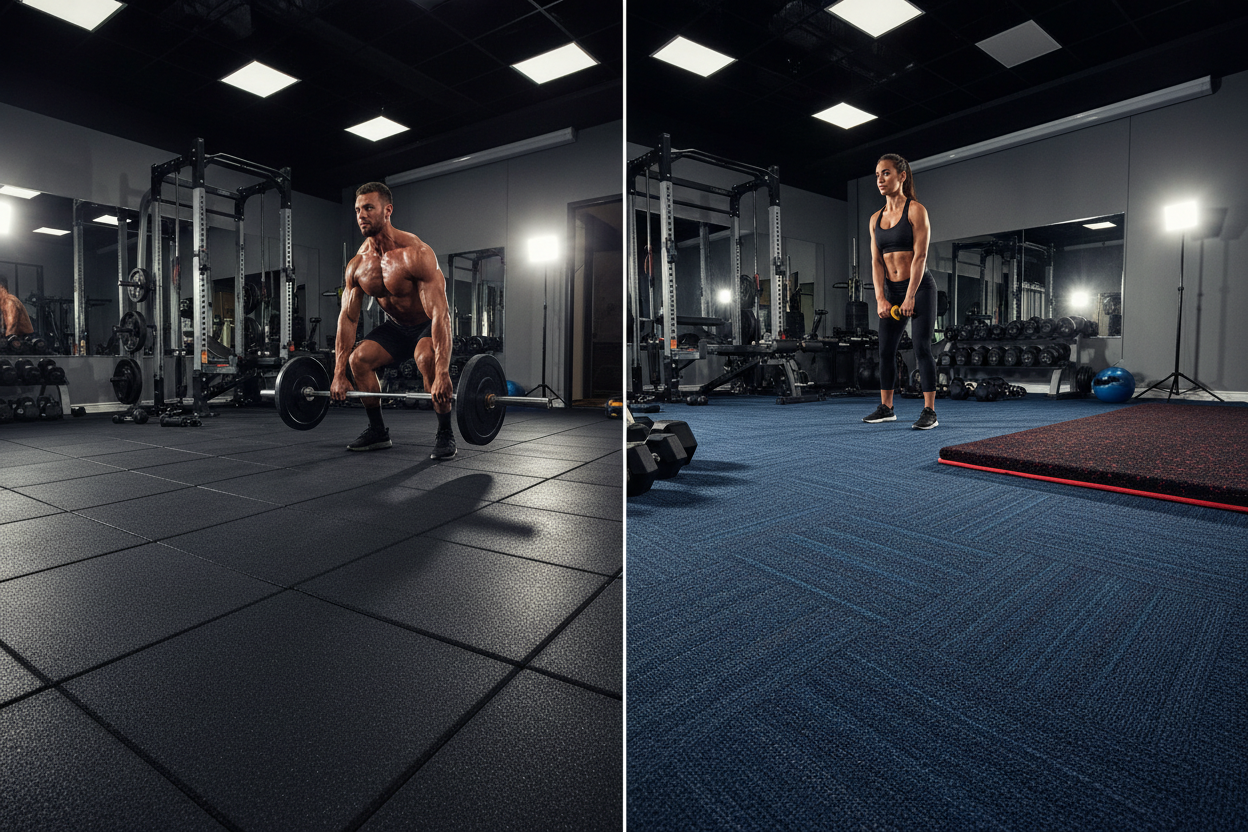
Standard household carpets will compress and permanently deform under the weight of a power rack. High-density, commercial-grade gym carpets feature a tightly woven, low-pile surface. This ensures your footing remains perfectly stable during heavy squats and deadlifts, preventing the squishy feeling that ruins power transfer.
Rubber-Backed Options
A high-quality gym floor rug must have an integrated rubber backing. This prevents the carpet from migrating across your garage or basement floor during explosive movements like kettlebell swings or burpees. It also acts as a moisture barrier, protecting your subfloor from sweat and spilled pre-workout.
Sizing and Space Planning
Whether you are outfitting a two-car garage or carving out a corner in a spare bedroom, proper sizing is crucial.
Wall-to-Wall vs. Platform Inserts
For full room coverage, broadloom gym carpets offer a seamless look. However, if you are working with a tight budget or a multi-use room, consider using a specialized gym floor rug just for your lifting zone. A 6x8 foot section is typically enough to cover the footprint of a standard power rack and a flat bench, giving you a dedicated, protective workout zone.
Durability and Maintenance
A home gym is a high-traffic, high-wear environment. Your flooring needs to stand up to dropped weights, chalk dust, and sweat.
Cleaning and Upkeep
The biggest hesitation people have with gym rugs is cleanliness. Fortunately, low-pile fitness carpets are surprisingly easy to maintain. A stiff-bristled vacuum attachment will pull up most chalk and dirt. For sweat and spills, a basic enzymatic carpet cleaner works wonders. Just avoid soaking the carpet, as trapped moisture can degrade the rubber backing over time.
From Our Gym: Honest Take
We recently tested a commercial-grade needle-punch gym carpet in our main garage testing facility. I was initially skeptical, assuming it would be a nightmare to keep clean compared to our standard 3/4-inch rubber stall mats. However, the acoustic difference was night and day. Dropping 45-pound bumper plates from waist height produced a dull thud rather than a neighborhood-waking crack.
The traction is where it truly shined. During heavy sumo deadlifts, my feet felt completely locked in—no sliding, even when my shoes were slightly damp from a previous conditioning circuit. The only minor caveat? Spilled liquid chalk is a pain to get out. You have to wait for it to dry completely and hit it with a stiff nylon brush before vacuuming. If you are a heavy chalk user, stick to darker colorways to hide the inevitable dusting.
Frequently Asked Questions
Are gym carpets better than rubber mats?
It depends on your training style. Rubber mats offer superior impact protection for Olympic weightlifting. However, gym carpets provide better traction, a more welcoming aesthetic, and superior acoustic dampening, making them great for general strength training and cardio spaces.
Can I put a gym floor rug over regular carpet?
It is generally not recommended. Placing a rigid gym rug over plush household carpet creates an unstable, squishy surface that can lead to ankle rolls during heavy lifts. It is always best to lay fitness flooring over a hard, flat subfloor like concrete or hardwood.
How thick should a gym carpet be?
Look for a total thickness of around 1/4 to 3/8 of an inch. This provides enough pile to be comfortable for floor work and stretching, but remains dense enough to support heavy equipment without permanent indentation.