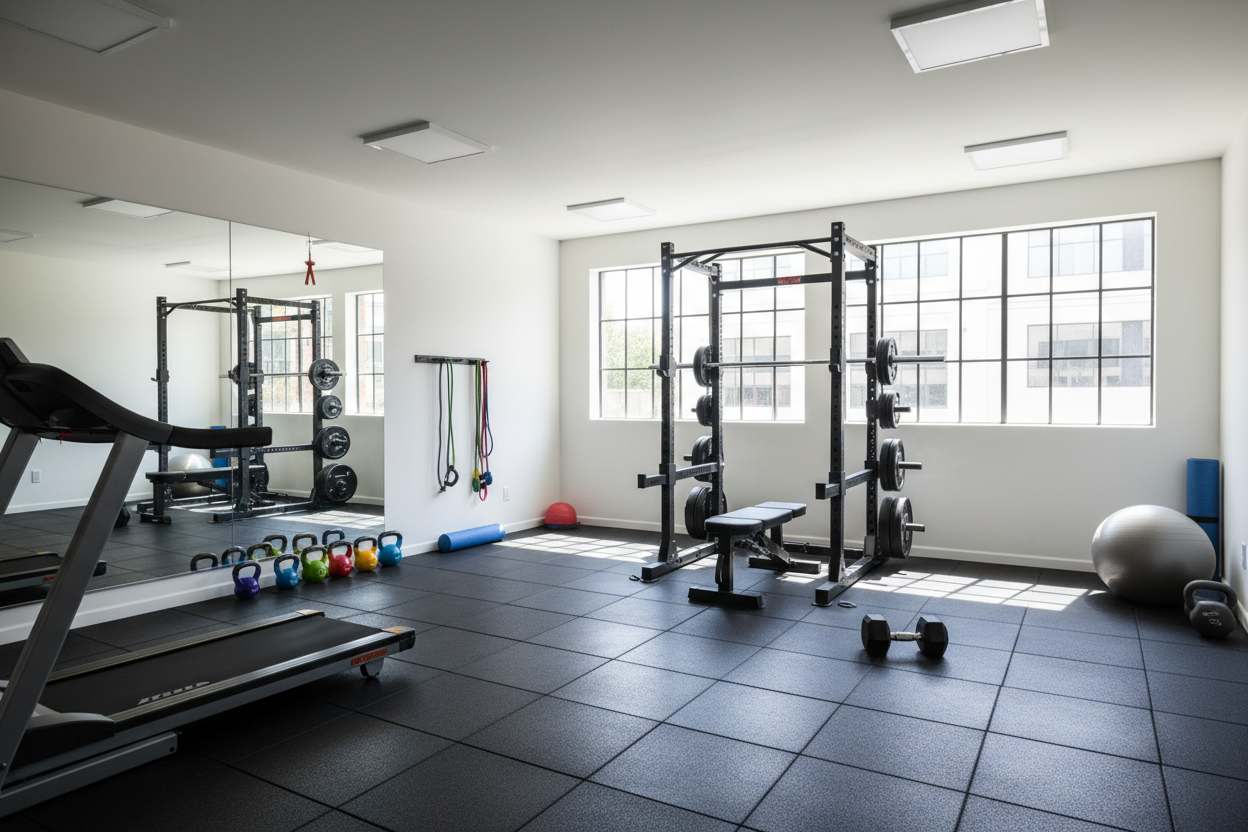
Goodyear Interlocking Foam Mats: Is This Gym Flooring Worth It?
Building a home gym is exciting until you hear the deafening crash of a dumbbell hitting your bare concrete floor. If you are tired of risking foundation damage and scuffed equipment, you have likely started looking into flooring solutions. Enter the goodyear interlocking foam mats.
These budget-friendly tiles have become a staple in North American basement and garage gyms, but are they the right foundation for your specific training style? In this guide, we will break down exactly what these mats can (and cannot) handle, helping you decide if they are the missing piece to your home gym puzzle.
Key Takeaways
- Affordable Protection: An excellent, budget-friendly barrier against floor scratches and light equipment impacts.
- Easy Assembly: The puzzle-piece design allows for a custom fit in awkward room layouts.
- Comfort First: High-density EVA foam provides excellent anti-fatigue support for mobility work, stretching, and plyometrics.
- Weight Limits: Best suited for bodyweight exercises, cardio machines, and light free weights—not intended for heavy barbell drops.
Space Planning and Setup
Maximizing the Goodyear 4 Piece Interlocking Foam Mats
One of the biggest hurdles in home gym design is dealing with irregular spaces. Whether you are carving out a corner in a cramped apartment or taking over half the garage, rigid rubber rolls can be a nightmare to cut and place. This is where the modular design shines. A standard pack of goodyear 4 piece interlocking foam mats typically covers about 16 square feet (with each tile measuring 24 by 24 inches). You can seamlessly connect multiple packs to scale up as your gym layout grows.
For a standard power rack and lifting area, you will generally need at least three to four packs to ensure a safe 8x8 foot zone. Always measure your floor space twice before ordering to account for equipment overhang and bench clearance.
Durability and Training Application
Light Dumbbells vs. Heavy Barbells
Let us set realistic expectations: these are EVA foam mats, not 3/4-inch vulcanized rubber horse stall mats. They excel at absorbing vibration from cardio equipment like stationary bikes and rowers. They also provide a fantastic, cushioned surface for yoga, core work, and kettlebell swings.
However, if your programming involves Olympic weightlifting or heavy deadlifts, dropping loaded barbells from the waist will eventually puncture or compress the foam. For heavy lifters, we recommend using these mats for your stretching or accessory zones, while investing in solid rubber drop pads for the primary heavy lifting platform.
From Our Gym: Honest Take
We recently laid down a 64-square-foot grid of these Goodyear mats in a basement testing facility. The installation took less than ten minutes, and the interlocking teeth fit together snugly without leaving annoying gaps that trap dust. The diamond-plate texture on top provides a surprisingly good grip for sweaty burpees and mountain climbers.
That said, I have to be honest about heavy equipment. When we placed a 250-pound power rack directly on the foam, it left permanent indentations within a week. Additionally, because the mats are lightweight, a highly dynamic workout (like heavy sled pushes or lateral bounds) caused the entire mat grid to slide slightly on the smooth concrete underneath. A few strips of double-sided carpet tape completely solved the sliding issue, but it is a minor caveat to keep in mind.
Frequently Asked Questions
Are these mats waterproof and easy to clean?
Yes, the closed-cell EVA foam is water-resistant. Sweat and spilled water will pool on top rather than soaking in. You can easily wipe them down with a damp cloth and a mild, non-abrasive soap solution after a heavy workout.
Can I park my car on Goodyear foam mats in a garage gym?
No. While they are durable for human traffic and fitness equipment, the concentrated weight and heat from car tires will compress, warp, and ultimately destroy the foam tiles. You should roll them up or move them if you need to park a vehicle in that space.
Do they have a strong chemical smell out of the box?
Like most new foam products, there is a mild off-gassing odor when first opened. However, we found that leaving them in a well-ventilated room or garage for 24 to 48 hours completely dissipates the smell.