Best At Home Total Body Workout: The 3D Movement Strategy
I recently visited a client's cramped 10x10 spare bedroom gym. He had a solid setup: a basic squat rack, a flat bench, and a set of 5-52.5 lb adjustable dumbbells. He was incredibly consistent, yet he complained of persistent lower back tightness every time he twisted to grab a heavy box off a top shelf in his garage. He was strong, but his strength only worked in one straight line.
If you want the best at home total body workout, you have to stop training like a robot on an assembly line. Real life requires you to twist, reach, step sideways, and pivot. When you only lift weights straight up and down, you neglect the stabilizing muscles that prevent injury and generate real athletic power.
Let's break down the 3D movement strategy and how you can apply it to your current home gym setup.
Quick Takeaways
- Traditional home workouts overemphasize the sagittal plane (forward and backward movements).
- Adding frontal (side-to-side) and transverse (rotational) exercises bulletproofs your joints.
- Multi-planar movements burn more calories by forcing your body to stabilize awkward loads.
- You do not need massive machines to train in 3D; a good floor space and basic free weights are enough.
Escaping the Sagittal Trap in Home Fitness
Most home lifters fall into what I call the sagittal trap. Take a look at a standard home workout program. You will likely see squats, deadlifts, overhead presses, bicep curls, and forward lunges. What do all these exercises have in common? They exist entirely in the sagittal plane, meaning the body moves strictly forward, backward, or up and down.
There is nothing inherently wrong with these movements. In fact, they are fantastic for building raw strength and muscle mass. The problem arises when they make up 100 percent of your training volume. When you spend months or years only moving straight ahead and straight up, your body adapts to that specific stress.
Your major prime movers get incredibly strong, but the smaller, stabilizing muscles in your hips, obliques, and shoulder capsules get left behind. This creates a dangerous strength imbalance. You might be able to deadlift 300 pounds, but stepping off a curb awkwardly or twisting to catch a falling toddler suddenly results in a pulled muscle or a tweaked lower back. Escaping this trap means consciously programming movements that force your body to move laterally and rotationally, mimicking the unpredictable demands of the real world.
Why 3D Movement Creates the Best Full-Body Home Workout
When you start training across different angles, you trigger a completely different metabolic and muscular response. This is why multi-planar training creates the best full-body home workout you can possibly do. Instead of isolating one muscle group, you force your nervous system to fire up stabilizing muscles in your core, hips, and shoulders to maintain balance.
Think about a standard dumbbell reverse lunge compared to a lateral lunge. The reverse lunge mostly hits the quads and glutes. The lateral lunge hits those same muscles but also demands massive effort from your hip adductors and abductors to decelerate your body weight sideways. This extra muscle recruitment translates to a higher heart rate, more calories burned, and better overall mobility.
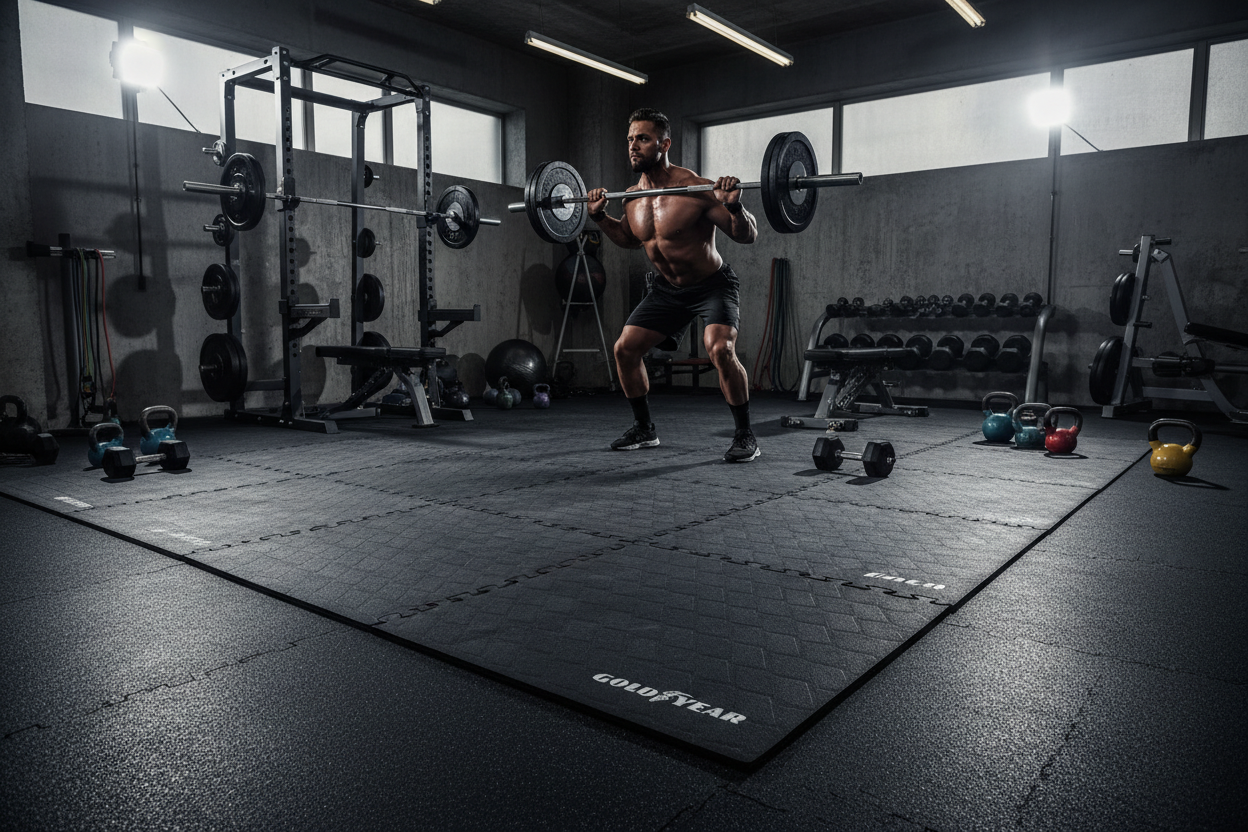
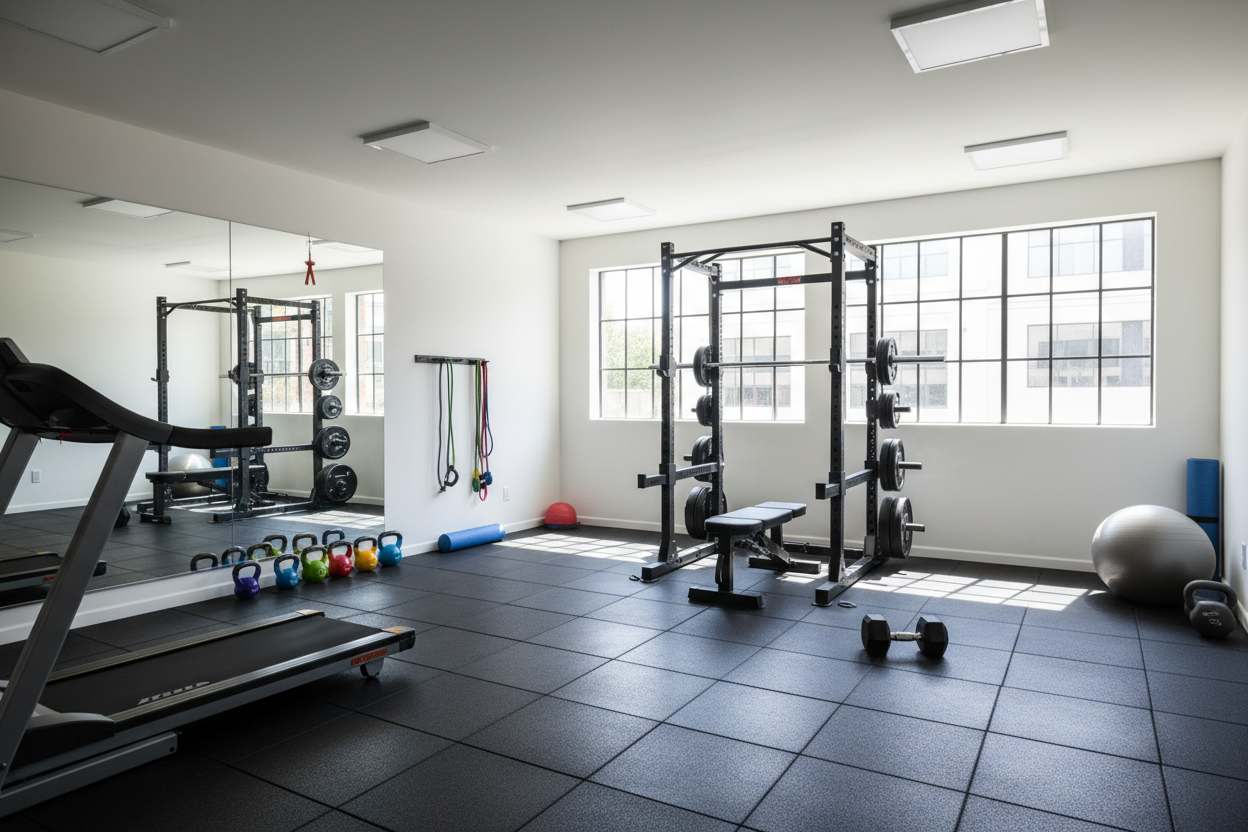
To safely execute these dynamic, multi-directional movements, you need a dedicated floor space that provides traction and shock absorption. I always tell my clients to invest in large exercise mats before buying expensive cardio equipment. When I tested barefoot lateral bounds on bare concrete versus a high-density foam mat, the difference in ankle and knee fatigue was night and day. A proper surface allows you to push off laterally without slipping or sending harsh impact forces directly into your joints. Once your floor space is dialed in, you have the perfect canvas for 3D training.
Deconstructing the Three Planes of Motion
To program an effective routine, you need to understand the three planes of motion. Think of these planes as invisible sheets of glass intersecting your body, dictating the directions in which you can move. A truly functional workout hits all three.
Sagittal Plane: The Foundation of Power
The sagittal plane divides your body into left and right halves. Movements in this plane occur forward and backward, or up and down. This is where you build your heavy, foundational power.
Exercises like goblet squats, Romanian deadlifts, push-ups, and bicep curls all live here. Everyday activities like walking, running, or bending down to tie your shoes are sagittal movements. You absolutely need this plane to build baseline strength, but treating it as the only way to train is a recipe for stiff, rigid joints.
Frontal Plane: Building Lateral Stability
The frontal plane divides your body into front and back halves. Any side-to-side movement happens in this plane. Training here is critical for lateral stability and injury prevention, particularly in the knees and hips.
Exercises include lateral lunges, side planks, lateral shoulder raises, and skater jumps. Think about shuffling sideways on a basketball court or stepping sideways over a puddle. Strengthening the frontal plane targets the often-weak glute medius and inner thigh muscles, which are vital for keeping your pelvis aligned and your lower back healthy.
Transverse Plane: Unlocking Rotational Core Strength
The transverse plane divides your body into top and bottom halves. This is the realm of twisting and rotation. Most athletic power, from swinging a golf club to throwing a punch, is generated in the transverse plane.
Exercises like Russian twists, cable woodchoppers, and rotational medicine ball throws build a bulletproof core. Because these movements require your feet to pivot and grip the floor aggressively, training on a heavy-duty 6x8 exercise mat is highly recommended to protect your home flooring and prevent your feet from slipping during fast, explosive twists.
Equipment vs. Bodyweight in 3D Training
You do not need a massive commercial gym setup to train in three dimensions. In fact, relying heavily on standard gym equipment can sometimes hinder your progress. If you look at most machines for a full-body workout, they lock you into a fixed, rigid path. A leg press or a Smith machine forces you to move exclusively in the sagittal plane, completely removing the need for your body to stabilize itself.
Bodyweight training is the perfect starting point for multi-planar workouts. Mastering a deep lateral lunge or a slow, controlled T-rotation push-up using just your bodyweight teaches your nervous system how to control your limbs in space. Once you own the movement, you can scale the resistance using free weights.
Dumbbells, kettlebells, and resistance bands are your best friends here. They allow for free, unrestricted movement across all planes. However, I will share one honest downside from my own garage gym testing: blocky adjustable dumbbells (like the popular 5-52.5 lb selectorized models) can feel incredibly clunky during rotational movements. When I try to do woodchoppers with a bulky adjustable dumbbell, the wide plates often catch on my forearms. For transverse movements, I usually prefer a single kettlebell or a resistance band anchored to a door frame, as they provide a much smoother range of motion.
Your Multi-Planar Total Body Circuit
Ready to put this into practice? Here is a routine I program for clients looking for the best full-body workout at home. It requires minimal equipment and hits all three planes of motion. Perform this as a circuit, working for 45 seconds on each exercise, followed by 15 seconds of rest. Complete 4 total rounds.
- Reverse Lunge to Overhead Press (Sagittal): Hold dumbbells at shoulder height. Step back into a lunge. As you stand back up, press the weights straight overhead. This builds vertical power and leg strength.
- Cossack Squats (Frontal): Stand with a very wide stance. Shift your weight to the right, bending your right knee while keeping your left leg totally straight and toes pointed up. Push back to center and alternate. This opens up tight hips and strengthens the groin.
- Half-Kneeling Woodchoppers (Transverse): Kneel on your right knee. Anchor a resistance band high on your right side (or hold a single dumbbell). Pull the weight diagonally down across your body toward your left hip, rotating your torso. Switch sides halfway.
- Skater Bounds (Frontal/Transverse): Leap laterally from your right foot to your left foot, sweeping your right leg behind you as you land. This builds explosive lateral power and ankle stability.
- Push-up to T-Rotation (Sagittal/Transverse): Perform a standard push-up. At the top, lift your right hand off the floor and rotate your entire torso to point your hand at the ceiling, forming a T shape. Return and alternate.
If you want to turn this single circuit into a long-term routine, check out this total body workout strategy to learn how to manipulate sets, reps, and tempos over a 12-week progression.
Conclusion: Train Like You Live
Building a home gym is an investment in your health, but the equipment you buy is only as good as the movements you perform with it. If you spend all your time moving straight up and down, you are leaving massive gaps in your fitness. By stepping out of your linear training habits and embracing the sagittal, frontal, and transverse planes, you build a resilient, capable body. Train like you live: dynamically, unpredictably, and in three dimensions.
Frequently Asked Questions
How many days a week should I do a 3D full-body workout?
For most home gym users, performing a multi-planar full-body routine 3 to 4 days a week is optimal. This allows for sufficient muscle stimulation while providing adequate recovery days in between sessions.
Can I build muscle without heavy barbells?
Absolutely. While heavy barbells are great for maximum absolute strength, muscle hypertrophy (growth) occurs when you take a muscle close to failure. You can easily achieve this using dumbbells, kettlebells, or challenging bodyweight variations across different planes of motion.
What is the best equipment for rotational exercises?
Resistance bands and cable pulleys are excellent for rotational movements because they provide constant tension throughout the entire twisting motion. Medicine balls are also fantastic for explosive transverse power, provided you have a solid wall to throw them against.