Glute Growing Exercises: Movement Frameworks, Tension Planes, and Stable Floor Setup
Targeted lower-body training requires a clear understanding of how different movement vectors stimulate the posterior chain. When choosing glute growing exercises, relying on random movements often leads to quad-dominant mechanics or excessive lower-back fatigue. Purposeful glute development depends on understanding how muscle fibers generate force across varying angles of hip extension, abduction, and external rotation.
Building an effective workout structure involves pairing multi-joint compound lifts with targeted isolation patterns while maintaining a safe, stable training environment. Understanding muscular tension curves, proper joint alignment, and setup mechanics helps you select the right movements for progressive results.
The Biomechanical Blueprint: Movement Vectors for Glute Growth
To determine what exercises grow glutes with the highest efficiency, it helps to categorize movements by their primary force vector. The gluteus maximus, medius, and minimus respond to tension delivered at distinct points along their range of motion. Structuring a training split around these mechanical vectors ensures balanced stimulation across the entire hip complex.
Horizontal Force Vectors: Peak Tension in the Shortened Position
Horizontal hip extension movements place the greatest mechanical tension on the gluteus maximus when the muscle is fully contracted (shortened). In these exercises, the line of resistance is perpendicular to the torso at full hip extension. This creates strong muscular activation at lockout without placing significant stretch-mediated stress across the hip joint, making them ideal for high-volume work and targeted contractions.
Lengthened Force Vectors: Peak Tension Under Deep Stretch
Lengthened movements challenge the glutes when the muscle fibers are fully stretched under load. Squats, lunges, and hinge variations deliver peak resistance during deep hip flexion. This deep stretch signals strong hypertrophic pathways, making lengthened lifts foundational exercises that grow your glutes over consistent training blocks. You can explore additional underlying physiological concepts in that glute growth guide.
Core Horizontal Exercises for Maximum Glute Loading
Horizontal hip extensions allow trainees to direct high levels of mechanical tension straight into the glutes with reduced spinal compression compared to heavy axial loading. Adding these movements provides reliable stimulus for trainees seeking dedicated grow glute exercises.
Barbell or Dumbbell Hip Thrusts
The hip thrust is a cornerstone horizontal movement. When performing thrusts, position the bench just below the lower edge of the shoulder blades. Keep the chin tucked and maintain a neutral ribcage throughout the movement to avoid arching through the lumbar spine. Drive through the mid-foot and heel, extending the hips until the thighs and torso form a straight line parallel to the ground. For structured progression techniques, consult our glute exercise growth guide.
Kas Glute Bridges and Mat-Based Floor Bridges
The Kas glute bridge modifies the standard hip thrust by limiting the range of motion purely to the top portion of hip extension. By eliminating momentum and quad assistance at the bottom of the rep, it keeps continuous tension on the gluteus maximus. Floor bridges, performed directly on a supportive exercise mat, provide an accessible variation that emphasizes posterior pelvic tilt and controlled muscular contraction without requiring a bench setup.
Lengthened Compound Movements for Structural Glute Development
Compound exercises that challenge deep hip flexion build unilateral balance and overall lower-body strength. These lifts represent foundational glute exercises for growth across both beginner and advanced training phases.
Deficit Reverse Lunges and Bulgarian Split Squats
Unilateral squat and lunge variations allow deep hip flexion while addressing left-to-right strength imbalances. To bias the glutes during Bulgarian split squats or reverse lunges, maintain a slight forward torso lean (roughly parallel to the shin angle) and keep the working shin relatively vertical. This geometry shifts mechanical demand away from the knee extensors and places it directly onto the working hip.
Romanian Deadlifts (RDLs) and B-Stance Hinges
The Romanian deadlift trains the glutes and hamstrings through a pure hip-hinge pattern. Push the hips backward horizontally as if reaching toward a wall behind you, keeping the knees soft but stationary. Stop the descent when the hips can no longer travel backward without rounding the spine. B-stance variations (staggered foot stance) allow lifters to focus tension onto one leg at a time while retaining the balance and load capacity of a bilateral lift.
Lateral and Abduction Movements for Complete Shape and Stability
While the gluteus maximus provides primary hip extension power, the gluteus medius and minimus stabilize the pelvis during single-leg stance and control hip abduction. Including lateral patterns creates well-rounded glute development and supports hip joint mechanics.
Cable and Banded Glute Kickbacks
Glute kickbacks target the upper fibers of the gluteus maximus and the gluteus medius. Setting the kickback line at a slight outward angle (roughly thirty degrees from center) aligns the movement with natural muscle fiber orientation. Focus on driving the movement with the hip rather than arching the lower back at peak extension. For a deeper breakdown of upper-glute emphasis, review our grow glutes that guide.
Seated and Standing Lateral Band Walks
Resistance band abduction exercises provide sustained tension across the abductor complex. Placing bands around the ankles or feet increases the lever arm, demanding greater activation from the hip stabilizers. Maintaining an athletic hinge and keeping the feet facing forward prevents the tensor fasciae latae from dominating the movement over the gluteus medius.
Structuring a Balanced Glute Growth Training Framework
Constructing an effective routine involves balancing movement patterns across weekly sessions rather than exhausting a single muscle group in one workout. A balanced training framework incorporates one heavy horizontal movement, one deep-stretch compound lift, and one lateral or accessory exercise within a session. For comprehensive routine design principles, explore our exercise glute growth guide.
- Horizontal Core: Hip thrusts or Kas bridges for peak shortened-range loading.
- Lengthened Compound: Romanian deadlifts, Bulgarian split squats, or deficit lunges for deep stretch stimulus.
- Abduction Accessory: Banded lateral walks, cable kickbacks, or seated abductions for stability and upper fiber work.
Home Training Space Setup: Flooring, Stability, and Joint Protection
Executing heavy lower-body lifts at home requires a secure, stable foundation. Improper footing or shifting equipment can alter joint alignment and compromise lifting mechanics during demanding sets.
Preventing Bench and Foot Slippage During Heavy Thrusts
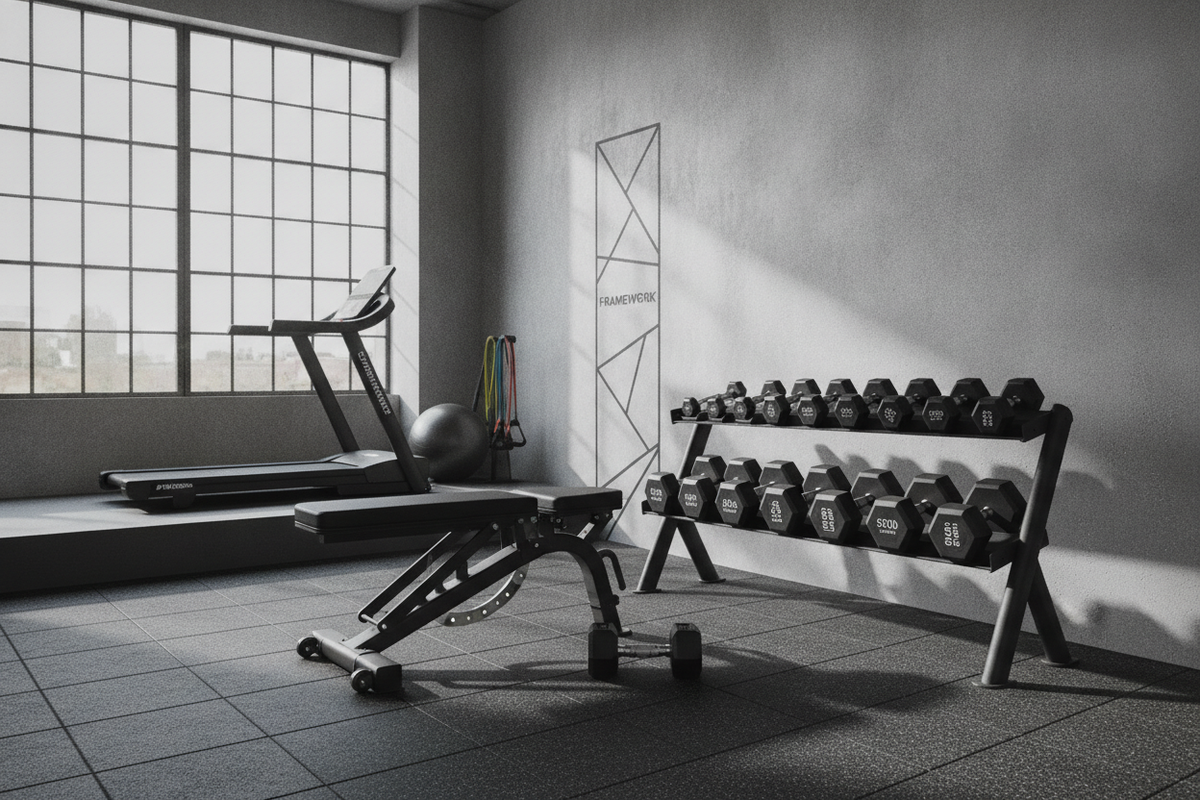
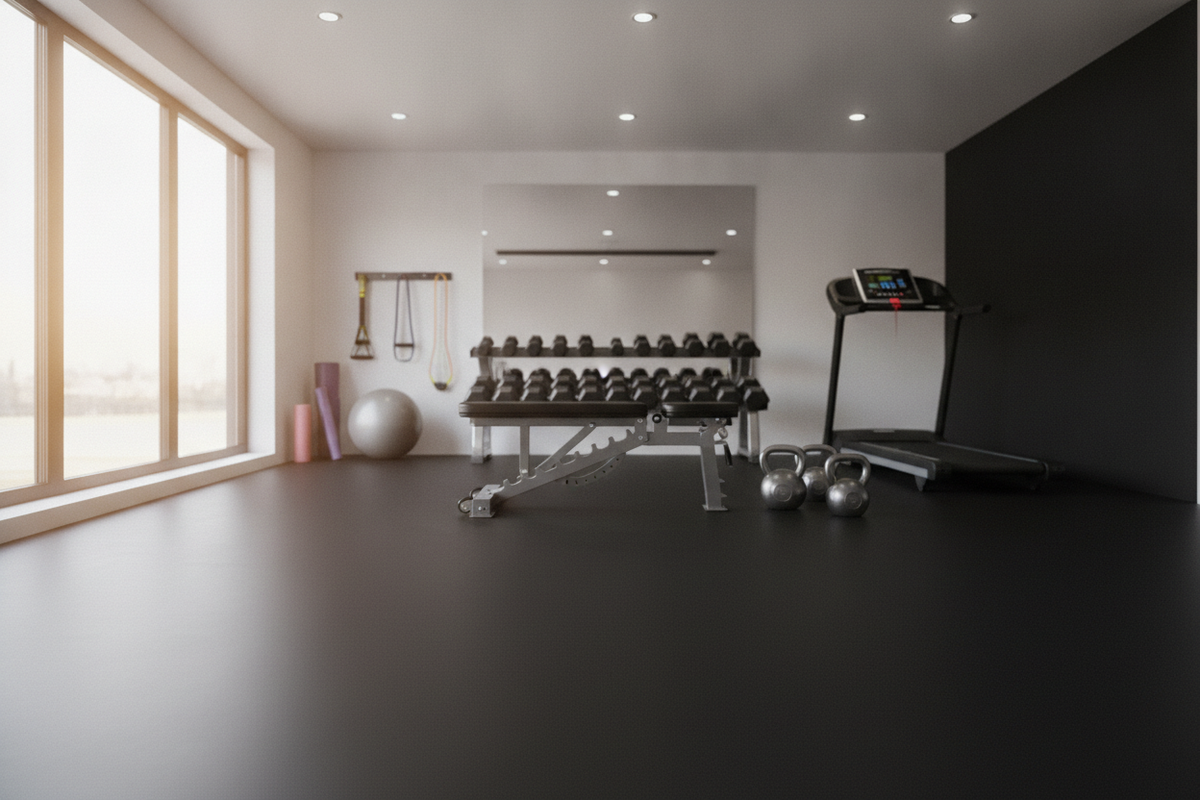
Hip thrusts generate significant backward horizontal force against the supporting bench. On slick hardwood, laminate, or standard residential carpet, benches can slide backward and feet can lose traction. Using dense, high-traction rubber gym matting creates a non-slip boundary that locks the bench in place and provides firm footing for heel drive during maximal contractions.
Impact Absorption and Floor Preservation for Weight Drops
Exercises like heavy Romanian deadlifts, dumbbell lunges, and kettlebell swings place repetitive pressure on residential subfloors. High-density workout flooring absorbs mechanical impact, protects underlying surfaces from dropped weights, and provides a stable, unyielding surface that ensures proper force transfer without squishing underfoot.