Transform Your Garage Into the Ultimate Home Gym Sanctuary
I remember the exact moment I decided to convert my cluttered garage into a functional workout space. It was a rainy Tuesday evening, and the thought of driving 20 minutes to my overcrowded commercial gym felt like an insurmountable hurdle. I looked at the dusty corner where my car wasn't even parked (it lived in the driveway) and saw potential instead of piles of forgotten belongings. That decision three years ago transformed not just my unused space, but my entire approach to fitness and consistency.
The garage offers what other home spaces can't: separation from daily life, durable flooring that can handle heavy weights, and typically fewer temperature concerns than a basement or spare bedroom. Unlike dedicating a living room corner to exercise, a garage gym creates a distinct mental and physical boundary between your home life and your training time. This psychological separation is more powerful than you might imagine—when I step through that side door into my gym, I'm there to work.
Planning Your Garage Gym Layout: Maximizing Every Square Foot
Before moving a single piece of equipment, take measurements and create a rough floor plan. Consider your primary training style—are you a weightlifter needing barbell clearance, a HIIT enthusiast requiring floor space, or a yoga practitioner prioritizing tranquility? Your answer will dictate your layout.
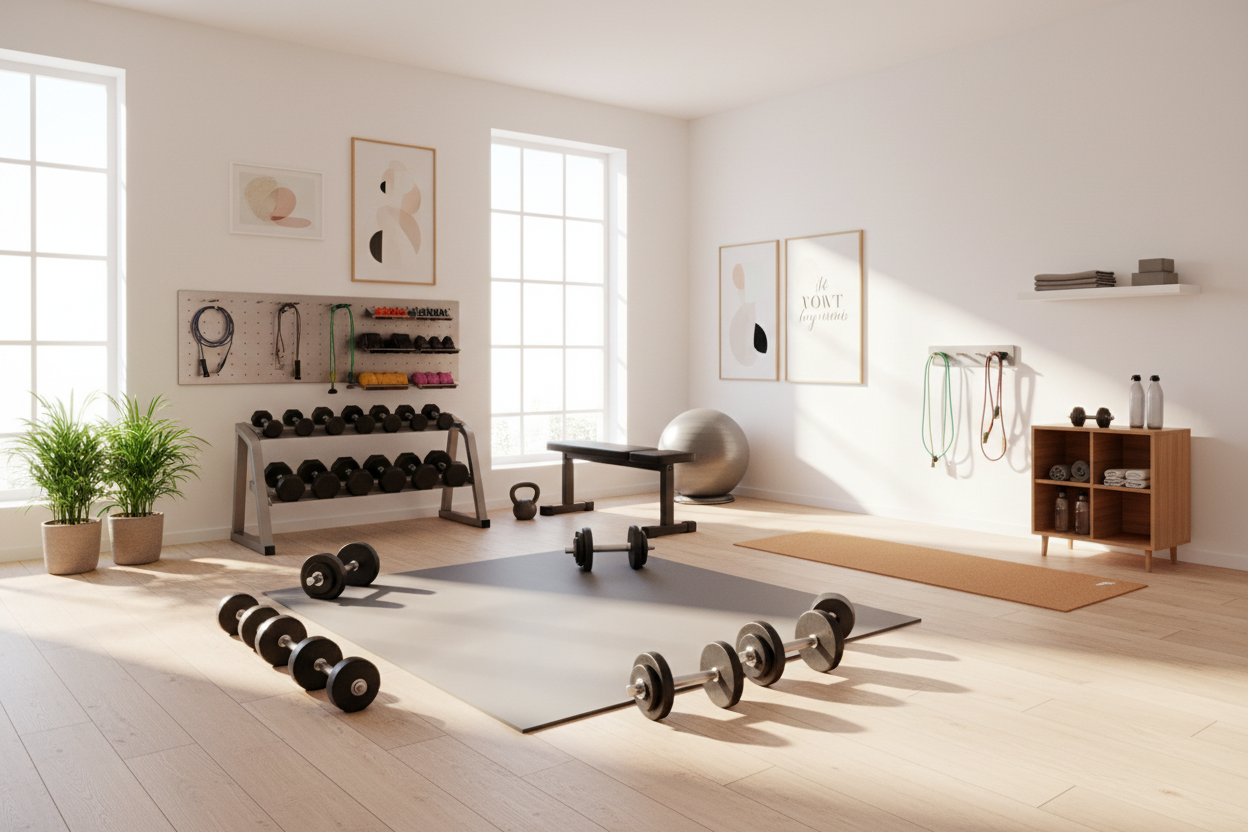
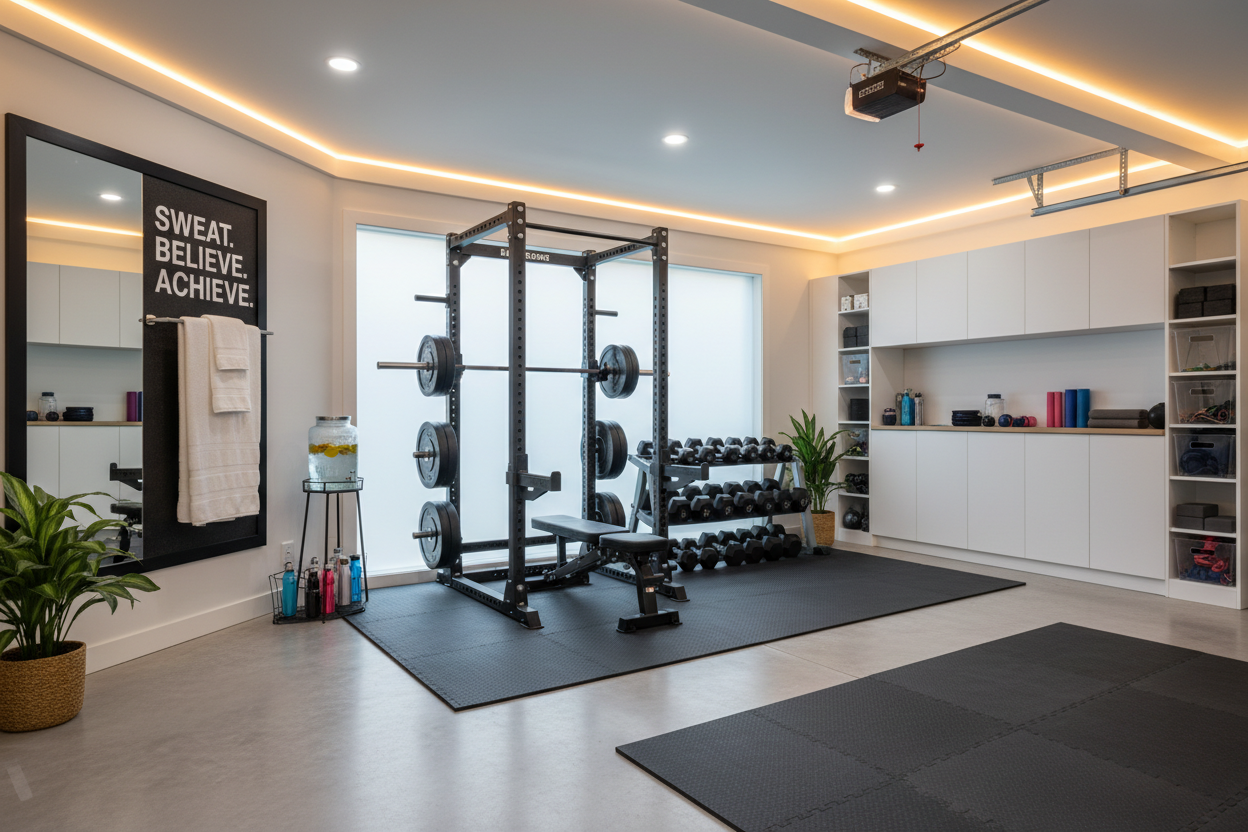
For small garage gyms, think vertically. Wall-mounted racks, shelving for weights, and ceiling hooks for resistance bands or jump ropes free up precious floor real estate. Leave a clear central area for dynamic movements and ensure there's adequate clearance around equipment. In my 200-square-foot space, I positioned my power rack against the longest wall, leaving the center open for deadlifts and functional training, with adjustable dumbbells stored neatly in a corner.
Essential Equipment Choices: Building Your Foundation
You don't need to replicate a commercial gym to have an effective workout space. Start with versatile equipment that offers the most bang for your buck and square footage. Based on my experience, these are the categories worth investing in:
Strength Training Foundation: A power rack or squat stand with pull-up bar provides endless exercise possibilities safely. Pair this with an adjustable bench and your choice of weights—bumper plates with a barbell for Olympic lifting, or adjustable dumbbells if space is extremely limited.
Cardio Considerations: While a treadmill might dominate a small garage, a rowing machine or assault bike can be stored vertically. For the ultimate space-saver, a jump rope and your own bodyweight provide phenomenal cardio options.
Flooring Fundamentals: Don't skip proper flooring. Interlocking rubber tiles protect your concrete floor from dropped weights, reduce noise, and provide cushioning. I learned this lesson the hard way after cracking a concrete patch with a dropped kettlebell—an expensive mistake that proper flooring would have prevented.
Climate Control and Comfort: Beating the Elements
Garages weren't designed for human comfort, but a few adjustments can make yours usable year-round. Insulating the garage door was my single most effective comfort upgrade, reducing both summer heat and winter chill dramatically. A simple space heater takes the edge off cold mornings, while a box fan or portable air conditioner manages summer workouts.
Ventilation matters too—I installed a louvered vent fan that automatically removes stale air and humidity. Proper lighting transforms the space from dungeon-like to energizing; bright LED shop lights provide excellent coverage for those early morning or late evening sessions when natural light is scarce.
Garage Gym Atmosphere: Creating Your Motivation Sanctuary
The aesthetics of your garage gym significantly impact your desire to use it regularly. Concrete walls and exposed insulation don't exactly inspire greatness. Here's where personalization creates powerful motivation:
Wall Treatments: Painting walls with bright, light-reflecting colors makes the space feel larger and more inviting. I used moisture-resistant semi-gloss paint in a light gray that hides scuffs while brightening the room. One accent wall with motivational decals or a bold color adds personality without overwhelming the space.
Practical Decor: Mirrors serve dual purposes—they allow you to check your form while making the space appear larger. I mounted a 4x6 foot mirror panel opposite my rack, which dramatically increased the perceived space. Pegboard organization systems keep accessories accessible while adding visual interest when arranged neatly.
The Audio Experience: A quality Bluetooth speaker that can overcome garage acoustics is non-negotiable. I mounted mine high in a corner where it's protected from dust and moisture but fills the space with motivating playlists.
Smart Storage Solutions: Taming the Chaos
Clutter is the enemy of both motivation and safety in a garage gym. After experimenting with various systems, I've found that designated homes for every item make cleanup effortless and workouts more efficient.
Wall-mounted weight plate trees keep heavy plates accessible but off the floor. Barbell holders mounted to the wall preserve precious floor space. For smaller items like resistance bands, lifting straps, and chalk, a tool chest with multiple drawers provides perfect organization. My favorite innovation was installing fold-down wall brackets for my plyometric box—it stores flat against the wall when not in use, disappearing completely.
Budget-Friendly DIY Garage Gym Ideas
Building a garage gym doesn't require a massive financial investment if you're willing to get creative. Search local marketplaces for used commercial equipment—often available at a fraction of the cost when businesses upgrade. Many of my best pieces came from gym closures or hotel renovations.
DIY projects can add personal touches while saving money. I built my own deadlift platform using plywood and horse stall mats for less than half the cost of pre-made options. PVC pipe storage solutions, sandbags from old army duffels, and even cinder block and wood shelving can be both functional and cost-effective.
Maintaining Your Garage Gym Sanctuary
Regular maintenance keeps your space inviting and extends equipment life. I dedicate ten minutes after each workout to wiping down equipment, returning weights to their proper places, and sweeping the floor. Monthly, I inspect equipment for wear, lubricate moving parts on my rack, and deep clean the flooring.
The humidity in a garage can affect equipment differently than indoors. I keep moisture-absorbing products in corners during humid months and regularly check for any signs of rust on metal surfaces, addressing them immediately with a wire brush and touch-up paint.
The Transformation Beyond the Space
What began as a practical solution to gym membership frustrations has become something far more significant. My garage gym has given me the consistency that eluded me for years. There are no excuses when your workout space is just steps away. The 30 minutes I used to spend commuting to the gym now becomes extra sleep or more time with my family.
More importantly, this space has become my sanctuary—a place where I can challenge myself physically while finding mental clarity. The investment has paid dividends in both physical health and daily stress management. Whether you're working with a single-car garage corner or transforming an entire three-car space, the principles remain the same: create a functional, inspiring environment that removes barriers between you and your fitness goals.
Your garage holds untapped potential. With thoughtful planning and execution, you can transform it from a storage area into the most rewarding room in your home—one that supports your health journey every single day.