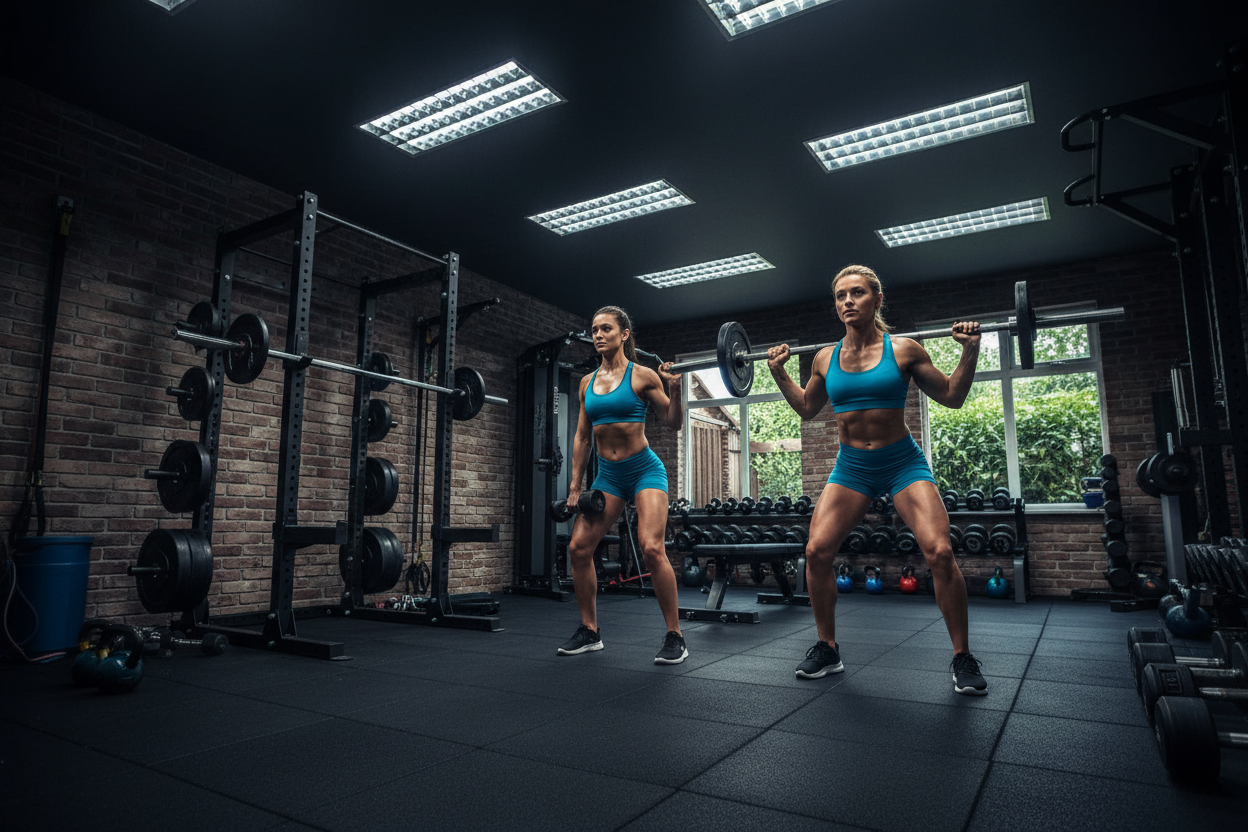
Full Body Workouts: Why Your Home Gym Split Is Failing
If you are juggling a busy career, family life, and trying to squeeze fitness into a cramped garage setup, the traditional five-day body part split might be setting you up for failure. When you miss a single day, the whole week's schedule falls apart. That is exactly why transitioning to full body workouts has become the gold standard for home gym owners looking to maximize results with minimal time.
Whether you are dealing with limited space, budget constraints, or just a severe lack of free time, rethinking how you train can completely transform your relationship with your home gym. Let us dive into how to structure your training for maximum efficiency and what equipment actually matters.
Key Takeaways
- Hitting all major muscle groups in a single session increases training frequency and drives better hypertrophy for home athletes.
- A well-structured total body workout focuses on heavy compound movements like squats, deadlifts, and overhead presses rather than isolation exercises.
- You only need minimal equipment—a solid power rack, a barbell, and adjustable dumbbells—to execute a complete routine in a small space.
- Training three days a week allows for optimal recovery while still providing enough stimulus to break through stubborn plateaus.
The Anatomy of a Total Body Workout
A true total body workout isn't about doing a dozen different isolation exercises; it is about efficiency. When you are training at home, you want to get the most bang for your buck out of every square foot of your gym and every minute of your session.
Essential Movement Patterns
To build a balanced physique and functional strength, your routine should cover the fundamental human movement patterns: push, pull, squat, and hinge. By focusing on these pillars, you ensure that no muscle group is left behind, creating a cohesive and highly effective training session without needing specialized machines.
Building Your Full Body Workout Plan
Creating a reliable full body workout plan requires the right balance of volume and intensity. You cannot go to failure on heavy squats and expect to hit heavy deadlifts in the same hour without burning out your central nervous system.
Equipment Essentials for a Full Workout
You don't need a commercial gym's worth of selectorized machines to get a full workout. A heavy-duty power rack with a pull-up bar, a standard 45lb Olympic barbell, and a reliable set of adjustable dumbbells (we recommend ones that go up to at least 80lbs) are your foundational pieces. This trifecta allows you to perform every compound lift safely, even if you are training solo in a low-ceiling basement.
Structuring Your Training Week
Consistency beats intensity when it comes to long-term gains. Scheduling your week properly prevents overtraining, keeps your joints healthy, and ensures your equipment is actually getting used.
The Full Body Workout of the Day
If you like variety, designing a full body workout of the day (WOD) keeps things fresh. For example, Monday might be a heavy squat and horizontal push focus, while Wednesday shifts to heavy deadlifts and vertical pulling. Alternating the emphasis keeps total body workouts engaging without sacrificing your recovery.
From Our Gym: Honest Take
When I first built my garage gym, I tried to replicate my commercial gym 'bro-split'—chest on Monday, back on Tuesday, and so on. But life gets in the way. If I missed Wednesday's leg day, my whole week was ruined. Switching to a full body routine changed everything.
Using a basic 3x3 power rack and a set of iron plates, I started hitting squats, bench, and barbell rows in the same 45-minute window. The honest caveat? The systemic fatigue is real. My grip strength was initially shot by the time I got to my pulling movements. I highly recommend investing in a good pair of figure-8 lifting straps to push through those heavy back-off sets when your forearms are fried. But after a month of adaptation, my strength numbers skyrocketed, and I was only training three days a week.
Frequently Asked Questions
Are total body workouts better than body part splits?
For most home gym owners, yes. They allow for greater flexibility. If you only manage to work out twice a week, you have still stimulated every major muscle group twice, whereas a missed split day means waiting a full week to train that muscle again.
How often should I do a full body workout?
Three days a week on non-consecutive days (e.g., Monday, Wednesday, Friday) is the sweet spot. This schedule gives your central nervous system and muscles 48 hours to recover and rebuild.
Can I get a full body workout with just dumbbells?
Absolutely. While a barbell allows for heavier absolute loads, adjustable dumbbells are incredibly versatile. You can perform goblet squats, Romanian deadlifts, floor presses, and bent-over rows to effectively hit every muscle group, making them perfect for apartment setups.