Full Body Workout for Over 40: Train Smarter, Not Harder
Hitting your fourth decade usually comes with a rude awakening: the five-day "bro splits" that worked in your twenties now leave your joints aching and your schedule stretched thin. Between career demands, family, and a changing metabolism, finding time to train efficiently is the ultimate home gym challenge.
That is exactly why a full body workout for over 40 is becoming the gold standard for sustainable strength. By hitting major muscle groups in a single session, you maximize metabolic conditioning, build functional strength, and actually give your body the time it needs to recover. In this guide, we will break down how to structure your routine and exactly what equipment you need to make it happen.
Key Takeaways
- Frequency is key: Aim for 2 to 3 sessions per week to optimize muscle protein synthesis without overtaxing your central nervous system.
- Compound focus: Prioritize multi-joint movements like squats, presses, and rows to get the most bang for your buck.
- Equipment efficiency: A basic home gym setup (rack, bench, barbell, or adjustable dumbbells) is all you need for a complete full body workout over 40.
- Recovery dictates progress: Mobility work and adequate rest days between sessions are non-negotiable for injury prevention.
Why Shift Your Training Style?
The Problem with Isolation Splits
When you isolate one muscle group per day, you inevitably create localized fatigue that takes days to clear. For a lifter over 40, this often translates to lingering soreness and joint inflammation. A full body approach spreads the volume across the week. Instead of doing 15 sets of chest on Monday, you do 5 sets of chest across three different days, keeping the muscle stimulated without the extreme wear and tear.
Embracing Compound Movements
At this stage in life, functional strength is paramount. You want to be able to lift heavy boxes, play with your kids, and move without pain. Multi-joint exercises—think goblet squats, trap bar deadlifts, and overhead presses—mimic real-life movements. They also trigger a better hormonal response, which naturally declines as we age.
Equipping Your Space for Success
The Core Essentials
You do not need a massive commercial setup to execute a highly effective routine. In fact, a minimalist approach often yields the best results. A sturdy power rack or half rack with safety pins is your foundation. Pair that with an adjustable bench and a high-quality barbell, and you unlock hundreds of exercise variations.
Space-Saving Alternatives
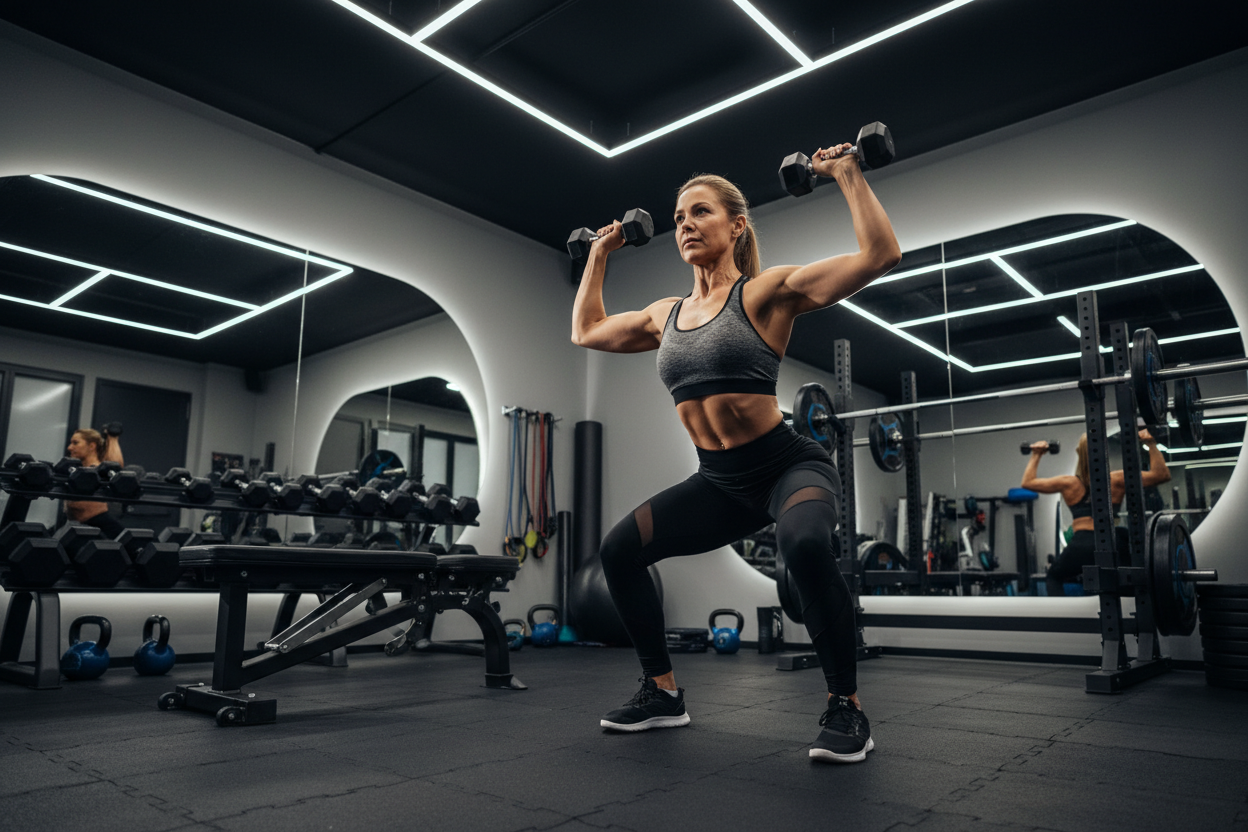
If you are working with a tight basement corner or a shared garage, adjustable dumbbells are a game-changer. They provide the necessary resistance for heavy pressing and pulling while occupying virtually zero floor space. Add some resistance bands for joint-friendly accessory work, and your home gym is complete.
From Our Gym: Honest Take
When I hit 42, I stubbornly tried to maintain my old high-volume bodybuilding split. The result? A nagging rotator cuff issue and chronic lower back stiffness. I finally swallowed my pride and transitioned to a 3-day full body routine using just my garage half-rack, a barbell, and some adjustable dumbbells.
The transition wasn't perfectly smooth. At first, I missed the "pump" of doing endless isolation curls. But within a month, my joint pain subsided, my functional strength skyrocketed, and I actually looked forward to my workouts again. One caveat: I found that I absolutely needed a solid 10-minute dynamic warm-up before touching the barbell—something I used to skip entirely. The aggressive knurling on my power bar felt great for heavy rows, but I had to be mindful of my grip fatigue by the end of a full body session. Overall, it was the smartest training pivot I've ever made.
Frequently Asked Questions
Is a full body workout over 40 better than a split routine?
For the majority of people, yes. It allows for a higher frequency of muscle stimulation with lower daily volume, which is ideal for aging joints and optimizing recovery time.
What equipment is best for this type of training?
A power rack, a barbell with bumper plates, and an adjustable bench are the holy trinity. If space or budget is tight, a premium pair of adjustable dumbbells and resistance bands can absolutely get the job done.
How many days a week should I train?
Three days a week on non-consecutive days (e.g., Monday, Wednesday, Friday) is the sweet spot. This provides 48 hours of recovery between sessions, which is critical for tissue repair and central nervous system recovery.