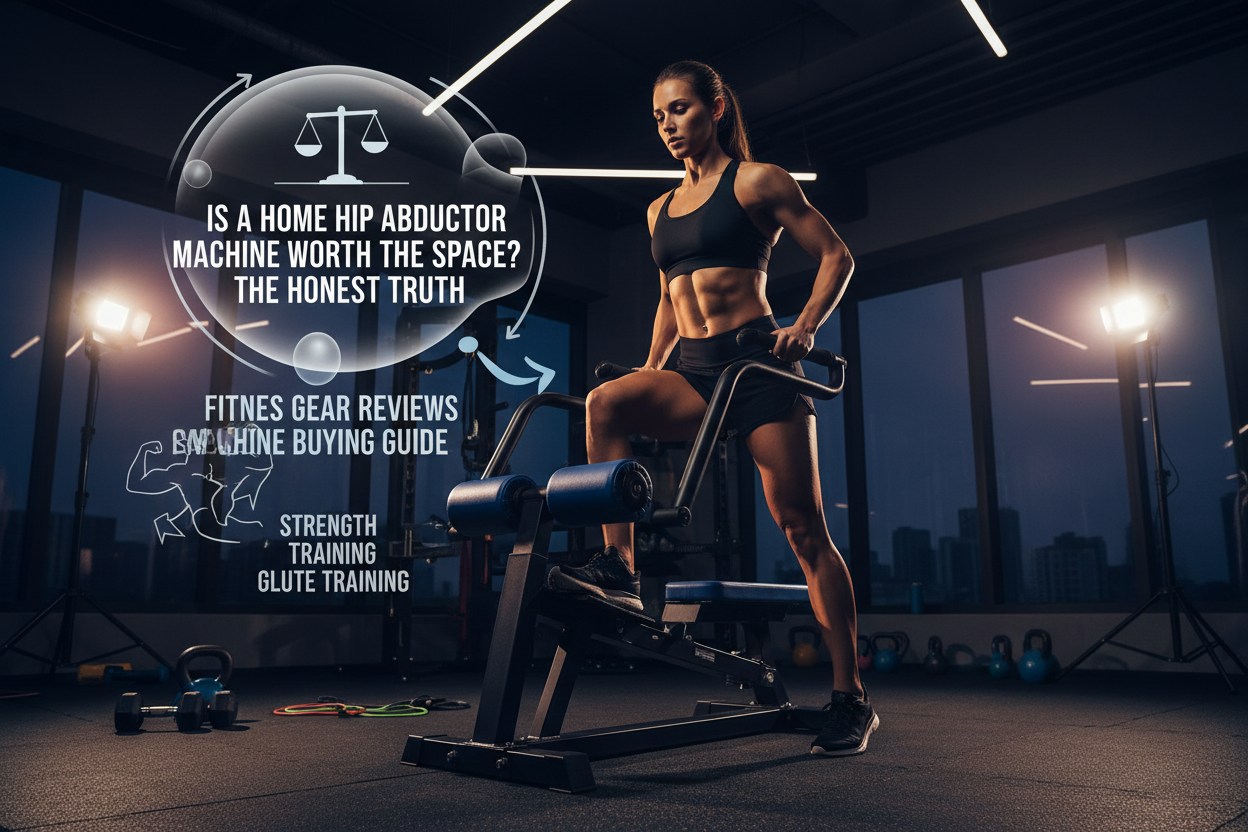
Is a Home Hip Abductor Machine Worth the Space? The Honest Truth
You know the feeling. You walk into the gym, ready to hit your glutes, but the one machine everyone fights over is occupied. It’s the standard scenario that drives many lifters to search for a home hip abductor machine. But unlike a set of dumbbells or a bench, this is a specialized piece of kit. It takes up floor space, costs a decent chunk of change, and serves a very specific purpose.
Is it actually worth dragging one into your garage or spare room? Or should you stick to resistance bands? Let's break down the biomechanics, the costs, and the reality of owning one.
Key Takeaways
- Dual Functionality is King: For home gyms, always prioritize an abductor adductor machine for sale over a single-function unit to maximize ROI.
- Space vs. Stability: Compact "home" versions often sacrifice weight stack smoothness; look for units with a wide enough base to prevent wobbling during heavy sets.
- The Load Curve: Machines provide constant tension at the peak contraction (shortened position) that bands cannot replicate.
- Budget Strategy: A used hip abductor machine for sale from a closing commercial gym is often better value than a brand new, flimsy budget model.
Why Dedicate Space to a Hip Abductor Machine at Home?
The primary argument against a home hip abduction machine is usually versatility. Why buy a machine that does one thing? However, if you are training for hypertrophy (muscle growth) or rehabbing hip instability, the "one thing" it does is irreplaceable.
Free weights and bands have a strength curve that drops off. When you use a band for clamshells, the tension is highest at the end but slack at the start. A proper abductor machine at home keeps tension constant throughout the range of motion. This mechanical tension is the primary driver of growth for the gluteus medius and minimus.
Buying Guide: Sifting Through the Options
When you start looking for a hip abductor machine for sale, the market can get confusing. Here is how to filter the junk from the gems.
1. The "Combo" Unit Necessity
Unless you live in a warehouse, do not buy a single-function machine. Look specifically for an abductor adductor machine for sale. These units have rotating pads that allow you to work the outer glutes (abduction) and the inner thighs (adduction) on the same seat. A home adductor machine is vital for pelvic stability, and getting both functions in one footprint saves you about 15 square feet of space.
2. Weight Stack vs. Plate Loaded
You will see two main types when checking the hip abductor machine price:
- Selectorized (Weight Stack): These are convenient and allow for quick dropsets. However, they are heavy to ship and harder to assemble.
- Plate Loaded: You load your own weight plates onto pegs. These are generally cheaper and easier to maintain. If you already own olympic plates, a plate-loaded home abductor machine is usually the smarter financial move.
3. The "Used" Market Goldmine
Commercial gym equipment is built to last for decades. Often, a used hip abductor machine for sale from a brand like Life Fitness or Cybex will cost the same as a brand-new, flimsy residential model. Check Facebook Marketplace or liquidation auctions. The padding might be torn, but the steel frame and cam mechanics are usually bulletproof.
Common Pitfalls with Home Units
Not all equipment is created equal. Many cheap hip abductor machine for home listings on Amazon feature poor ergonomics. The most common issue is the range of motion. Budget machines often don't open wide enough for taller users or close tight enough for smaller users to get a full stretch.
Additionally, watch out for the "cable drag." On a low-quality abductor machine for sale, you might feel a gritty friction in the movement rather than a smooth glide. This friction kills the mind-muscle connection because you are fighting the machine's rust, not the weight.
My Training Log: Real Talk
I want to share a specific detail from my own experience bringing a plate-loaded abductor/adductor combo into my garage gym. On paper, it looked perfect. But the first time I loaded it up with 45lb plates for a heavy set, I noticed something the product photos didn't show: the shin pad rotation.
On commercial gym machines, the pads swivel automatically as your legs open. On the budget unit I bought, the pads were fixed on a stiff bolt. As I pushed my legs out, the leather didn't roll with me; it dragged across my skin. By the third set, the friction was burning my shins more than the weight was burning my glutes. I actually had to dismantle the pad arm and grease the bolt heavily with lithium grease just to get it to pivot smoothly.
Also, don't underestimate the footprint. I measured the floor space, but I forgot to account for the "swing." When the legs are fully open, the machine is three feet wider than when it's at rest. I nearly smashed a hole in my drywall during my first workout. Measure the active footprint, not just the static dimensions.
Conclusion
If your goal is serious glute development or correcting hip imbalances, a home hip abductor machine is a luxury that pays off. It offers stability and load capacity that bands simply can't match. Just ensure you opt for a dual-function unit to justify the floor space, and don't be afraid to buy a rugged used commercial unit over a shiny, flimsy residential one.
Frequently Asked Questions
Is a home hip abductor machine effective for glute growth?
Yes, it is highly effective because it isolates the gluteus medius and minimus. Unlike squats or lunges, which involve the quads and hamstrings, this machine places direct tension on the side glutes without systemic fatigue.
What is the difference between an abductor and adductor machine?
The difference lies in the direction of resistance. An abductor machine resists your legs moving outward (working the outer hips/glutes). An adductor machine resists your legs squeezing inward (working the inner thighs/groin). Most home units combine both functions.
How much does a decent hip abductor machine price run?
For a new residential plate-loaded unit, expect to pay between $400 and $800. Selectorized (weight stack) units usually start around $1,200. Used commercial units can often be found in the $500 to $1,000 range depending on condition.