
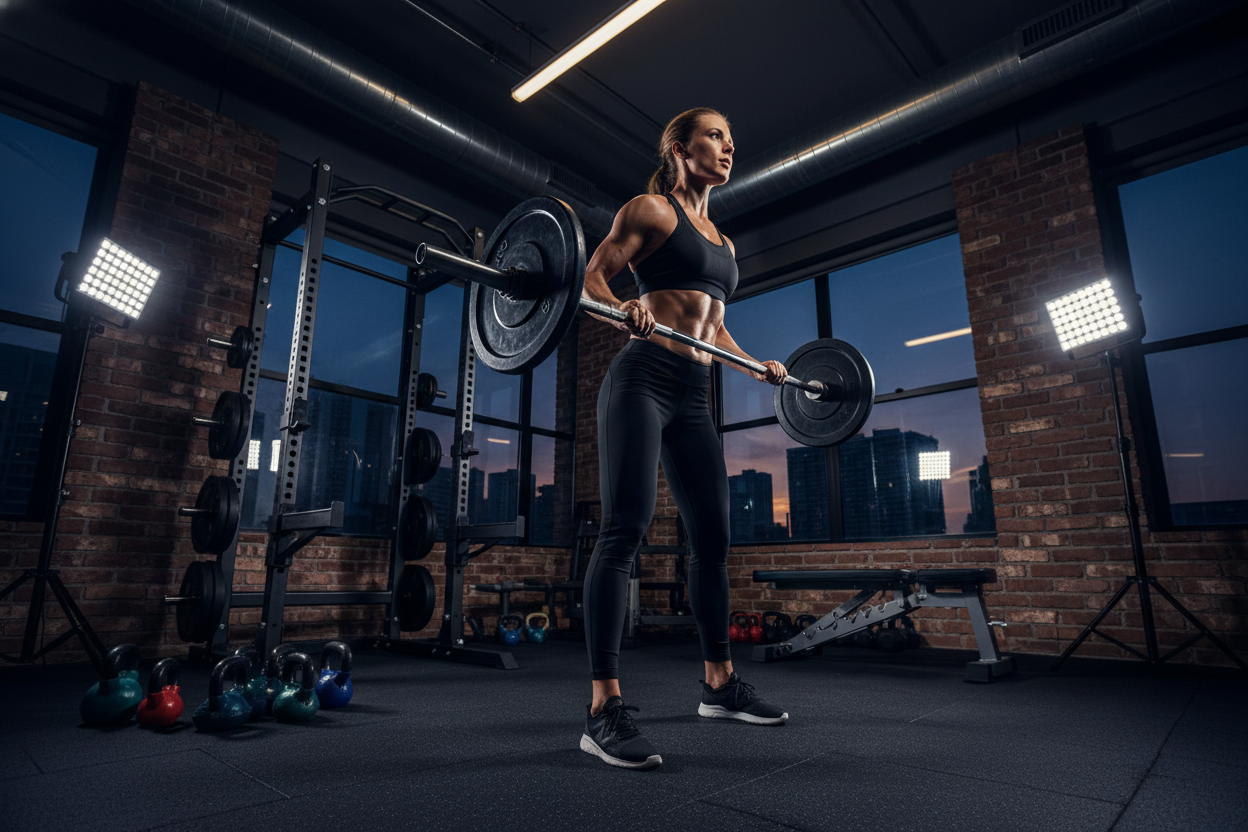
If you are juggling a busy schedule, spending five days a week in your home gym isolating different muscle groups can quickly lead to burnout. You hit a plateau, your expensive equipment sits gathering dust, and your progress stalls out. The solution isn't adding more days to your calendar—it is optimizing the time you already have. Implementing a well-structured full body strength routine is the most efficient way to stimulate muscle growth, build raw power, and get the absolute most out of your home gym setup.
Whether you are working with a premium six-post power rack or a compact adjustable dumbbell set, shifting your focus to compound movements can completely transform your physique and your training efficiency. Here is everything you need to know to program the ultimate home workout.
Key Takeaways
- Frequency Over Volume: Training 3 days a week allows for optimal recovery while hitting every muscle group multiple times.
- Compound Focus: A true whole body strength workout relies on multi-joint movements like squats, deadlifts, and presses.
- Minimal Gear Required: You can execute a highly effective full body weight training program with just a barbell, plates, and a reliable rack.
- Progressive Overload: Consistently adding weight or reps is easier to track when you repeat full body training exercises frequently.
Building the Ultimate Total Body Strength Workout
Core Movement Patterns
To design an effective total body strength training workout, you must step away from isolation exercises and focus on foundational human movements. Every session should include a squat, a hip hinge, a horizontal push, a vertical push, and a pulling motion. By structuring your full body weightlifting workouts around these pillars, you ensure no muscle group is left behind.
Balancing Volume and Intensity
One of the biggest mistakes people make when starting a full body workout program for strength is doing too much too soon. Because you are hitting the entire body in one session, you do not need five different chest exercises. Stick to one or two heavy, compound movements per muscle group. This approach makes your weight training full body workout highly efficient, allowing you to get in, hit the heavy weights, and get out in under an hour.
Gearing Up Your Home Gym for Success
The Power Rack and Barbell Foundation
When it comes to executing a full body heavy weight workout safely at home, your equipment matters. A sturdy power rack with reliable safety pins or straps is non-negotiable if you are training alone. Pair this with a high-quality Olympic barbell and an adjustable bench, and you have the ultimate setup for whole body weight training exercises.
Space Considerations for North American Homes
Not everyone has a sprawling two-car garage. If you are setting up in a basement or spare bedroom, clearance is crucial. A standard barbell requires at least 8 feet of side-to-side clearance to load plates comfortably. If you lack the ceiling height for standing overhead presses during your total body lifting workout, a seated utility bench and heavy dumbbells are excellent space-saving alternatives that still deliver a brutal body workout training stimulus.
From Our Gym: Honest Take
When I first transitioned my garage gym from a traditional bodybuilding bro-split to a 3-day full body weight training schedule, the learning curve was real. Using my standard 20kg barbell with aggressive center knurling made my heavy back squats feel incredibly secure, but I quickly realized I needed high-quality bumper plates. Pulling heavy deadlifts three times a week on raw concrete was taking a toll on my floor and my equipment.
One minor caveat: a true full body lift workout is incredibly demanding on your central nervous system. I found that I had to upgrade to a thicker, denser bench pad (at least 2.5 inches thick) to better support my shoulders during high-frequency pressing. The investment was absolutely worth it—my numbers skyrocketed, and I actually spend less total time in the gym now.
Frequently Asked Questions
How often should I do a full body weight lift workout?
For most home gym owners, 3 days a week on non-consecutive days (e.g., Monday, Wednesday, Friday) is the sweet spot. This allows for 48 hours of recovery between full body strength workouts, which is essential for muscle repair and central nervous system recovery.
What is the best equipment for full body weightlifting exercises?
The core essentials are a power rack (or half rack), an adjustable weight bench, an Olympic barbell, and enough weight plates to challenge you. If space is tight, a set of heavy adjustable dumbbells can also facilitate a highly effective weights full body workout.
Can beginners handle a total body lifting workout?
Absolutely. In fact, a total body weight training workout is widely considered the best approach for beginners. It allows novice lifters to practice the fundamental full body lift exercise patterns frequently, leading to faster neurological adaptations and quicker strength gains.


