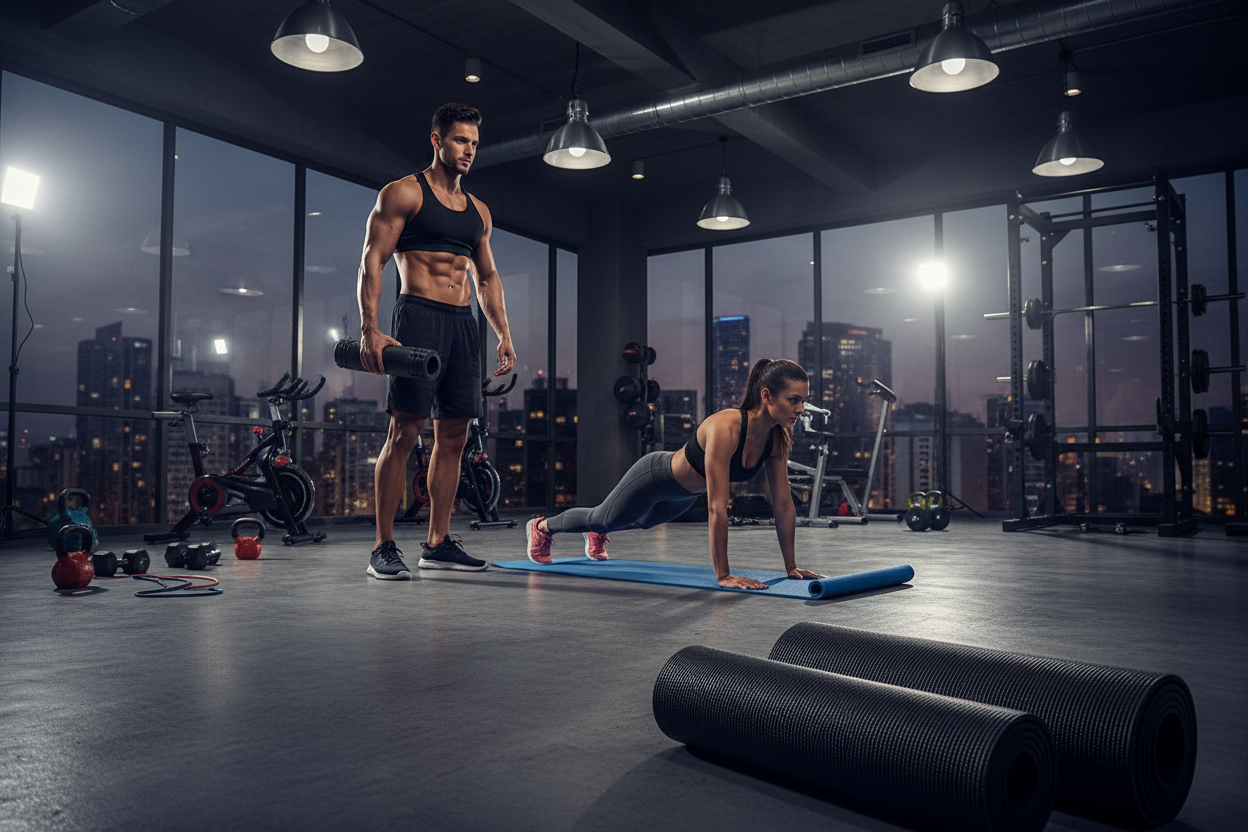
Full Body Exercises Routine: Master Your Home Gym
If you're juggling a busy schedule and a compact garage gym, piecing together the perfect full body exercises routine can feel overwhelming. Many home gym owners fall into the trap of overcomplicating their training, trying to replicate a commercial gym split with limited equipment. The result? Frustration, workout plateaus, and gear that gathers dust.
Whether you are working out in a spacious basement or a tight apartment corner, dialing in your programming and equipment is the key to consistent gains. In this guide, we'll break down exactly how to structure your workouts and choose the right gear to maximize your results.
Key Takeaways
- Focus on compound movements (squat, hinge, push, pull) to get the most out of your full body exercises routine.
- Adjustable dumbbells and a sturdy bench are the most space-efficient investments for home gyms.
- A well-structured total body workout routine requires training 3 to 4 days per week with adequate rest.
- Investing in versatile, durable equipment prevents the need for constant upgrades as you get stronger.
Equipment Essentials for Your Home Gym
You don't need a sprawling facility to get an elite workout. The right gear allows you to execute a highly effective full body workout training protocol without sacrificing square footage.
Adjustable Dumbbells vs. Fixed Sets
For most North American home gyms, space is a premium. A high-quality set of adjustable dumbbells is the undisputed champion of home fitness. They allow you to transition seamlessly from heavy goblet squats to lighter lateral raises. Look for sets with a robust locking mechanism and a weight capacity that gives you room to grow—ideally up to 80 or 90 pounds per hand.
The Power of a Versatile Bench
An adjustable flat-incline-decline (FID) bench opens up dozens of movement variations. When shopping, prioritize weight capacity (aim for at least 600 lbs) and pad width (10-12 inches is standard for shoulder stability during presses). A bench with transport wheels is crucial if you need to roll it out of the way after your workout.
Structuring Your Total Body Workout Routine
Having the gear is only half the battle; knowing how to use it dictates your success. A solid total body workout routine should hit every major muscle group in a single session.
The Core Movement Patterns
To keep things efficient, build your sessions around fundamental movement patterns rather than isolating specific muscles. Pair a squat variation (like a dumbbell front squat) with a horizontal pull (bent-over rows). Follow that with a hinge (Romanian deadlifts) and a vertical push (overhead presses). This framework ensures balanced muscular development and keeps your heart rate elevated.
Space Planning for a Full Body Fitness Routine
Nothing kills the momentum of a great workout like banging your barbell into a wall or tripping over plates. If you're setting up in a standard single-car garage or spare bedroom, you need to map out your footprint.
Clearance and Flooring
For a dynamic full body fitness routine, you need a minimum clear footprint of 6x8 feet. If you are incorporating overhead presses, measure your ceiling height—most standard barbells require at least 84 inches of vertical clearance when pressed by someone of average height. Don't skip on flooring; 3/4-inch horse stall mats are the gold standard for protecting your foundation and dampening noise.
From Our Gym: Honest Take
When I first shifted to a home-based full body exercises routine, I tried to do everything with a cheap set of spin-lock dumbbells and a wobbly bench. Big mistake. Transitioning weights between heavy Bulgarian split squats and chest presses took forever, and my workouts dragged on.
Upgrading to a premium set of quick-adjust, cradle-style dumbbells completely changed my training flow. My rest periods actually became rest periods, not plate-math puzzles. One honest caveat: these adjustable dumbbells are longer than standard hex dumbbells, so they can feel slightly clunky during certain movements like bicep curls or tricep kickbacks. However, the sheer amount of time and space saved makes them an absolute necessity for my setup.
Frequently Asked Questions
How often should I perform a full body exercises routine?
For most lifters, 3 days a week on non-consecutive days (e.g., Monday, Wednesday, Friday) is the sweet spot. This allows for adequate muscle recovery while providing enough stimulus for growth.
What is the best equipment for a total body workout routine on a budget?
If you are on a strict budget, start with a pair of high-quality resistance bands and a kettlebell. As your budget allows, graduate to adjustable dumbbells and an FID bench for maximum versatility.
Can I build serious muscle with a home full body fitness routine?
Absolutely. Muscle growth (hypertrophy) relies on progressive overload—consistently challenging your muscles with more weight or reps over time. As long as your home equipment allows you to increase resistance, your body will adapt and grow.