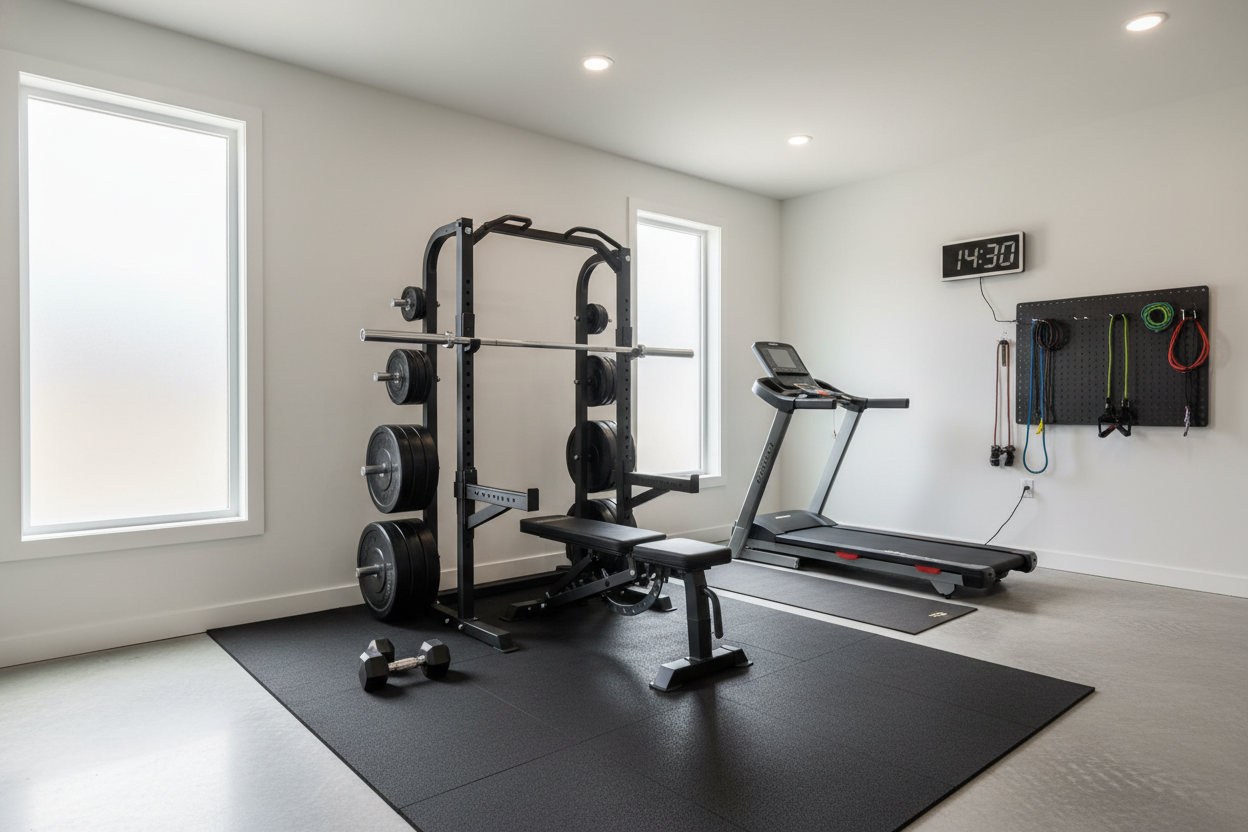
Full-Body Exercise Moves: The Complete Home Gym Training Guide
Struggling to find the time to isolate every muscle group during your busy week? You aren't alone. One of the biggest hurdles home gym owners face is balancing a tight schedule with meaningful strength progression. That is exactly where mastering full-body exercise moves changes the game.
Instead of splitting your week into endless 'arm days' or 'leg days,' integrating comprehensive movements allows you to stimulate maximum muscle fiber, burn more calories, and get out of the garage gym faster. In this guide, we'll break down how to optimize your home equipment for these demanding routines and build a highly efficient training space.
Key Takeaways
- Efficiency: Compound movements target multiple joints, cutting workout times in half.
- Equipment Needs: You do not need a commercial facility; a barbell, rack, and kettlebells are plenty.
- Space Requirements: Most dynamic full-body routines require an 8x8 foot clearance.
- Adaptability: Easily scale movements from beginner to advanced by adjusting load and tempo.
The Anatomy of Effective Full-Body Training
When we talk about maximizing your home gym, the focus should always be on versatility. Equipment that only serves one function wastes precious square footage.
Compound Movements vs. Isolation
Isolation exercises have their place, but they require highly specialized, space-consuming machines. Conversely, compound lifts like squats, deadlifts, and overhead presses are the foundation of any solid home training program. They demand core stabilization and recruit multiple muscle groups simultaneously.
Equipping Your Space for Full-Body Movement Exercises
To safely execute full-body movement exercises, your gear needs to be durable, versatile, and appropriately sized for your environment.
The Power Rack: Your Training Hub
A high-quality power rack is non-negotiable for heavy barbell work. Look for a rack with 3x3-inch, 11-gauge steel uprights and standard 5/8-inch or 1-inch hole spacing. This ensures stability during explosive movements and allows for attachments like pull-up bars and landmines, which are crucial for total-body engagement.
Kettlebells and Adjustable Dumbbells
If you are working with a tight spare bedroom setup, adjustable dumbbells and a few heavy kettlebells are your best friends. They allow for thrusters, snatches, and goblet squats without requiring the footprint of a 7-foot Olympic barbell.
From Our Gym: Honest Take
Frequently Asked Questions
Can I build muscle with full-body exercise moves?
Absolutely. By hitting major muscle groups 2-3 times a week with adequate resistance and progressive overload, you create an optimal environment for muscle hypertrophy and strength gains.
How much space do I need for a full-body home gym?
At minimum, an 8x8 foot space is recommended. This provides enough clearance for a standard power rack, a 7-foot barbell, and a small buffer zone for dynamic kettlebell or dumbbell movements.
How often should I perform full-body routines?
For most home gym athletes, 3 days a week on non-consecutive days (e.g., Monday, Wednesday, Friday) is ideal. This allows for intense training sessions while providing adequate central nervous system recovery.