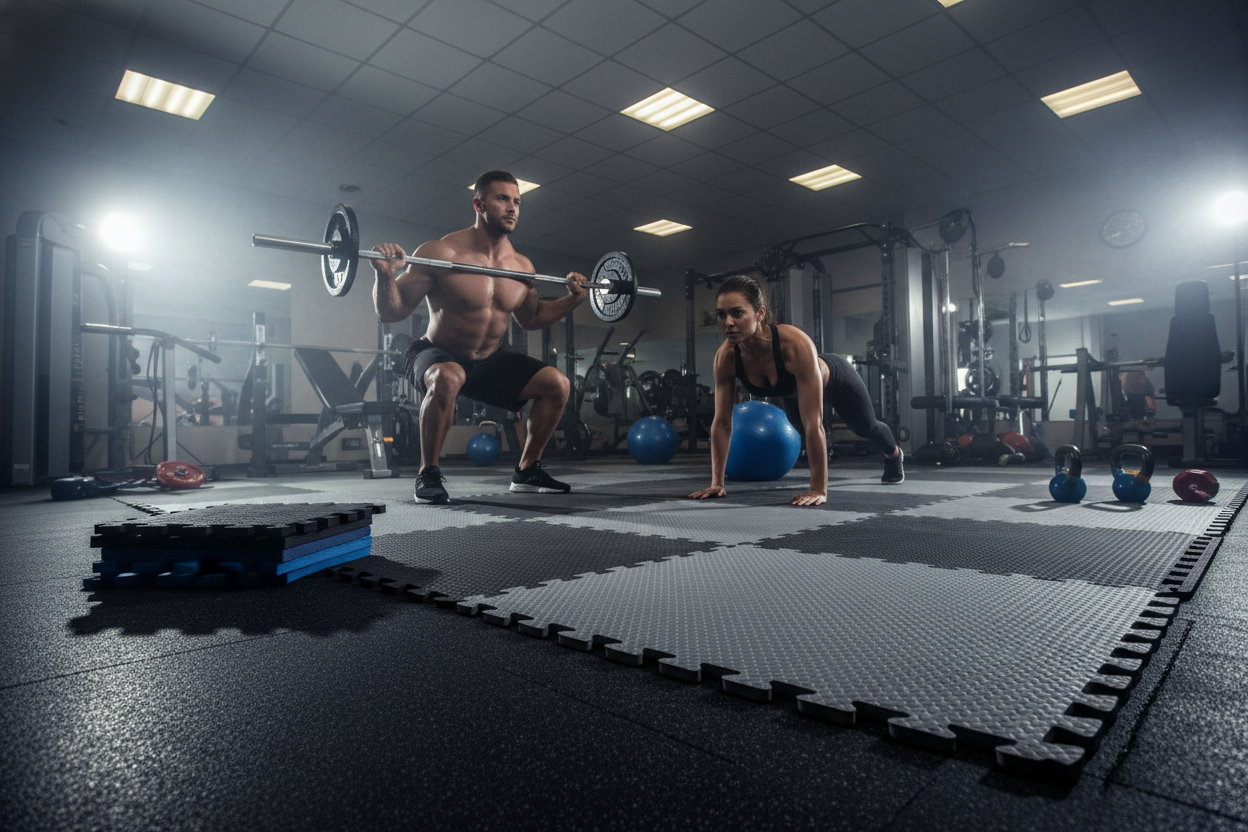
Foam Floor for Home Gym: The Truth About Cheap Tiles
There is a distinct, heart-stopping sound when a 50-pound dumbbell slips from your grip and crashes directly onto bare concrete. Beyond the immediate fear of a cracked foundation, training on hard, unforgiving surfaces wreaks havoc on your joints and equipment over time. If you are building a personal workout space, your first line of defense is your flooring.
Investing in a high-quality foam floor for home gym setups isn't just about making the room look like a professional studio—it is about safety, noise reduction, and equipment longevity. But before you buy the cheapest multi-colored puzzle mats you can find online, you need to understand the critical differences in density, thickness, and material. In this guide, we will break down exactly what you need to look for so you only have to buy your flooring once.
Key Takeaways
- Thickness matters: Aim for at least 3/4-inch thickness if you plan to use heavy dumbbells or kettlebells.
- Density over depth: High-density EVA foam resists compression under heavy racks better than standard soft foam.
- Subfloor prep is crucial: Always sweep and dry your concrete or wood subfloor before laying down mats to prevent mold and slipping.
- Interlocking edges: Look for precision-cut puzzle edges to ensure the tiles don't separate during lateral movements like lunges or skater jumps.
Decoding Density and Thickness
Not all foam is created equal. The biggest mistake home gym owners make is confusing playroom foam with gym-grade foam.
High-Density vs. Standard EVA
When shopping for a foam floor for gym environments, you will frequently see the acronym EVA (Ethylene-Vinyl Acetate). Standard EVA is soft and squishy—great for yoga or stretching, but terrible for supporting a 300-pound squat rack. High-density EVA foam is manufactured to be much firmer. It provides enough yield to cushion your knees during burpees, but remains rigid enough to keep your ankles stable during heavy lifts.
The 3/4-Inch Rule
If your workouts consist solely of bodyweight exercises and light resistance bands, a 1/2-inch mat will suffice. However, if you are dropping dumbbells or using a heavy bench, 3/4-inch to 1-inch thick tiles are non-negotiable to protect your subfloor from impact damage.
Sizing Up Your Space
One of the biggest advantages of using easy home interlocking floor mats is their modular adaptability. Whether you are outfitting a sprawling two-car garage or a tight 10x10 spare bedroom, you can customize the footprint without dealing with heavy, cumbersome 100-pound rubber stall mats.
Expansion and Edge Pieces
Foam naturally expands and contracts with temperature changes, especially in non-climate-controlled spaces like garages or unfinished basements. Leave a 1/4-inch gap between the edge of your mats and the wall to prevent the floor from buckling in the summer. Additionally, ensure your kit comes with straight edge borders for a clean, trip-free finish at the doorways.
Can It Handle Heavy Lifting?
A common misconception is that a thick foam mat for gym floor use can replace a dedicated weightlifting platform. While high-density foam is incredibly durable, dropping a loaded barbell with iron plates from waist height will eventually punch through EVA foam. If Olympic weightlifting or heavy deadlifting is part of your routine, you should lay a piece of 3/4-inch plywood over your foam in your dedicated lifting zone.
From Our Gym: Honest Take
When I first set up my garage gym back in 2018, I made the rookie mistake of buying cheap, 1/2-inch generic foam tiles meant for a children's playroom. Within two weeks, my power rack had permanently compressed the foam, leaving deep divots. Worse, the tiles constantly pulled apart during kettlebell swings and lateral lunges.
Upgrading to a 3/4-inch high-density EVA foam system completely changed the game. The grip improved immediately, and the precision-cut teeth kept the floor locked together as a single unit. However, I will be completely honest about one minor con: high-density foam can be prone to scuffing if you drag heavy metal benches across it rather than picking them up. Treat the floor with respect, and it will easily last you 5 to 7 years of daily abuse.
Frequently Asked Questions
Can I put heavy equipment on a foam floor?
Yes, but it must be high-density EVA foam. Soft foam will compress and cause your equipment to lean or wobble. For extremely heavy items like a loaded power rack, placing a thin piece of plywood or hard rubber under the feet can help distribute the weight and prevent permanent indentations.
How do I clean interlocking foam gym mats?
Maintenance is incredibly simple. Sweep or vacuum loose dirt regularly. For sweat and chalk, use a damp mop with a mixture of warm water and a few drops of mild dish soap. Avoid harsh chemicals like bleach, which can break down the EVA material over time.
Can I install foam mats over carpet?
It is not recommended. Installing foam over plush carpet creates a soft-on-soft surface, which is highly unstable and increases your risk of rolling an ankle during weightbearing exercises. If you must build over carpet, lay down a rigid subfloor of plywood first, then place your foam mats on top.