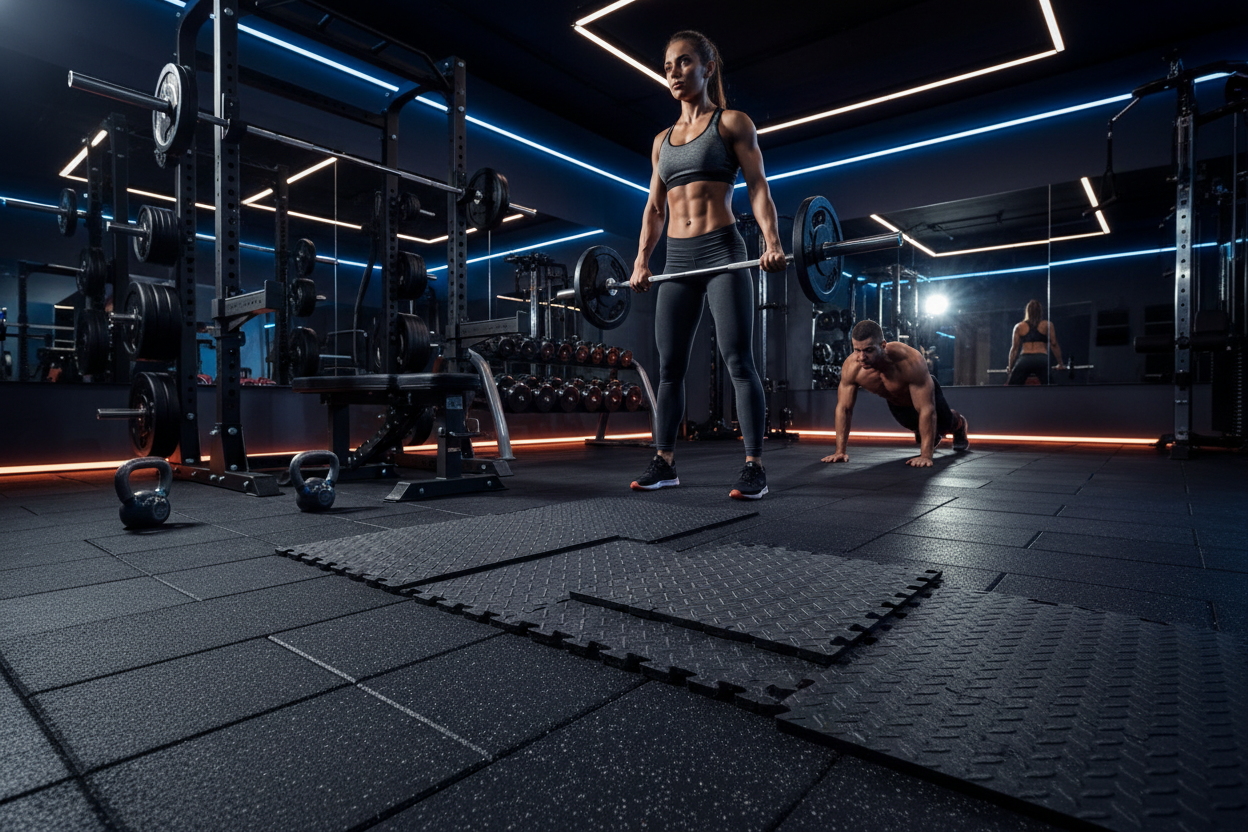
Flooring for Gyms Explained: What to Know Before You Buy
Building a home workout space is incredibly exciting. You spend hours researching the perfect power rack, comparing barbells, and calculating plate weights. But there is one critical element most people treat as an afterthought, often leading to cracked concrete, ruined equipment, and angry neighbors.
We are talking about the ground beneath your feet. Investing in proper flooring for gyms is the single most important foundational decision you will make. In this guide, we will break down exactly what you need to know to choose the right surface for your training style, space, and budget so you can train safely and confidently.
Key Takeaways
- Thickness dictates protection: A minimum of 3/8-inch rubber is required for general strength training, while heavy lifters need more.
- Material is everything: Avoid cheap EVA foam if you plan on dropping weights or parking heavy machines.
- Moisture matters: Basements and garages require non-porous materials to prevent mold and mildew buildup.
- Measure twice, cut once: Always account for a 5-10% overage when ordering rolls or tiles to account for wall cuts and mistakes.
Material Matters: Finding the Right Match
When searching for the ideal home gymnasium flooring, the material you choose dictates durability, traction, and shock absorption. Not all mats are created equal.
High-Density Rubber (The Gold Standard)
Rolled rubber or heavy-duty interlocking rubber tiles are the undisputed kings of gym home flooring. They absorb impact from dropped dumbbells, provide excellent grip for heavy squats, and significantly muffle sound. For North American garage gyms, vulcanized rubber is particularly resilient against extreme winter-to-summer temperature swings.
EVA Foam (Budget-Friendly but Limited)
Foam puzzle tiles are cheap, lightweight, and easy to install, making them tempting for beginners. However, foam compresses under heavy racks, creating an unstable lifting surface, and offers zero protection against dropped iron. Reserve foam strictly for yoga, stretching, or light bodyweight zones.
Sizing and Thickness for Your Space
Not every floor for gym setups requires the same level of heavy-duty protection. Your specific training style and the room's subfloor should dictate your specs.
Garage Gyms vs. Indoor Rooms
If you are deadlifting 400+ pounds in a concrete garage, you need 3/4-inch thick horse stall mats or premium commercial rubber tiles to prevent subfloor cracking. If you are setting up a functional fitness space in a spare carpeted bedroom, a 3/8-inch interlocking rubber mat system over a rigid wood sub-layer might be plenty. Proper thickness ensures your joints are protected without wasting money on overkill materials.
From Our Gym: Honest Take
Over the years, we have tested everything from premium indoor turf to cheap puzzle mats. When setting up our main testing garage, we opted for 3/4-inch vulcanized rubber stall mats. Let me be completely honest: the initial off-gassing smell was intense. We had to leave the garage doors open for nearly two weeks with fans running before the heavy rubber odor finally faded.
However, that minor inconvenience was absolutely worth it. After three years of daily abuse—including heavy barbell drops, dragging cast-iron plates, and parking a 500-pound functional trainer on top of them—these gym floors look virtually brand new. The aggressive grip holds my chalked shoes perfectly planted during heavy bench presses, even when the garage gets incredibly humid in mid-July.
Frequently Asked Questions
Is 3/8-inch rubber flooring thick enough for deadlifts?
For moderate weights with bumper plates, 3/8-inch rubber can suffice, especially if you also use drop pads. However, if you are regularly dropping heavy iron plates or pulling over 315 pounds, we highly recommend upgrading to 1/2-inch or 3/4-inch rubber to protect your concrete foundation.
Can I put gym flooring directly over carpet?
It is not recommended to place flexible rubber or foam directly over plush carpet. The soft sub-layer will cause your gym floor to shift, buckle, and separate at the seams, creating a tripping hazard. If you must build over carpet, lay down a rigid layer of 3/4-inch plywood first to create a stable base.
How do I clean and maintain my gym floors?
Maintenance is incredibly simple. Sweep or vacuum loose chalk, dust, and debris weekly. For a deeper clean, use a damp mop with a pH-neutral cleaner mixed with warm water. Avoid harsh chemicals like bleach or ammonia, which can dry out and break down rubber compounds over time.