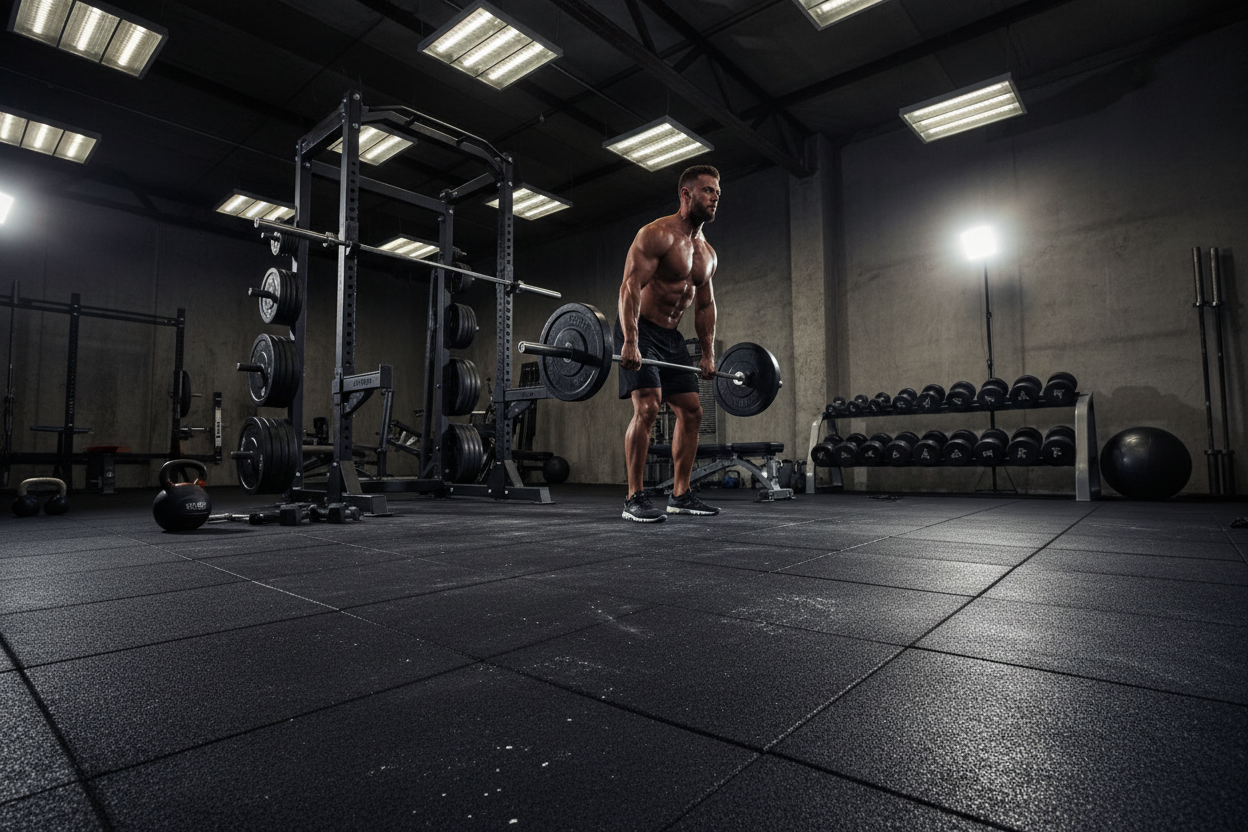
Flooring for Gym Setups: Stop Ruining Your Foundation
Building a workout space is exciting, but most people gloss over the literal foundation. If you have ever cringed at the sound of a heavy dumbbell crashing onto bare concrete, or felt your feet slip during a heavy squat, you know exactly what I mean. Getting the right flooring for gym setups isn't just about aesthetics; it is about protecting your joints, your expensive equipment, and your home's foundation.
Whether you are outfitting a two-car garage or converting a spare bedroom, choosing the proper exercise flooring for home gym environments will dictate how safely and effectively you can train. In this guide, we will break down exactly what you need to know before laying down your first mat.
Key Takeaways
- Thickness is crucial: 3/8-inch is the gold standard for general strength training and heavy lifting.
- Material dictates durability: High-density rubber outperforms cheap foam in longevity and stability.
- Format matters: Rolled rubber minimizes seams, while interlocking tiles are best for DIY installations.
- Odor control: Vulcanized rubber is essential if you are building an indoor gym to avoid the heavy rubber smell.
Material Breakdown: Finding the Right Fit
Why Rubber Dominates
When researching flooring for home gyms, you will quickly find that rubber is the undisputed king. Unlike EVA foam puzzle mats, which compress under heavy loads and create an unstable lifting surface, high-density rubber absorbs shock and springs back. If you are looking for the best rubber mats for home gym use, prioritize virgin or vulcanized rubber, which offers superior grip and tear resistance.
The Foam Trap
Foam mats might look appealing due to their low price point, but they are a massive liability for strength training. A heavy power rack will permanently dent foam within days, and dropping a weight can easily puncture straight through to your subfloor.
Sizing and Thickness Guidelines
How Thick Do You Actually Need?
The thickness of your flooring for home gym setups should directly correlate to your training style. For pure cardio spaces (treadmills, ellipticals, yoga), a 1/4-inch mat is sufficient to dampen vibration. However, if you are moving iron, 3/8-inch is the absolute minimum you should consider. For dedicated Olympic weightlifters who frequently drop loaded barbells from overhead, upgrading to 1/2-inch or 3/4-inch rubber is highly recommended to prevent concrete fracturing.
Space Planning and Installation
Garage Gyms vs. Indoor Spaces
Your installation location dictates your product choice. Garage gyms often deal with moisture and temperature fluctuations. If you are laying rubber flooring home setups directly over a concrete basement or garage floor, consider adding a vapor barrier underneath to prevent mold. For spare bedrooms, interlocking tiles are incredibly popular because they require zero adhesive and can be easily disassembled if you move. When designing a flooring home gym layout, always measure twice and order 10 percent extra material for edge cutting.
From Our Gym: Honest Take
Frequently Asked Questions
Is 8mm flooring thick enough for a home gym?
8mm (roughly 5/16-inch) is acceptable for light dumbbell work and machine use, but it falls slightly short for heavy barbell training. If you plan on deadlifting or using a heavy power rack, step up to a 3/8-inch (approx. 10mm) thickness.
Do I need to glue down my gym mats?
In most residential setups, no. High-density rubber is incredibly heavy. Gravity and the tight friction fit between walls or interlocking teeth are usually more than enough to keep the mats from shifting during your workouts.
How do I clean rubber gym flooring?
Keep it simple. Vacuum up dust and chalk regularly. For a deeper clean, use a damp mop with a pH-neutral cleaner (like a few drops of dish soap in warm water). Avoid harsh chemicals like bleach, which can degrade the rubber over time.