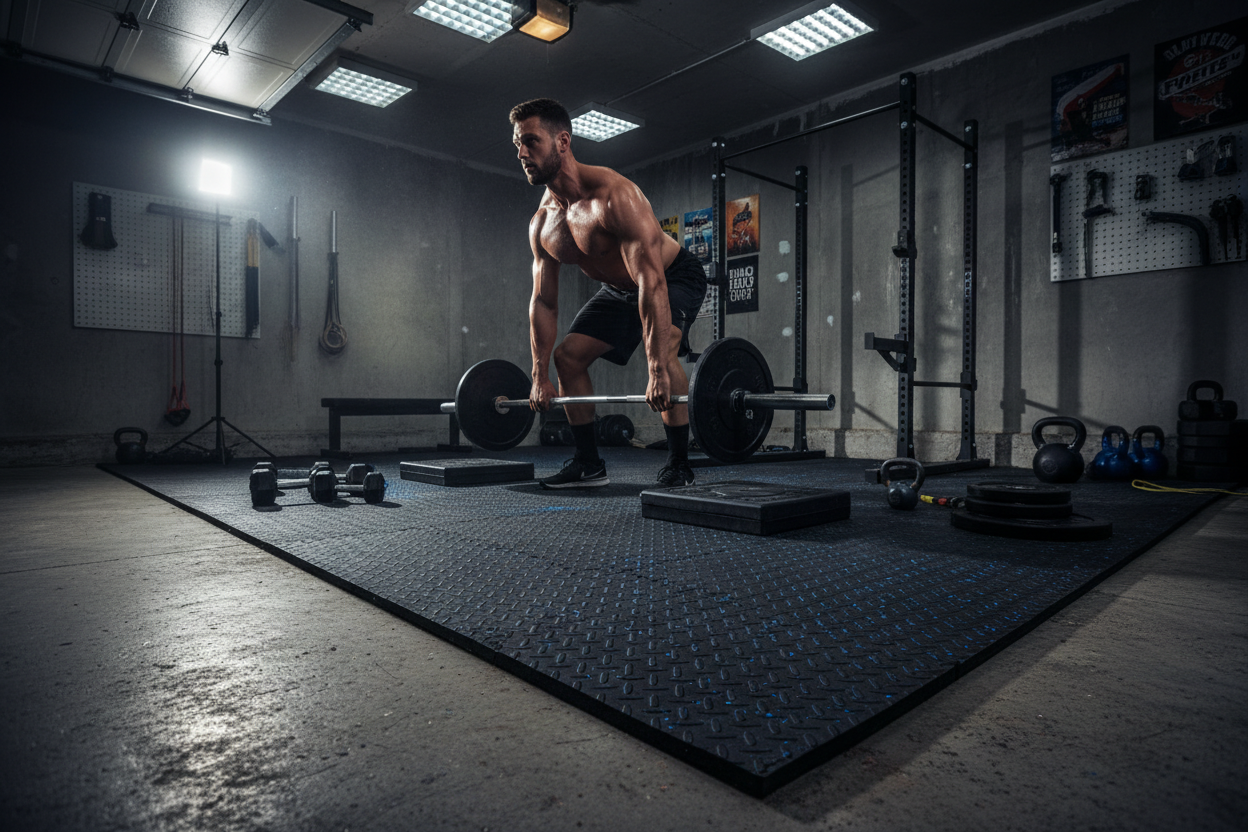
Flooring for Garage Gym: Stop Ruining Your Concrete
Building a home gym usually starts with the exciting stuff—power racks, barbells, and cast-iron plates. But the unsung hero of your iron paradise is what lies beneath your feet. Dropping a 400-pound deadlift on bare concrete is a fast track to cracked foundations, shattered plates, and angry neighbors. Getting the right flooring for garage gym setups is the most critical foundational step you can take.
Whether you are parking cars next to your squat rack or dedicating the entire space to lifting, the right surface protects your equipment, saves your joints, and defines the space. This guide will help you navigate the sea of options to find the perfect balance of protection, grip, and budget.
Key Takeaways
- Rubber is the undisputed king of durability when choosing a garage gym floor.
- Aim for at least 3/4-inch thickness if you plan on dropping heavy barbells or kettlebells.
- Interlocking tiles are great for light workouts, but horse stall mats or dense rolled rubber are mandatory for heavy lifting.
- Always account for temperature fluctuations; rubber will expand and contract in an uninsulated garage.
- Moisture barriers are highly recommended if your concrete is prone to sweating.
Sourcing the Best Gym Flooring for Garage Setups
The Big Three: Stall Mats, Rolls, and Tiles
When searching for the best gym flooring for garage environments, you generally have three primary choices. The most popular among powerlifters and CrossFitters are 4x6 foot horse stall mats. They are incredibly dense, relatively cheap, and virtually indestructible. If you want a seamless look, rolled rubber flooring offers a premium aesthetic, though it can be heavy and difficult to install alone. Finally, interlocking rubber tiles provide a DIY-friendly installation, making them an excellent exercise mat for garage spaces that double as workshops or play areas.
Matching Thickness to Your Training Style
Not all garage exercise mats are created equal. If your routine consists mostly of yoga, bodyweight exercises, or light dumbbell work, a 3/8-inch gym mat for garage use is perfectly adequate. However, if you are performing Olympic lifts, heavy deadlifts, or dropping weights from overhead, you need a minimum of 3/4-inch thickness. Anything less risks transferring the shock directly into your concrete subfloor. For dedicated lifting platforms, layering 3/4-inch rubber over high-grade plywood is the gold standard.
Balancing Quality and Cost
Building a home gym is an investment, and it is tempting to cut corners on the floor to buy a fancier barbell. Don't do it. While you can find affordable gym mats made of EVA foam, they will compress under heavy racks and tear under the friction of pivoting shoes. True rubber flooring for garage gym applications costs more upfront but lasts a lifetime. If budget is a strict concern, prioritize high-density stall mats over cheap foam alternatives. They are the best garage gym floor pound-for-pound when it comes to value.
From Our Gym: Honest Take
When I first built my setup, I tried to save money by using cheap foam interlocking tiles as my primary gym floor in garage. Big mistake. Within two weeks of heavy squats, the tiles compressed permanently, leaving my power rack leaning slightly. Worse, my bench press felt dangerously unstable because the foam would squish under my shoulder drive.
I eventually ripped it all out and upgraded to 3/4-inch vulcanized rubber stall mats. The difference was night and day. My chalked lifters actually gripped the floor, and the heavy thud of a dropped barbell was completely deadened. One caveat: fresh rubber mats have a very strong odor. I had to leave my garage doors open and run high-velocity fans for about three weeks before the 'new tire' smell finally faded. If I had to do it again, I would wash them with a mild degreaser and let them bake in the driveway sun for a few days before bringing them inside.
Frequently Asked Questions
What is the best flooring for gym in garage environments?
For most home lifters, 3/4-inch vulcanized rubber (often sold as horse stall mats) is the absolute best rubber flooring for garage setups. It offers commercial-grade density, protects against heavy drops, and provides excellent traction even when sweaty.
Can I just use a regular floor mat for garage gym workouts?
No. Standard anti-fatigue mats or basic yoga mats lack the density required to support heavy equipment. Using a soft exercise flooring for garage setups can cause your ankles to roll under heavy loads and will quickly tear under the weight of a bench or rack.
Do I need to glue down my gym floors for garage setups?
Usually, no. The sheer weight of dense rubber garage gym mats (often 100 lbs per 4x6 mat) is enough to keep them firmly in place. However, if you notice shifting over time, applying double-sided heavy-duty carpet tape at the seams is a great, non-permanent solution.