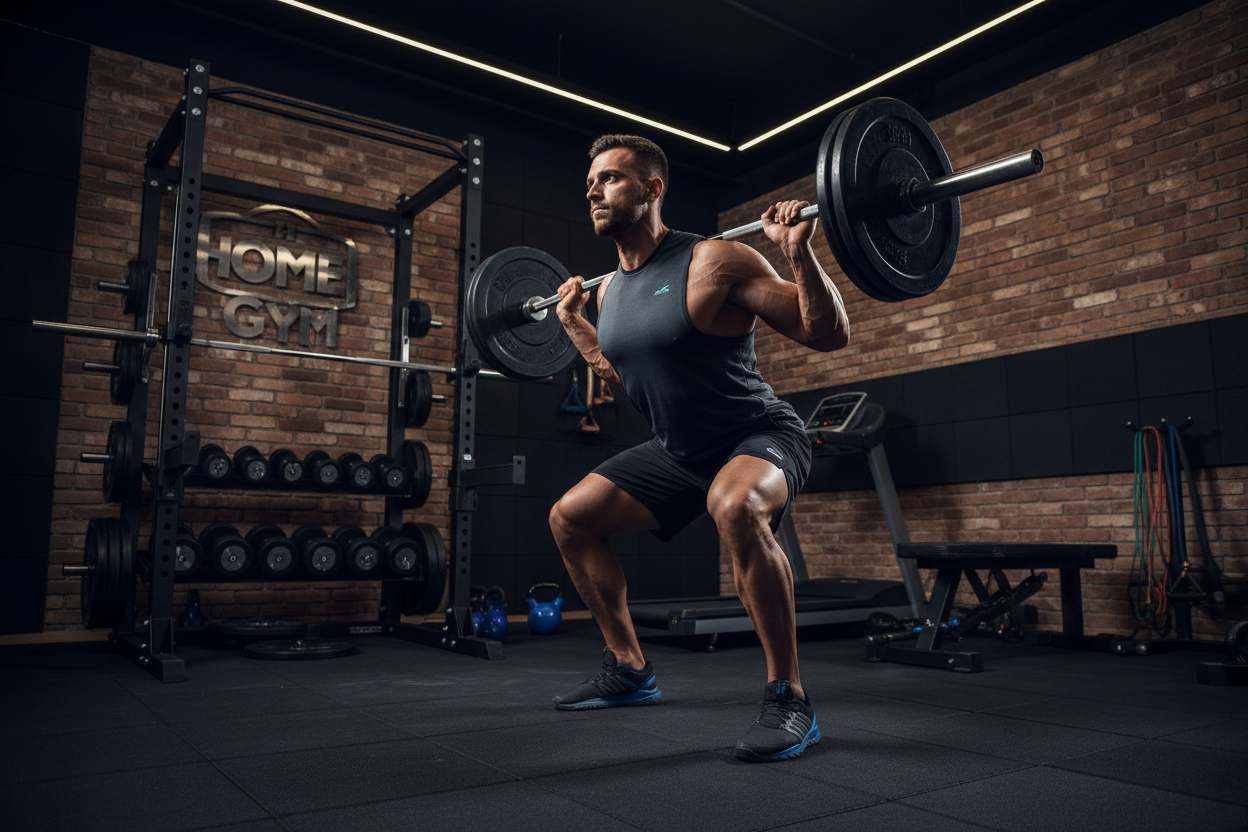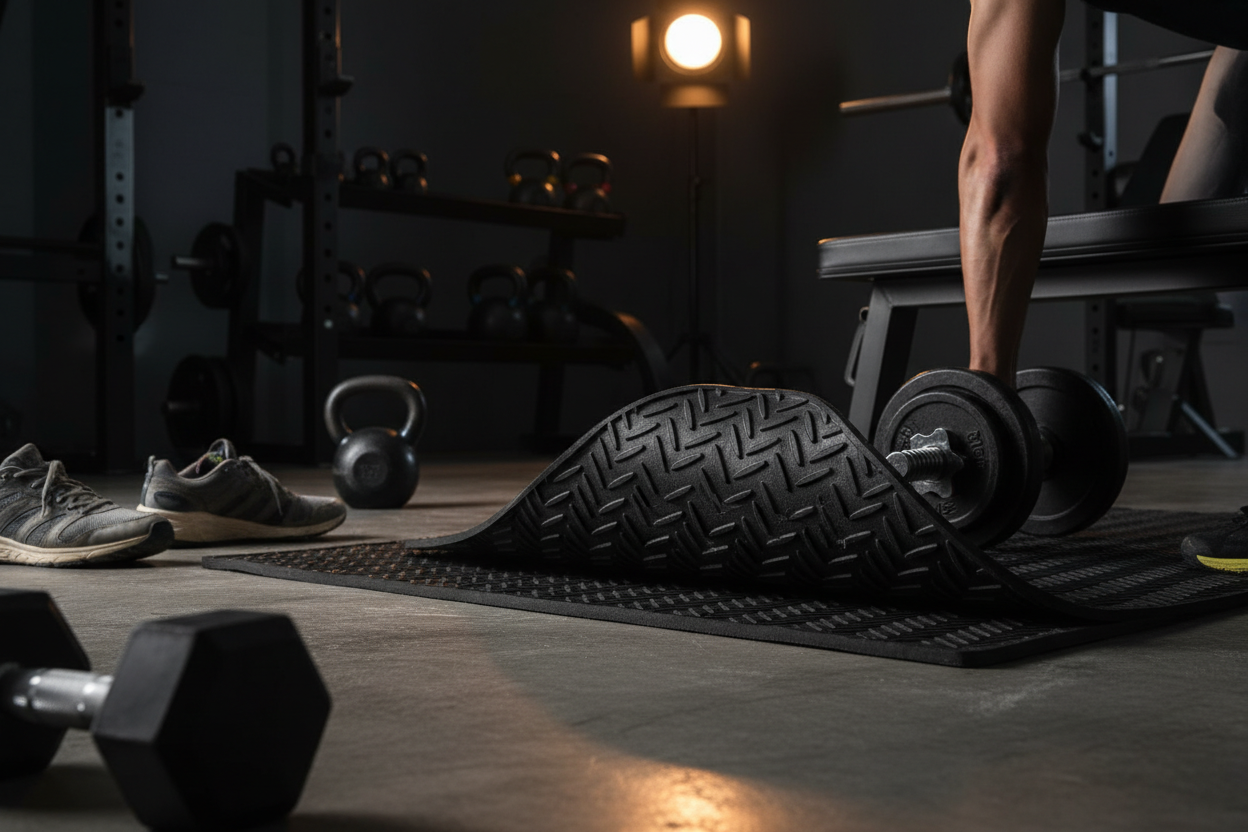
Nothing ruins a heavy lifting session faster than a shifting bench or the terrifying sound of a dumbbell cracking your hardwood floor. If you are building a home gym, you already know that protecting your space is just as important as the equipment you buy. That is exactly where a quality floor mat rubber backing comes into play.
Whether you are outfitting a damp garage, a spare bedroom, or a basement corner, the right foundation dictates your workout's safety and comfort. In this guide, we break down exactly why this specific flooring style is a non-negotiable for serious home athletes, and how to choose the perfect fit for your training style.
Key Takeaways
- Prevents dangerous equipment shifting during high-intensity workouts and heavy lifts.
- Protects vulnerable subfloors (like hardwood, tile, and concrete) from impact damage.
- Significantly reduces noise and vibration transmission to lower levels of your home.
- Moisture-resistant base layers prevent mold and mildew in humid garage or basement setups.
Why Your Gym Needs a Rubber Backed Mat
Superior Grip and Safety
When you are pushing through a heavy set of squats or sprinting on a treadmill, lateral movement is your worst enemy. A high-quality rubber backed mat grips the subfloor aggressively. Unlike cheap foam tiles that slide apart under pressure, the friction generated by the rubber ensures your equipment stays exactly where you placed it.
Floor Protection and Noise Reduction
Dropping weights happens. Even if you are a controlled lifter, the repeated stress of a loaded barbell or a heavy kettlebell will eventually take its toll on unprotected floors. Furthermore, rubber back floor mats act as acoustic dampeners. If you live in an apartment or have family sleeping upstairs, the vibration absorption is a game-changer for early morning sessions.
What to Look for Before You Buy
Thickness and Density
Not all mats are created equal. For general cardio equipment (like an exercise bike or rower), a 1/4-inch thickness is usually sufficient. However, if you are setting up a power rack or a deadlift station, you need a high-density mat with at least a 3/8-inch to 1/2-inch thickness to properly absorb shock and prevent structural damage.
Surface Material Variations
Depending on your space, you might opt for a solid vulcanized rubber top, or a rubber backed carpet mat. The carpeted variations are excellent for stretching areas or under lighter cardio machines in living spaces, offering a more residential look while maintaining that crucial anti-slip base. For heavy iron, stick to solid, non-porous rubber tops.
From Our Gym: Honest Take
We recently overhauled our primary testing garage, and dialing in the flooring was our first priority. I placed a heavy-duty rubber backed carpet mat under our primary rowing machine, and it completely eliminated the annoying 'creep' the rower used to do across the concrete during high-stroke-rate sprints.
For the squat rack area, we went with 1/2-inch thick solid rubber mats. The grip is phenomenal—my chalked feet stay planted during heavy deadlifts without any micro-slips. However, a quick word of warning: the initial off-gassing smell of fresh commercial rubber backing is intense. We had to leave the garage doors open with fans running for about four days before the odor dissipated. It is a minor annoyance, but absolutely worth the long-term durability.
Frequently Asked Questions
Is a floor mat rubber backing necessary on carpet?
Yes. Placing heavy equipment directly on residential carpet compresses the pad and stretches the fibers, leading to permanent damage. A rigid mat with a firm rubber base distributes the weight evenly and prevents your cardio machines from wobbling.
How do I clean a rubber backed carpet mat?
For regular maintenance, vacuuming works perfectly. If it gets sweaty or stained, use a mild carpet cleaner or a mixture of water and gentle dish soap. Avoid soaking the mat entirely, as trapped water can take a long time to dry, even though the rubber base itself is waterproof.
What is the weight limit on standard rubber back floor mats?
High-density commercial rubber mats can withstand thousands of pounds, easily supporting fully loaded power racks and heavy deadlift drops. Thinner, cheaper mats may compress permanently under loads exceeding 500 pounds, so always check the density rating before buying for a strength training setup.