Fitness Cycles For Sale? Read This Before You Buy
We've all been there: staring at a cramped basement or garage corner, wondering how to squeeze in some reliable cardio without draining our bank accounts. Whether you are trying to break a workout plateau or just want a convenient way to sweat while watching your favorite shows, the right indoor bike can completely transform your home gym setup.
However, when you start searching for fitness cycles for sale, the sheer volume of options can be overwhelming. From high-tech studio bikes to basic folding models, how do you know which one won't end up as an expensive clothes rack? This guide will help you navigate the market, balance your budget, and find the perfect ride for your specific needs.
Key Takeaways
- Determine your resistance needs: Magnetic resistance offers a silent, smooth ride, while friction resistance is often more budget-friendly.
- Measure your footprint: Standard stationary bikes require about a 2-by-4-foot footprint, plus clearance.
- Weight capacity matters: Always check the max user weight; it is a strong indicator of overall frame durability.
- Flywheel weight impacts feel: A heavier flywheel (30+ lbs) generally provides a smoother, more road-like pedaling experience.
Decoding the Specs Without Overpaying
You don't need to spend thousands to get a great workout. If you are looking for a cheap exercise cycle, the trick is knowing which features to compromise on and which are non-negotiable for your safety and comfort.
Resistance Types Explained
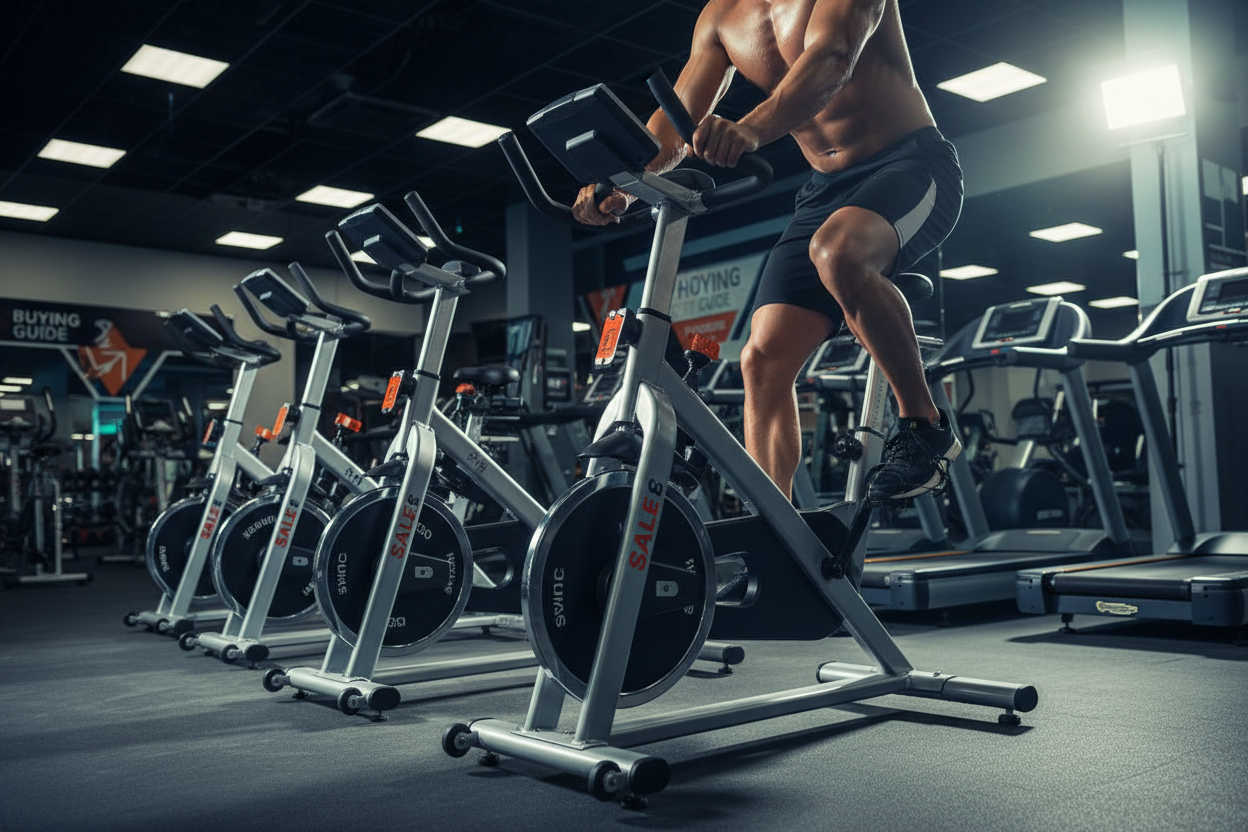
When browsing gym bikes for sale, you will primarily see two resistance types: friction and magnetic. Friction resistance uses felt pads that press against the flywheel. It is highly effective and keeps the cost down, making it a staple on many budget models. Magnetic resistance, on the other hand, uses magnets to create tension. It requires less maintenance and is practically silent, making it ideal for shared living spaces or early morning sessions.
Finding the Right Fit for Your Space
A common mistake people make when looking for a workout bike cheap is ignoring their actual floor plan. North American homes range from sprawling garage gyms to tight apartment corners, and your equipment needs to match your environment.
Garage Gyms vs. Apartment Corners
If you have a dedicated garage space, a heavier spin-style bike with a robust steel frame is a great choice. The weight adds stability during intense standing sprints. However, if you are in a second-story apartment, you might want to look at folding upright bikes. While you might sacrifice some high-end stability, many exercise bikes cheap in the folding category are surprisingly durable and can be tucked away in a closet post-workout.
From Our Gym: Honest Take
Over the years, we've tested everything from premium studio bikes to the most basic entry-level models. Recently, I decided to test a highly-rated fitness bike cheap model against our daily driver, a mid-tier magnetic resistance bike.
Here is my honest take: At 6 foot 1 and 210 pounds, I immediately noticed the difference in the Q-factor (the distance between the pedals). The budget model had a wider stance, which felt slightly less ergonomic during long, 45-minute sessions. Additionally, while the lighter 15-pound flywheel was fine for steady-state cardio, it had a noticeable stutter at high RPMs when I tried to push out max-effort sprints. That said, for the price point, it held up remarkably well. The powder-coated frame showed zero flex when I stayed seated. The takeaway? If you are a casual rider, an entry-level bike is perfectly fine, but if you plan on aggressive, out-of-the-saddle intervals, invest in a heavier flywheel and a rock-solid frame.
Frequently Asked Questions
Is a budget fitness cycle worth it for a home gym?
Yes, absolutely. As long as you manage your expectations regarding tech features (like built-in touchscreens) and focus on build quality and a smooth drivetrain, an affordable cycle can deliver an incredible cardiovascular workout.
How much space do I need for a stationary bike?
Most standard indoor cycles require a footprint of roughly 2 feet wide by 4 feet long. However, you should always leave at least 24 inches of clearance on all sides for safe mounting, dismounting, and adequate ventilation.
What is a good weight limit to look for?
For a reliable home gym bike, look for a minimum weight capacity of 250 to 300 pounds. Even if you weigh significantly less, a higher weight capacity usually indicates thicker gauge steel and better overall construction.