
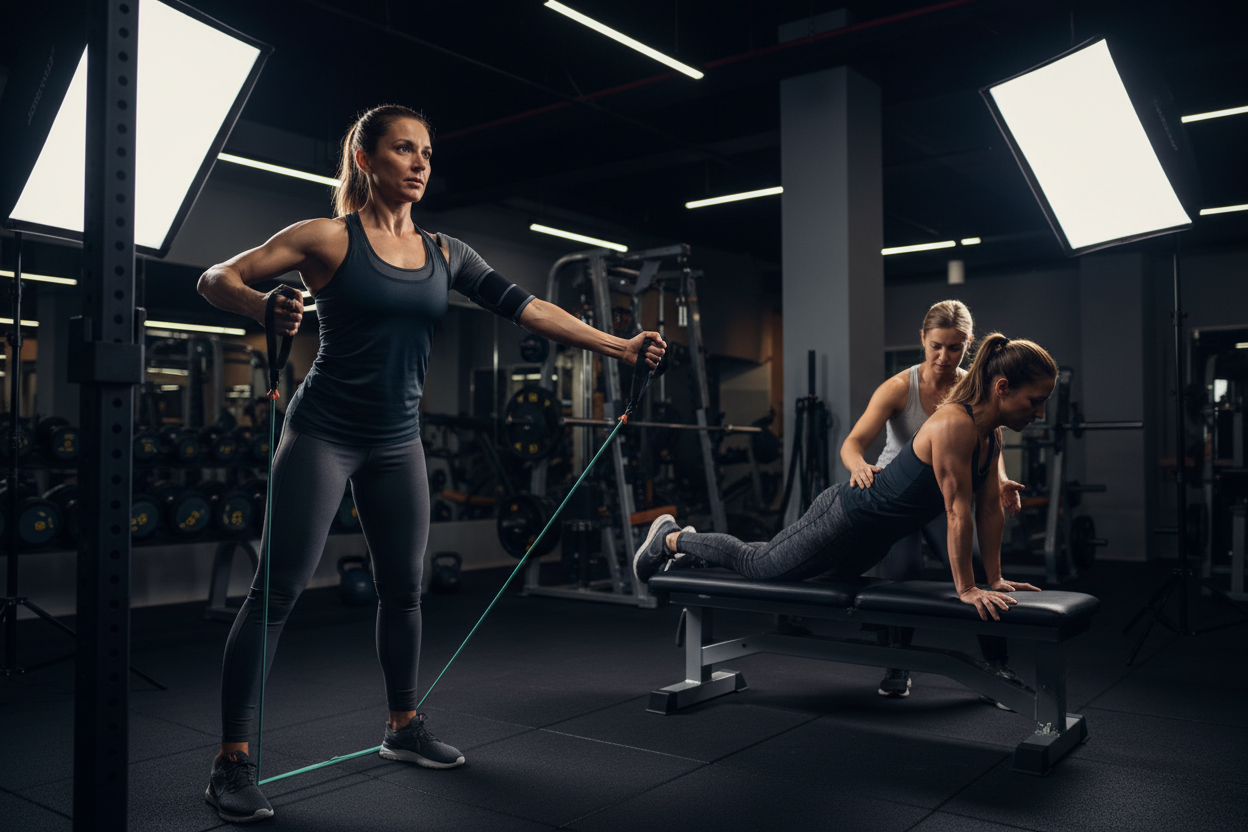
Exercising After Rotator Cuff Surgery: The Safe Recovery Roadmap
Disclaimer: Always consult your surgeon or physical therapist before starting any exercise routine. Every tear and repair is unique.
Staring at your arm in a sling creates a strange mix of emotions. You are relieved the repair is done, but you are terrified of undoing the surgeon's work. The fear of re-injury is real, but staying completely immobile is actually dangerous—it leads to a frozen shoulder that is harder to fix than the original tear.
The key to exercising after rotator cuff surgery isn't about how much weight you can move; it is about respecting biology. Your tendon needs to heal to the bone, a process that cannot be rushed. This guide cuts through the noise to give you a realistic, safe path from the sling back to the gym.
Key Takeaways for Safe Recovery
- Respect the Phases: Recovery is linear. You must master passive motion before attempting active movement.
- Pain vs. Soreness: Learn the difference. Sharp, stabbing pain means stop immediately; dull muscle ache usually means progress.
- Consistency Over Intensity: Doing your rehab exercises three times a day for 10 minutes is superior to one hour-long session.
- Technique is King: Cheating with your traps (shrugging your shoulder up) is the most common mistake during rehab.
- Don't Skip the Scapula: Shoulder health starts at the shoulder blade. Scapular retraction is often safe early on.
The Biology of Your Repair
Before we look at specific post surgery shoulder exercises, you need to understand the "why." Your surgeon used anchors and sutures to press the tendon against the bone. For the first 6 to 12 weeks, that connection is weak.
If you contract the rotator cuff muscles too hard, you pull against those sutures. That is why early physical therapy for shoulder surgery focuses on passive movement. We want the joint to move so it stays lubricated and flexible, but we don't want the muscle to fire yet.
Phase 1: Passive Motion (Weeks 0-6)
In this early stage, your "workout after shoulder surgery" looks very boring. That is a good thing. Your goal here is to protect the repair while preventing stiffness.
The Pendulum
This is the bread and butter of post op shoulder exercises. Lean forward, resting your good arm on a table. Let your surgical arm hang dead weight. Use your body's momentum to sway the arm in small circles. Crucial tip: If you feel your shoulder muscles gripping or tense, you are doing it wrong. It should feel like a wet noodle.
Grip Strength and Wrist Mobility
Just because your shoulder is out of commission doesn't mean your hand has to atrophy. Squeezing a stress ball and rotating your wrist keeps blood flowing and maintains nerve health down the chain. This is often overlooked in rehab shoulder surgery protocols but makes a huge difference later.
Phase 2: Active-Assisted Motion (Weeks 6-12)
Once your doctor clears you, you move to Active-Assisted Range of Motion (AAROM). This means your arm moves, but something else helps lift the weight.
Wand/Cane Exercises
Lie on your back holding a broomstick or cane. Use your good arm to push the surgical arm up toward the ceiling. This is a staple in physiotherapy for shoulder surgery because it allows you to reach overhead without the rotator cuff bearing the full load of gravity.
The Pulley System
If you attend shoulder surgery physical therapy, you will see door pulleys. These are excellent for regaining elevation. You pull down with the good arm to lift the bad arm up. The focus here is a slow, controlled stretch at the top, not a rhythmic pumping motion.
Phase 3: Strengthening (Months 3-6)
This is where real shoulder strengthening exercises after surgery begin. The tendon has likely healed enough to handle resistance.
Isometrics
You push against a wall without moving the joint. For example, standing in a doorway and pressing the back of your wrist into the frame activates the external rotators without the shear force of movement.
Band External Rotation
This is the classic "rotator cuff exercise" you see in every gym. Keep your elbow pinned to your ribcage (use a rolled-up towel between your elbow and side to ensure form). Rotate your hand outward against a light resistance band. If your elbow leaves your side, you are cheating.
Common Mistakes in Shoulder Rehab Post Surgery
The biggest error I see as a coach is the "shoulder hike." When you try to lift your arm, your upper trap takes over and shrugs the shoulder toward your ear. This creates bad movement patterns that can last for years.
Another mistake is ignoring the rest of the body. You can still ride a stationary bike. You can still do leg presses (if you can load the machine safely). Keeping your systemic blood flow high aids in recovery.
My Personal Experience with exercising after rotator cuff surgery
I want to be real about the "ugly" side of this that the brochures don't mention. When I was rehabbing a partial tear, the hardest part wasn't the pain—it was the atrophy. I remember looking in the mirror around week 5 and seeing my deltoid looking like a deflated balloon. It messes with your head.
But the specific moment that sticks with me is the first time I tried to do a simple wall slide around week 8. On paper, it's easy. In reality, my arm started shaking uncontrollably about halfway up. It wasn't fatigue; it was a neurological "wobble" where my brain had forgotten how to stabilize the joint. I felt a distinct, gritty popping sensation—scar tissue breaking up. It was terrifying, but my PT assured me it was normal. That mental hurdle of trusting the arm again was harder than the physical lifting. Also, sleeping in that bulky sling? Absolute nightmare. I found propping myself up at a 45-degree angle with three stiff pillows was the only way to get more than two hours of shut-eye.
Conclusion
Recovering from shoulder arthroscopy is a marathon, not a sprint. The timeline for exercises for shoulder surgery recovery is dictated by biology, not your willpower. Respect the healing tissue, listen to your physical therapist, and celebrate the small wins—like finally being able to wash your hair with both hands again.
Frequently Asked Questions
When can I start lifting weights after rotator cuff surgery?
Generally, light resistance begins around 12 weeks, but heavy lifting is often restricted until 4 to 6 months post-op. This varies heavily based on the size of the tear and the quality of the tendon tissue. Always wait for your surgeon's clearance.
Is pain normal during post surgical shoulder exercises?
Some discomfort and soreness are expected as you stretch stiff tissues. However, sharp, stinging pain or pain that persists for hours after the session is a red flag. If you feel a sharp "catch," stop the movement immediately.
What are the best exercises to do after shoulder surgery for stiffness?
Passive range of motion exercises are best for stiffness. The pendulum exercise, table slides, and pulley systems are the gold standard for breaking up scar tissue and regaining motion without overloading the repairing tendon.


