Exercises to Stay in Shape: A Trainer's Maintenance Guide
I have seen it happen to dozens of my clients. You spend six months crushing your home gym routine, building muscle, and dialing in your cardio. Then, life hits. A new baby arrives, your job demands overtime, or you just hit a wall of mental burnout. Suddenly, spending five days a week in your garage gym feels impossible. You don't want to lose your hard-earned progress, but you need a break. This is exactly when you need to switch gears and focus on exercises to stay in shape.
Maintenance is the unsung hero of lifelong fitness. You don't have to constantly push for personal records or live in a state of deep muscle soreness to keep what you have built. By strategically dropping your volume and focusing on high-yield movements, you can preserve your physique and your sanity.
- It takes significantly less volume to maintain muscle than to build it—often just one-third of your usual workload.
- Focus entirely on compound movements that hit multiple muscle groups simultaneously to save time.
- Two to three short, full-body sessions per week are enough to preserve your gains.
- A pair of adjustable dumbbells and a kettlebell are all the equipment you need for an effective maintenance phase.
The Difference Between Building and Maintaining
When you are trying to pack on muscle or drastically improve your cardiovascular engine, you have to force adaptation. That means progressively overloading your muscles with more weight, more reps, or more sets. It is exhausting, both physically and mentally. But maintaining? That is a completely different physiological game.
Research shows that you can maintain muscle mass and strength with roughly one-third to one-ninth of the volume it took to build it, provided you keep the intensity relatively high. If you usually do 15 sets of chest exercises a week to grow your pecs, you might only need 3 to 5 challenging sets to keep them exactly the same size.
This is a massive mental relief for my clients. You have permission to step off the gas pedal. You don't need to leave your home gym crawling on your hands and knees. The goal is simply to remind your body that it still needs the muscle it built. You just need to provide a minimal effective dose of stimulus. This mindset shift is crucial because trying to push through a high-volume program when you are stressed or exhausted usually leads to skipped workouts and eventually quitting altogether.
Core Exercises to Stay in Shape at Home
When you cut your workout time down to 30 or 40 minutes, you can't waste time on isolation exercises. Bicep curls and tricep kickbacks are great for hypertrophy, but they are terrible for efficiency. A maintenance phase relies entirely on the big rocks—compound movements that recruit maximum muscle mass across multiple joints.
I tell my clients to think of their body in movement patterns rather than muscle groups. You need a squat pattern, a hinge pattern, a horizontal push, a horizontal pull, a vertical push, and a vertical pull. If you hit those six patterns every week, your body isn't going to lose an ounce of muscle.
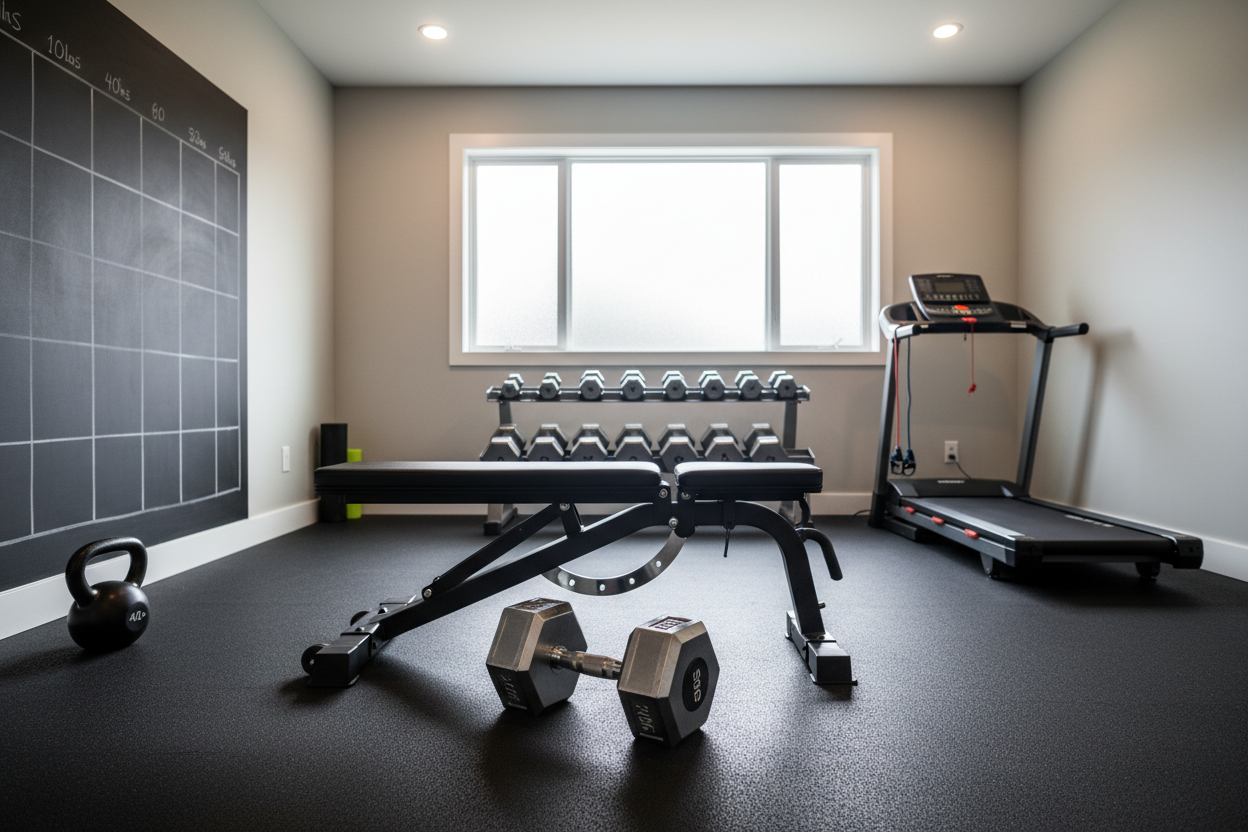
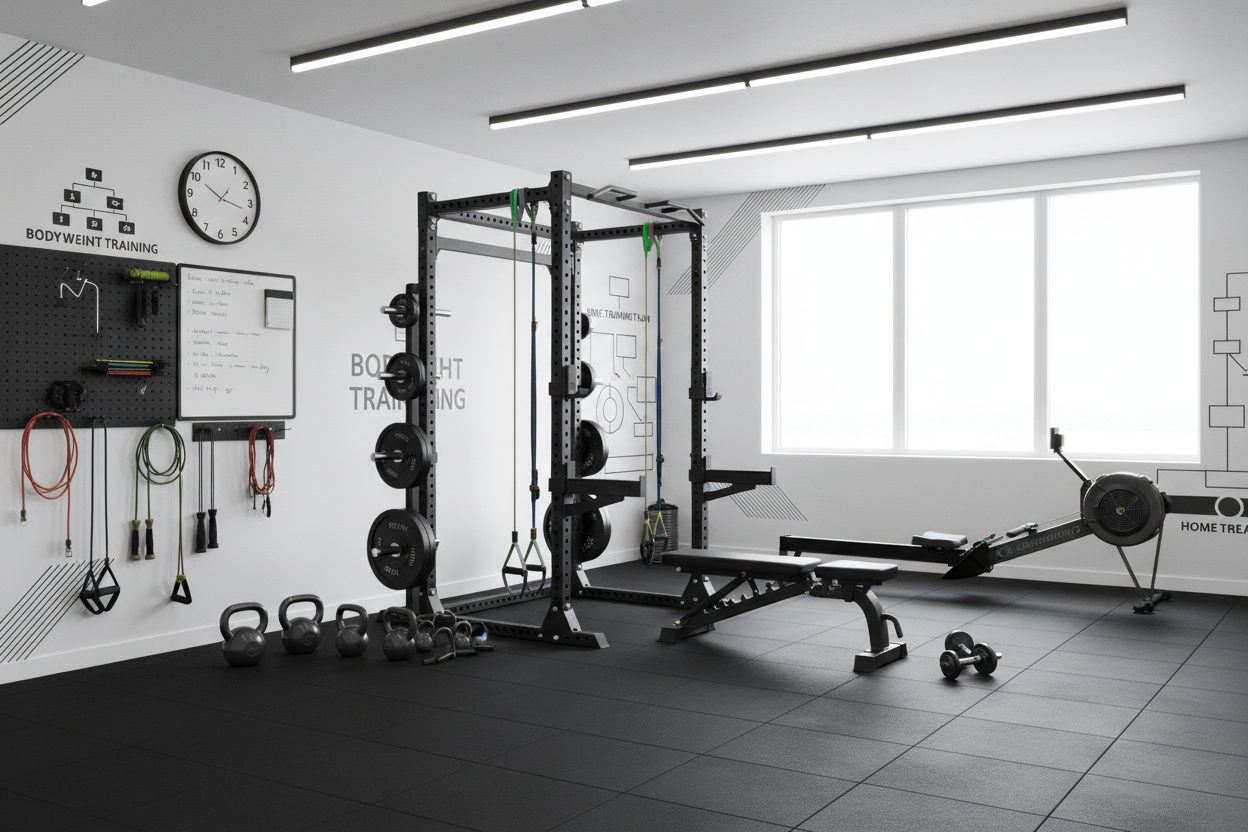
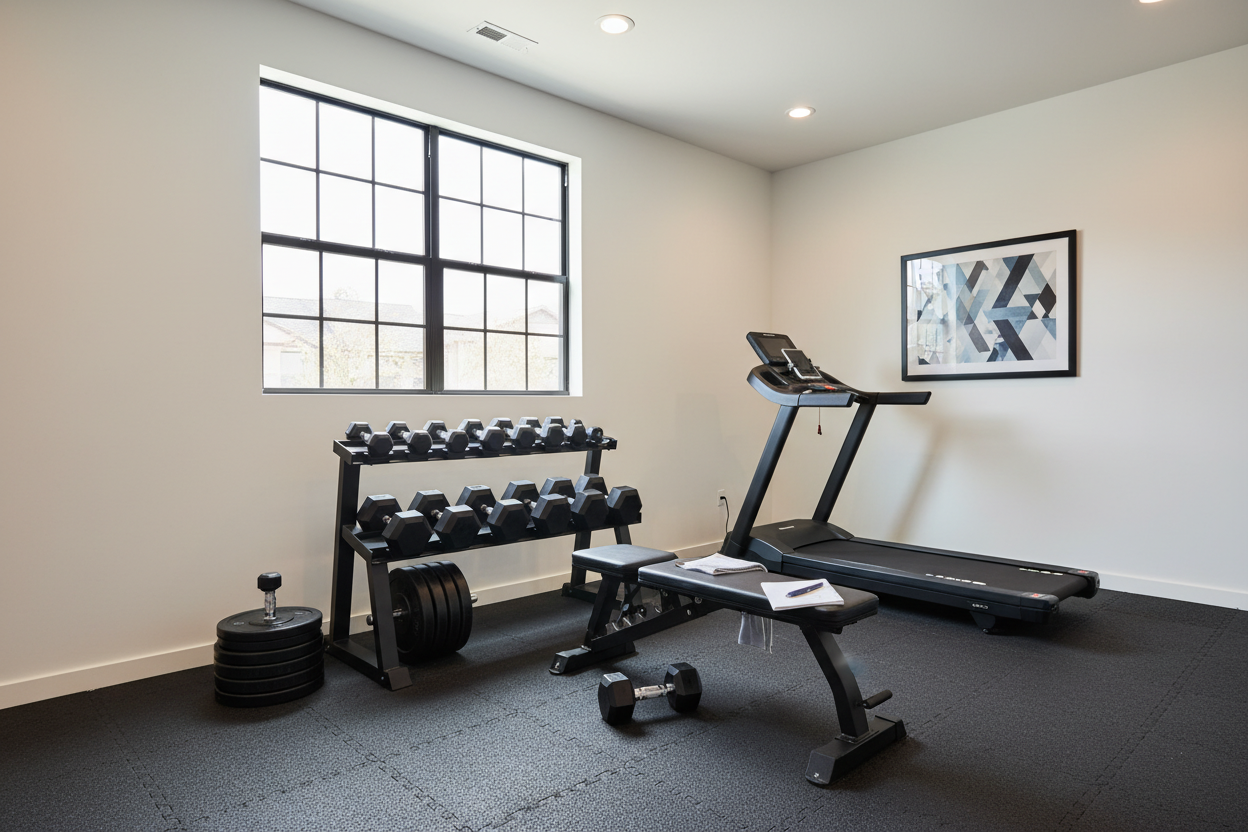
You also don't need a massive power rack or 500 pounds of bumper plates for this. I have tested dozens of home gym setups, and for a maintenance phase, a pair of adjustable dumbbells ranging from 5 to 52.5 pounds and a single 35-pound or 53-pound kettlebell will do the trick. They take up less than a 2x2 foot square in your living room and provide enough resistance to keep your muscles engaged.
I recently spent three months doing a pure maintenance routine using only a pair of dial-adjust dumbbells. They were perfect for quick transitions between exercises, though an honest downside is that their bulky 15.5-inch length makes movements like goblet squats feel a bit awkward compared to a traditional cast-iron dumbbell. Still, the space-saving tradeoff is worth it.
Lower Body Maintenance Staples
Heavy barbell back squats and deadlifts are fantastic for building raw power, but they generate a massive amount of systemic fatigue. Your central nervous system takes a beating. When you are just trying to maintain, I swap those out for dumbbell and kettlebell variations.
The goblet squat is my absolute favorite lower body maintenance tool. Holding a heavy dumbbell or kettlebell vertically against your chest forces your core to brace hard, keeps your posture upright, and hammers your quads and glutes. Aim for 3 sets of 8 to 12 reps, stopping one or two reps shy of failure.
For the posterior chain—your hamstrings, glutes, and lower back—the dumbbell Romanian deadlift (RDL) is unmatched. You don't need 300 pounds to make this effective. Grab your adjustable dumbbells, hinge at the hips with a slight knee bend, and focus on a deep stretch in the hamstrings. Three sets of 10 reps will keep your backside strong and resilient.
Upper Body Preservation Movements
Upper body maintenance is all about balancing your pushing and pulling muscles to keep your shoulders healthy and your posture upright. You don't need a half-dozen chest machines to do this.
The classic push-up remains the king of horizontal pressing. If you can bang out 30 strict push-ups, elevate your feet on a chair or wear a weighted vest to keep the rep range between 10 and 15. Pair this with a horizontal pull, like the single-arm dumbbell row. Rowing a heavy dumbbell while supporting your non-working hand on a bench or couch builds a thick, stable upper back.
For vertical movements, the seated or standing dumbbell overhead press will maintain your shoulder caps and triceps. Pull-ups are the ideal vertical pull, but if you don't have a doorway bar, you can substitute dumbbell pullovers. Doing 2 to 3 sets of each of these movements per week is plenty to preserve your upper body mass.
Structuring Workouts to Stay in Shape
Now that you have your exercises, how do you put them together? The beauty of stay in shape workouts is their flexibility. You aren't tied to a rigid five-day body part split. Instead, I highly recommend a 2-day or 3-day full-body routine.
If you are incredibly pressed for time, a 2-day split (like Monday and Thursday) works wonders. You do one squat variation, one hinge, one push, and one pull each day. That is four exercises. You can finish 3 sets of each in under 35 minutes.
If you have a bit more breathing room, a 3-day full-body split (Monday, Wednesday, Friday) spreads the volume out even more, making the sessions feel incredibly manageable. This is a stark contrast to the grueling six-day-a-week programs of the past. If you are burned out on those intense DVD routines from the 2000s, there are plenty of modern home workout alternatives that prioritize recovery and sustainable frequency over daily exhaustion.
When programming workouts to stay in shape, remember that intensity is the key variable you cannot drop. You are doing fewer sets, so the sets you do perform must be challenging. If you finish a set of goblet squats and feel like you could have done 10 more reps, the weight is too light to maintain your muscle.
Conditioning: Keeping Your Engine Running
Cardiovascular fitness declines faster than muscle mass, so you can't completely ignore your heart and lungs during a maintenance phase. However, you don't need to log 40 miles a week on a treadmill either.
I like to integrate conditioning directly into the end of strength sessions to save time. Kettlebell swings are my go-to. They build explosive hip power and spike your heart rate in seconds. Try doing 10 to 15 heavy swings every minute on the minute (EMOM) for 10 minutes at the end of your workout.
If you don't have a kettlebell, a basic jump rope is an incredible tool. Three 3-minute rounds of skipping rope with a 60-second rest in between will maintain your baseline cardiovascular endurance. It is low impact, requires practically zero setup, and fits perfectly in a cramped garage gym or driveway.
When to Transition Back to a Growth Phase
A maintenance phase isn't meant to last forever. Eventually, the chaotic season of life will pass. The baby will start sleeping through the night, the busy season at work will end, or your mental burnout will fade. You will wake up one day and realize you actually want to push hard in the gym again.
That is your signal to transition back to a growth phase. Start slowly adding volume back in—an extra set here, a new isolation exercise there.
If your maintenance phase slipped into a complete hiatus and you haven't touched a weight in months, don't panic. Muscle memory is real, but you shouldn't jump straight back into your old heavy routine. Instead, review some basic exercises to get in shape to rebuild your connective tissue strength and work capacity over a few weeks before chasing new personal records.
Can I maintain muscle with just bodyweight exercises?
Yes, but you have to keep the intensity high. If regular push-ups and squats become too easy, you must progress to harder variations like decline push-ups, pistol squats, or use a weighted vest to ensure you are still challenging the muscles.
How long can a maintenance phase last?
You can technically maintain your muscle mass indefinitely if you consistently apply the minimum effective dose of resistance training. However, most of my clients use maintenance phases for 4 to 12 weeks during stressful life periods.
Will I lose my cardio fitness if I only lift weights?
If you drastically reduce your cardiovascular training, your aerobic base will decline. However, keeping your rest periods short during weightlifting and adding 10 minutes of high-intensity intervals at the end of your session will preserve a solid baseline of conditioning.