Exercise Mat For Outdoors: Stop Ruining Your Indoor Gear
There is nothing quite like taking your kettlebells or yoga flow into the fresh air, but there is a quick way to ruin that experience: using the wrong mat. Whether you are dealing with hot driveway concrete, damp grass, or a rough patio, standard indoor mats simply cannot handle the elements. They tear, they soak up moisture like a sponge, and they leave your joints aching.
If you want to train under the sun without destroying your equipment or your knees, you need a dedicated exercise mat for outdoors. In this guide, we will break down exactly what makes an outdoor-ready mat different, how to choose the right materials, and how to build the perfect backyard training space.
Key Takeaways
- Material is everything: Look for closed-cell foam or high-density rubber to ensure your outdoor gym mat is truly weather-resistant.
- Thickness matters: An outdoor workout mat for concrete should be at least 8mm to 10mm thick to absorb impact and protect your joints.
- UV protection prevents degradation: Direct sunlight will warp and crack standard PVC; UV-treated materials are non-negotiable for an exercise mat outdoor setup.
- Traction over texture: Deeply grooved bottoms prevent slipping on wet decks or dusty driveways.
Why Standard Mats Fail Outside
The Elements vs. Indoor Gear
Most traditional fitness mats are designed for climate-controlled living rooms and smooth hardwood floors. When you transition to outdoor workout mats, the environment changes drastically. Rough surfaces chew through soft foam, while morning dew turns porous materials into a slippery, heavy mess. To safely train outside, you need an outdoor exercise mat specifically engineered to resist abrasion and moisture. Using workout mats for outside ensures you aren't replacing your gear every few months.
Choosing the Right Flooring for Outdoor Gym Setups
Waterproof vs. Water-Resistant
If you are planning to leave your gear outside, you need truly waterproof gym flooring. Closed-cell technology ensures that sweat, rain, and morning dew sit on the surface rather than soaking in. A high-quality waterproof outdoor exercise mat can easily be hosed off after a muddy backyard boot camp. For larger spaces, interlocking gym mats waterproof tiles provide a seamless barrier over damp patios, making them ideal flooring for outdoor gym spaces.
Thickness and Joint Protection
Training on grass offers some natural cushion, but if you are setting up on a driveway, you need a specialized outdoor workout mat for concrete. Concrete offers zero shock absorption, which can wreak havoc on your knees and lower back during high-impact exercises like burpees or jump squats. Look for an outdoor sports mat that is thick enough to absorb shock, or opt for heavy-duty rubber outdoor gym flooring if you plan on dropping weights.
Permanent vs. Portable Outdoor Fitness Flooring
Building a Backyard Gym
Are you rolling out a mat for a quick Saturday morning HIIT session, or are you looking for permanent outdoor gym flooring ideas? If you want a dedicated lifting space, thick rubber stall mats or specialized outdoor fitness flooring tiles are your best bet. They won't blow away in the wind and can withstand the weight of a squat rack. On the other hand, if you need portability, a rollable, lightweight outdoor fitness mat made of high-density TPE is perfect. A dedicated fitness mat outdoor routine gives you the flexibility to train anywhere.
From Our Gym: Honest Take
We test a lot of gear, and I learned the hard way that not all gym mats outdoor are created equal. Last summer, I decided to move my kettlebell routine to the driveway. I used a standard 5mm indoor mat. Within twenty minutes, the black asphalt heated the mat to the point where it literally stretched and warped under my feet during Turkish get-ups. It was completely ruined.
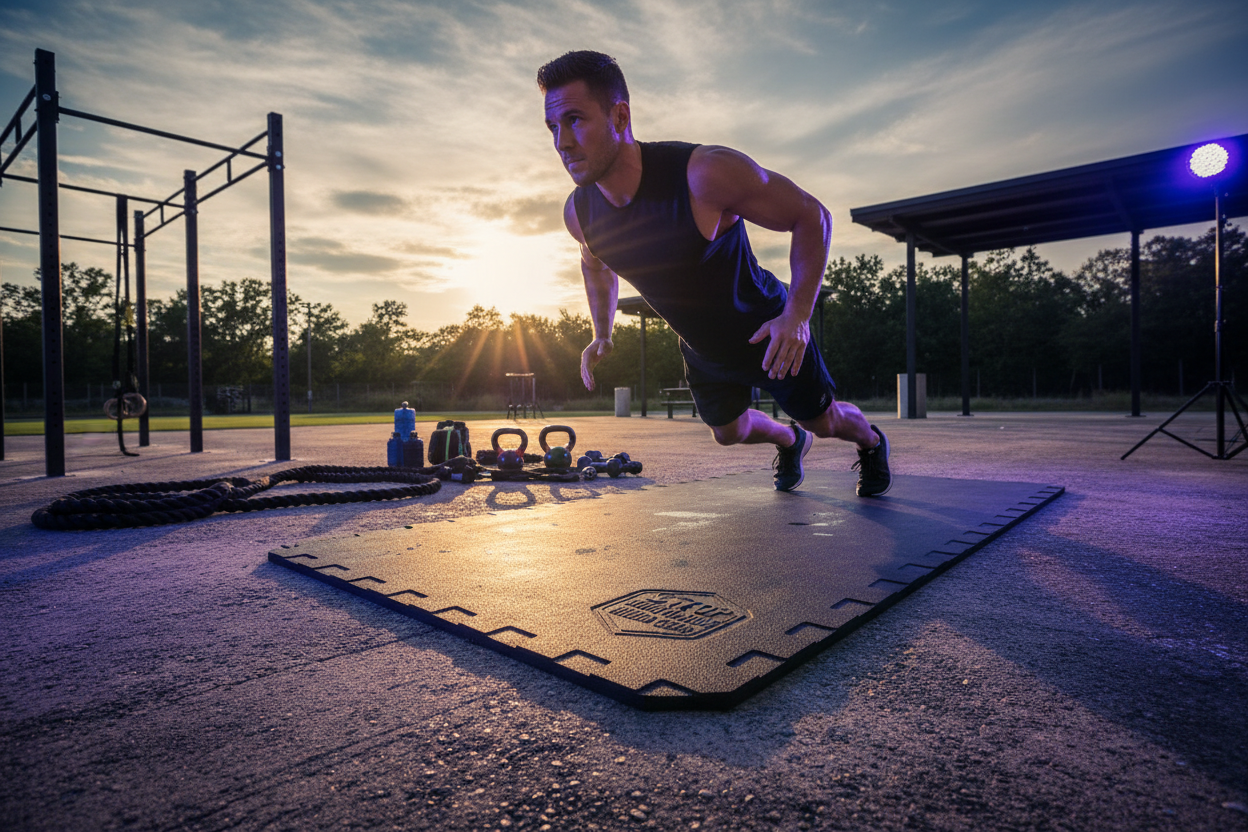
I swapped to a 10mm, UV-treated, waterproof exercise mat, and the difference was night and day. The extra thickness completely neutralized the harsh concrete, and the aggressive tread on the bottom meant it didn't slide an inch, even when the driveway was covered in a light layer of dust. The only minor caveat? A true heavy-duty outdoor gym floor mat is noticeably heavier to lug around than your standard yoga mat, so I highly recommend grabbing one with a dedicated carrying strap.
Frequently Asked Questions
Can I leave my gym mat outdoor permanently?
It depends on the material. Vulcanized rubber outdoor exercise flooring can be left out year-round, as it is designed to withstand freezing temperatures and intense heat. However, rollable foam or TPE mats should be stored away from direct sunlight when not in use to prolong their lifespan.
What is the best outdoor workout mat for concrete?
For concrete, prioritize thickness and density. A high-density rubber or thick closed-cell foam outdoor workout mat (at least 8mm to 10mm) is ideal. This provides the necessary shock absorption to protect your joints from the unforgiving surface.
Are puzzle mats good for an outdoor exercise flooring setup?
Standard EVA foam puzzle mats are generally too light and prone to blowing apart in the wind for permanent outdoor use. If you want interlocking outdoor workout flooring, choose heavy-duty rubber tiles that lock tightly and are heavy enough to stay put during storms.