Exercise Mat for Bike: Why Your Floors (and Ride) Need It
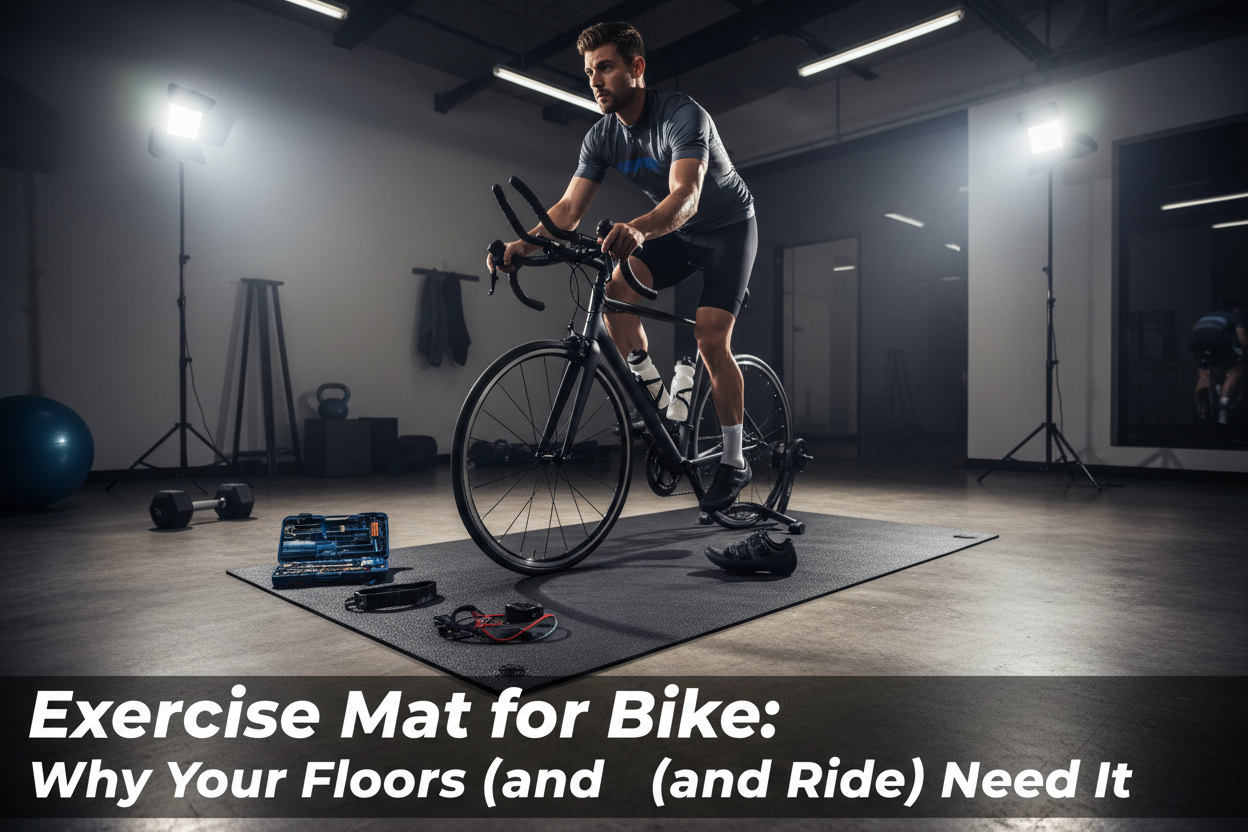
You just invested a significant amount of money in a high-end trainer or a Peloton, but you are likely overlooking the one accessory that keeps your setup functional. Setting up an exercise mat for bike training isn't just about aesthetics; it is about protecting your home and stabilizing your ride.
Many cyclists assume their existing yoga mat or a towel will suffice. That is a mistake. Between the high-frequency vibrations of a flywheel and the corrosive nature of sweat, your floor doesn't stand a chance without proper shielding. Let's look at exactly what you need to create a stable, sweat-proof pain cave.
Key Takeaways: Choosing the Right Mat
- Material Matters: High-density PVC is superior to foam for heavy equipment; foam compresses too much and causes instability.
- Carpet vs. Hardwood: Hardwood requires non-slip textures to prevent sliding. Deep pile carpet often needs a plywood sheet under the mat for true stability.
- Size Specifics: Ensure the mat extends at least 6 inches beyond the bike's footprint to catch sweat.
- Vibration Dampening: A quality cycling floor mat reduces the hum and vibration transfer to the floor below (critical for apartment dwellers).
Why You Can't Just Use a Yoga Mat
I see this question constantly: "Do you need a mat under an exercise bike, or can I just use my yoga gear?"
Here is the science behind why that fails. Yoga mats are designed for human weight distributed over hands and feet. They are soft and pliable. When you place a 100+ pound stationary bike on them, the heavy contact points (the feet of the bike) slice right through the soft foam.
Furthermore, a standard yoga mat is too narrow. A proper cycling matt or indoor training mat is designed to be wider and longer, accommodating the sweat spray that inevitably lands outside the bike's immediate footprint.
Matching the Mat to Your Floor Type
The best exercise bike mat for you depends entirely on what is underneath it. The physics change depending on whether you are on a rigid surface or a soft one.
Hardwood and Tile Floors
If you are training on hardwood, your enemies are scratches and sweat. The best exercise bike mat for hardwood floors is made of high-density PVC. This material is impermeable to liquid. If you drip sweat onto wood, it can warp the boards over time. A PVC pad for stationary bike setups creates a waterproof barrier.
Additionally, you need grip. During a heavy sprint on Zwift, a bike on a slick floor will "walk" or slide. A textured PVC mat locks the bike in place.
Carpeted Floors
Setting up a bike trainer on carpet is trickier. The issue here isn't scratches; it's wobble. The best bike mat for carpet needs to be stiffer than usual. If the mat is too soft, and the carpet padding is thick, your bike will rock side-to-side when you climb out of the saddle.
If you have high-pile carpet, even the best bike trainer mat might not be enough. The pro tip here is to buy a piece of 3/4-inch plywood, cut it to size, and place it between the carpet and the mat. This creates a floating subfloor for your spin bike platform.
Sizing for Specific Bikes (NordicTrack, Peloton, Wahoo)
Not all footprints are the same. If you are looking for the best mat for NordicTrack s22i or a Peloton Bike+, you need to account for the screen rotation and weight. These bikes are front-heavy.
Look for mats for indoor bikes that are at least 30 inches wide and 72 inches long. If you use a Wahoo KICKR or a Tacx Neo, you are looking for bike trainer mats specifically. These often have an hourglass shape, but a rectangular zwift floor mat offers better sweat coverage for the floor surrounding the cassette.
My Training Log: Real Talk
Let's drop the specs for a second. I want to tell you about the time I ruined a section of my living room floor because I was cheap.
I was testing a direct-drive trainer and figured an old camping foam pad would work fine. Two weeks into a high-intensity training block, I moved the setup to clean. Not only had the trainer's heavy legs cut clean through the foam, but the sweat had pooled underneath, creating a dark, warped ring on the laminate flooring that smelled distinctively like a locker room.
But the worst part was the "squish." Every time I stood up to sprint, I felt the bike sink into the foam on the downstroke. It saps your power transfer. When I finally switched to a rigid, high-density cycling floor mat, the bike felt bolted to the concrete. The difference in stability was immediate—no more micro-wobbles when I was pushing 800+ watts.
Conclusion
Don't let a $50 accessory ruin a $2,000 bike or your home's flooring. Whether you need a sweat mat for spin bike sessions or a heavy-duty indoor bike trainer floor mat for a smart trainer, prioritize density over thickness. Your floors will stay dry, and your power transfer will stay efficient.
Frequently Asked Questions
Do I really need a mat under my exercise bike on carpet?
Yes. While carpet protects the floor from scratches, it absorbs sweat like a sponge. Over time, this leads to mold growth and odors in the carpet padding. A waterproof indoor bike mat for carpet prevents moisture from penetrating the fibers.
What is the best thickness for a bike trainer mat?
Thicker isn't always better. A mat that is too thick (over 6mm of soft foam) creates instability. Look for a 4mm to 6mm high-density PVC mat. This provides enough cushion to dampen vibration noise without introducing wobble.
Can I use a rubber gym tile instead of a roll-out mat?
Absolutely. Interlocking rubber gym tiles (horse stall mats) make an excellent spin bike mat for carpet or concrete. They are incredibly durable and heavy, meaning they won't slide around, though they can be harder to clean than a smooth roll-out mat.