Exercise Machine Names: The Definitive Field Guide for Beginners
Walking into a large commercial gym often feels like stepping into the cockpit of a fighter jet without a flight manual. You see rows of metal, cables, and leather pads, but identifying the specific exercise machine names can be intimidating. This confusion often leads to "gymtimidation" or, worse, injury from using equipment incorrectly.
Understanding these gym instruments names isn't just about vocabulary; it is about efficiency. Knowing exactly what a piece of gear is called helps you find tutorials, track your progress, and structure a logical workout program. Let’s strip away the confusion and map out the gym floor.
Key Takeaways: Machine Categories
If you are looking for a quick breakdown of how equipment is categorized, here is the cheat sheet:
- Cardio Machines: Designed for endurance (e.g., Treadmills, Ellipticals, Rowers).
- Selectorized (Pin-Loaded) Machines: Machines with a weight stack where you insert a pin to select resistance (e.g., Lat Pulldown, Leg Extension).
- Plate-Loaded Machines: Equipment where you manually add round weight plates (e.g., Hack Squat, Leg Press).
- Cable Machines: Versatile pulley systems allowing free range of motion (e.g., Functional Trainer, Cable Crossover).
The Cardio Section: More Than Just Running
Most gyms position these machines near the entrance. While they seem straightforward, knowing the correct names of exercise machines in this section helps you program your conditioning.
The Ergometer (Rowing Machine)
Often just called the "rower," the technical term is an ergometer (or "erg"). This machine simulates watercraft rowing. It is unique because it demands leg drive, core stability, and upper body pulling power simultaneously.
The Elliptical Trainer
This is a staple for low-impact cardio. Unlike a treadmill, your feet never leave the pedals, which reduces stress on the knees and hips. It mimics the motion of running but follows an orbital (elliptical) path.
Selectorized Machines: The Pin-Loaded Circuit
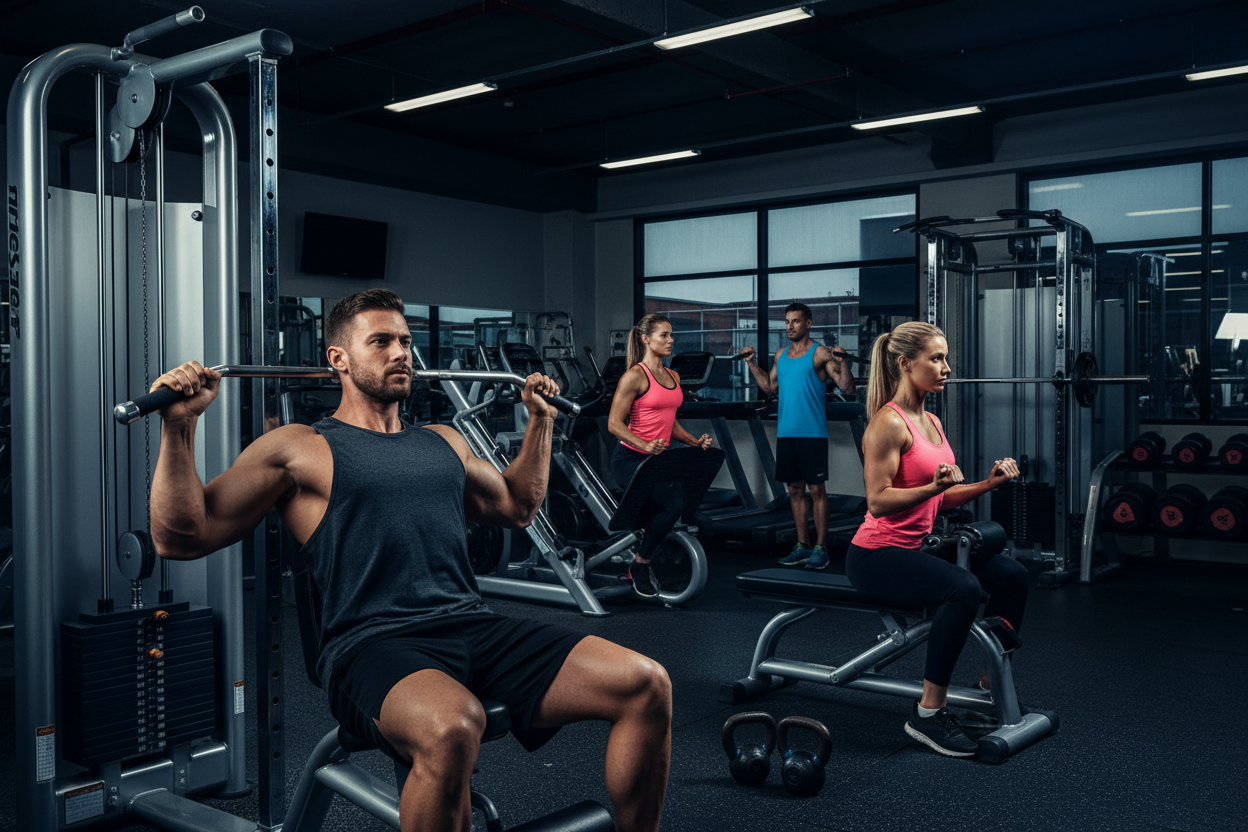
These are the machines with the rectangular weight stacks. They are excellent for isolation exercises because they stabilize your body, forcing specific muscles to do the work.
Lat Pulldown
You will find this tall machine with a seat and a long bar hanging from a cable. It targets the Latissimus Dorsi (back muscles). A common mistake here is pulling the bar behind the neck, which puts unnecessary strain on the rotator cuff. Always pull to the upper chest.
Leg Extension & Leg Curl
These are often paired together. The Leg Extension involves sitting and kicking upward to target the quadriceps. The Leg Curl (either seated or lying prone) involves curling the heels toward the glutes to target the hamstrings. These are isolation movements, meaning they move only one joint.
The Pec Deck (Machine Fly)
This machine locks your arms in a bent or straight position to bring them together in front of your chest. It isolates the pectorals without the balancing act required by dumbbells.
The Heavy Hitters: Plate-Loaded & Racks
This area usually features heavy iron and requires you to load weight plates manually.
The Smith Machine
Frequently confused with a standard squat rack, the Smith Machine features a barbell fixed within steel rails. The bar can only move vertically. This removes the need to balance the weight, making it safer for solo training, though it forces a slightly unnatural movement path compared to free weights.
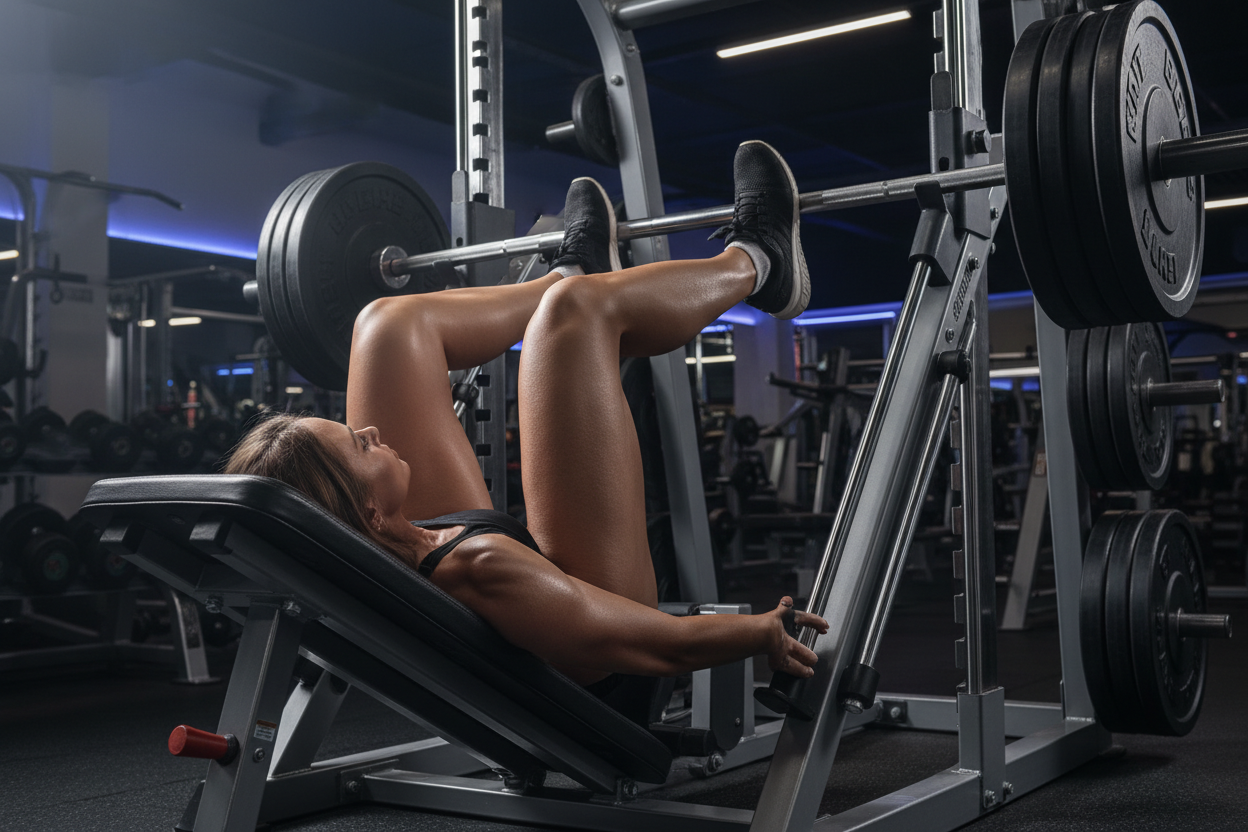
The Leg Press
This is a sled-style machine set at a 45-degree angle. You sit in a reclined position and push a loaded platform away from you. It allows you to move significantly more weight than a squat because your back is supported, removing the limiting factor of core stability.
The Cable Crossover (Functional Trainer)
This is usually a massive, wide frame with two adjustable pulley stacks on opposite sides. It is perhaps the most versatile tool in the gym. By changing the handle attachments and the height of the pulley, you can perform hundreds of movements, from tricep press-downs to woodchoppers.
My Personal Experience with Exercise Machine Names
I remember my first month training in a serious bodybuilding gym. I was trying to follow a program I found online that called for a "Hack Squat." I spent twenty minutes wandering the floor, eventually settling on a machine that looked vaguely correct. I loaded it up and started pushing.
It wasn't a Hack Squat. It was a pendulum squat machine. The pivot point was completely different. I remember the specific, grinding friction of the pads against my shoulders and the terrifying realization at the bottom of the rep that the weight curve was much heavier than I anticipated. My knees shot forward, and I barely racked the weight back up.
That moment of panic—feeling the distinct wobble of the carriage and the smell of old rubber handles—taught me a valuable lesson. Knowing the names isn't about sounding smart; it's about knowing the biomechanics. A Hack Squat slides on rails; a pendulum swings on an arc. That subtle difference in naming convention changes the entire shear force on your knees.
Conclusion
Mastering these gym instruments names is the first step toward autonomy in your fitness journey. When you know the difference between a Smith Machine and a Power Rack, or a Lat Pulldown and a High Row, you stop guessing and start training with intent. Next time you walk into the gym, use this guide to identify your tools, adjust them to your body, and get to work.
Frequently Asked Questions
What is the best machine for beginners to start with?
Selectorized (pin-loaded) machines are generally best for beginners. They have fixed movement paths that guide your form, reducing the risk of injury while you build a baseline level of strength and coordination.
What is the machine with the ropes called?
That is typically called a "Battle Rope" station if the ropes are on the floor. If you are referring to the machine with pulleys and cables, it is a "Cable Machine" or "Functional Trainer." The rope attachment itself is simply a "rope handle."
Are machines better than free weights?
Neither is inherently "better"; they serve different purposes. Machines offer stability and isolation, making them great for hypertrophy (muscle growth) and rehabilitation. Free weights require more stabilization, which improves overall functional strength and coordination.