Exercise for Lean Body at Home? Ditch the Treadmill
I still remember a client, Sarah, who lived in a cramped 400-square-foot studio apartment. She wanted to drop body fat and assumed the only solution was to cram a cheap folding treadmill right next to her couch. Three months later, that treadmill was nothing more than an expensive clothes hanger. If you are searching for the best exercise for lean body at home, I have good news: you do not need bulky traditional cardio equipment. Instead, I teach my clients a method called Contrast Training.
By pairing slow, heavy strength movements with fast, explosive bodyweight exercises, you force your nervous system into overdrive. This creates a massive metabolic burn that strips away fat while preserving the muscle that gives your body its shape. Let me show you exactly how to set this up in your living room or garage.
Quick Takeaways: Contrast Training
- Pairs a heavy, slow lift with a fast, explosive movement using the same muscle group.
- Triggers post-activation potentiation (PAP), allowing you to recruit more fast-twitch muscle fibers.
- Burns more calories post-workout than steady-state cardio.
- Requires minimal equipment: just a heavy dumbbell or kettlebell and adequate floor space.
- Keeps workouts under 30 minutes due to high intensity.
Why Traditional Cardio Fails the Lean Body Goal
When most people decide they want to lose fat, their default setting is to jog. Steady-state cardio certainly burns calories while you are actively moving your legs. However, the metabolic fire dies the second you step off the treadmill. Your body is incredibly efficient; the more you jog, the better your body gets at conserving energy during that specific activity.
If you want to understand how to get lean at home, you have to shift your focus from simply burning calories to prioritizing muscle retention and metabolic output. Muscle is metabolically active tissue. It costs your body calories just to maintain it. When you rely solely on low-intensity cardio, you risk losing muscle mass alongside fat, which leads to a "skinny fat" appearance rather than a toned, athletic physique.
High-intensity resistance training forces your body to adapt by increasing your resting metabolic rate. You burn calories long after the workout is over as your body repairs the muscle tissue. Contrast training takes this a step further by demanding extreme force production, taxing your central nervous system, and creating an oxygen debt that takes hours to repay.
The Science of Contrast Training for Fat Loss
Contrast training works on a physiological principle called post-activation potentiation, or PAP. Here is what happens inside your body: when you lift a heavy weight, your central nervous system sends a massive signal to your muscles, recruiting as many motor units as possible to move the load. Your nervous system is now fully "lit up" and primed for action.
If you immediately drop the heavy weight and perform an explosive, unweighted movement using the exact same muscle group, your nervous system is tricked. It still fires with the intensity needed for the heavy weight, but now there is zero resistance. The result? You move faster, jump higher, and push harder than you normally could. This rapid transition from heavy tension to explosive speed creates the ultimate lean body exercise at home.
The metabolic cost of recruiting all those fast-twitch muscle fibers is enormous. Your heart rate spikes, your muscles burn through stored glycogen, and your body is forced to tap into fat stores for recovery energy. While you can absolutely perform the heavy portion of this method with a single 50-pound dumbbell, integrating this protocol with standard at home exercise machines can amplify the heavy resistance portion of the workout. For instance, doing a heavy leg press before moving to floor jumps.
Structuring Your Contrast Movement Pairings
To build an effective contrast pair, you must follow a strict rule: the two exercises must target the same biomechanical movement pattern. If you do a heavy squat, you follow it with a vertical jump. If you do a heavy chest press, you follow it with an explosive pushup.
The transition time between the heavy lift and the explosive movement must be less than 15 seconds. You want to capitalize on that nervous system excitation before it fades. After the explosive movement, you rest completely for 90 to 120 seconds to allow your central nervous system to recover.
Lower Body Power Combinations
The legs house your largest muscle groups, meaning lower body contrast pairings will generate the highest heart rate spikes and the greatest calorie burn. My go-to pairing for clients is the heavy goblet squat combined with the explosive jump squat.
Grab a heavy dumbbell or kettlebell—something that makes 6 to 8 reps feel very challenging. Perform the goblet squats with a slow tempo: 3 seconds lowering down, a 1-second pause at the bottom, and a powerful drive up. The moment you finish your last rep, safely drop the weight.
Immediately transition into 5 to 8 explosive bodyweight jump squats. Do not rush the reps; focus on maximum height and a soft, controlled landing. The goal is power, not just mindlessly bouncing up and down. If you eventually want to transition from this conditioning focus into building pure leg mass, you can easily adapt these principles into a dedicated at home lower body workout by increasing the load and dropping the jump volume.
Upper Body and Core Combinations
Upper body contrast training requires a bit more creativity, especially if you lack heavy weights at home. I often use mechanical disadvantage to make the strength portion harder. A perfect example is the tempo pushup paired with a plyometric clapping pushup.
Start with your feet elevated on a couch or chair to increase the resistance on your chest and shoulders. Perform 6 to 8 slow pushups, taking 4 seconds to lower your chest to the floor. The slow eccentric phase builds immense tension. Once you hit failure or near-failure, drop your feet to the floor.
Instantly perform 5 plyometric pushups, driving your hands off the floor as hard as possible. You can clap if you have the speed, but simply getting your hands airborne is enough. Another great upper body core pairing is a heavy dumbbell pullover on the floor, immediately followed by 10 aggressive medicine ball slams. The pullover heavily taxes the lats and core, and the slam requires explosive power from those exact same muscles.
The 30-Minute Lean Body Home Workout Routine
Here is a complete lean body home workout you can execute in under 30 minutes. Perform this routine 3 times a week on non-consecutive days. Focus on form during the heavy lifts and absolute speed during the explosive movements.
Pairing 1: Lower Body Push
1A. Heavy Dumbbell Goblet Squat: 6-8 reps (3-second lowering phase)
1B. Bodyweight Jump Squats: 5 reps (Max height)
Rest 90 seconds. Repeat for 4 total sets.
Pairing 2: Upper Body Push
2A. Feet-Elevated Tempo Pushups: 6-8 reps (4-second lowering phase)
2B. Plyometric Pushups: 5 reps (Hands leave the floor)
Rest 90 seconds. Repeat for 4 total sets.
Pairing 3: Lower Body Hinge
3A. Heavy Dumbbell Romanian Deadlift: 8 reps (Focus on hamstring stretch)
3B. Broad Jumps: 5 reps (Jump forward as far as possible, reset after each jump)
Rest 90 seconds. Repeat for 3 total sets.
Because you are performing high-impact movements like jump squats and broad jumps, landing on hard concrete or thin carpet is a recipe for knee and ankle pain. I require my clients to use a large exercise mat to ensure proper shock absorption and joint protection when performing the explosive plyometric portion of the workout.
Setting Up Your Space for High-Impact Movements
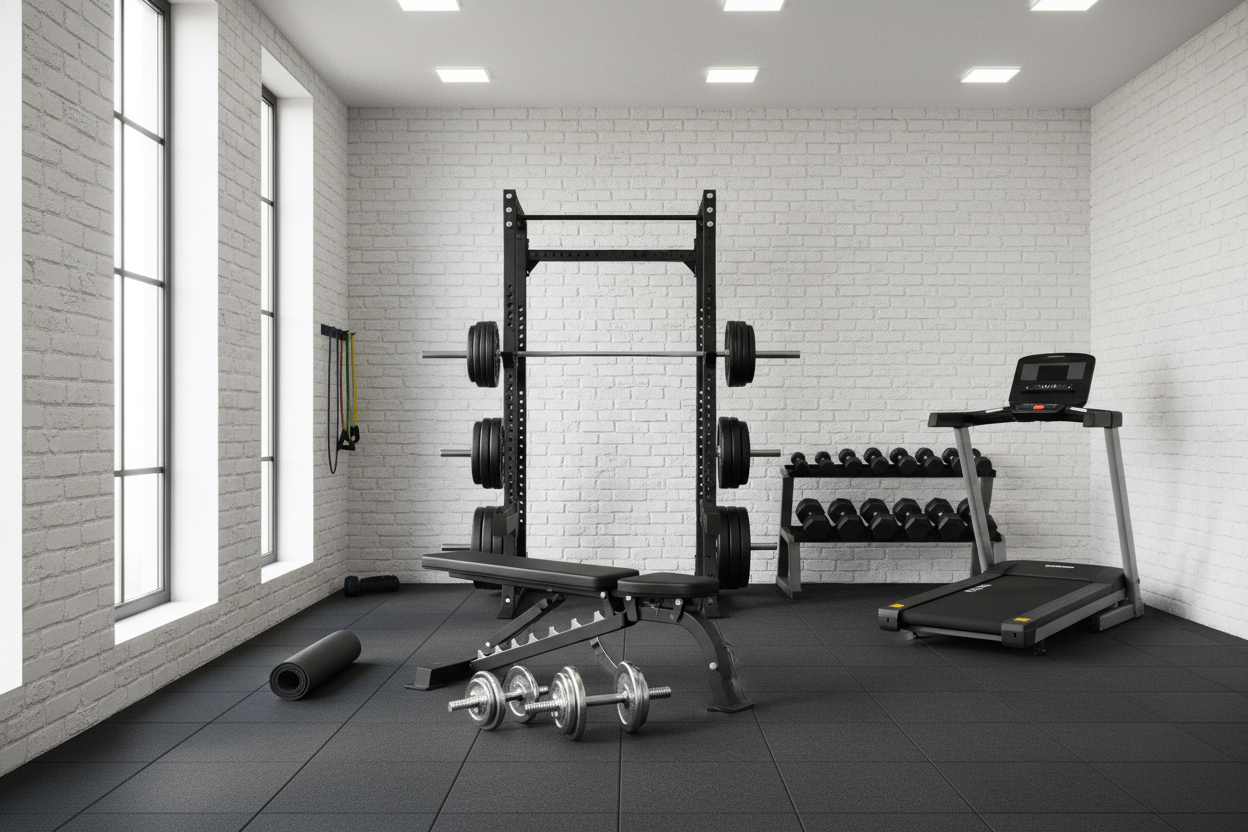
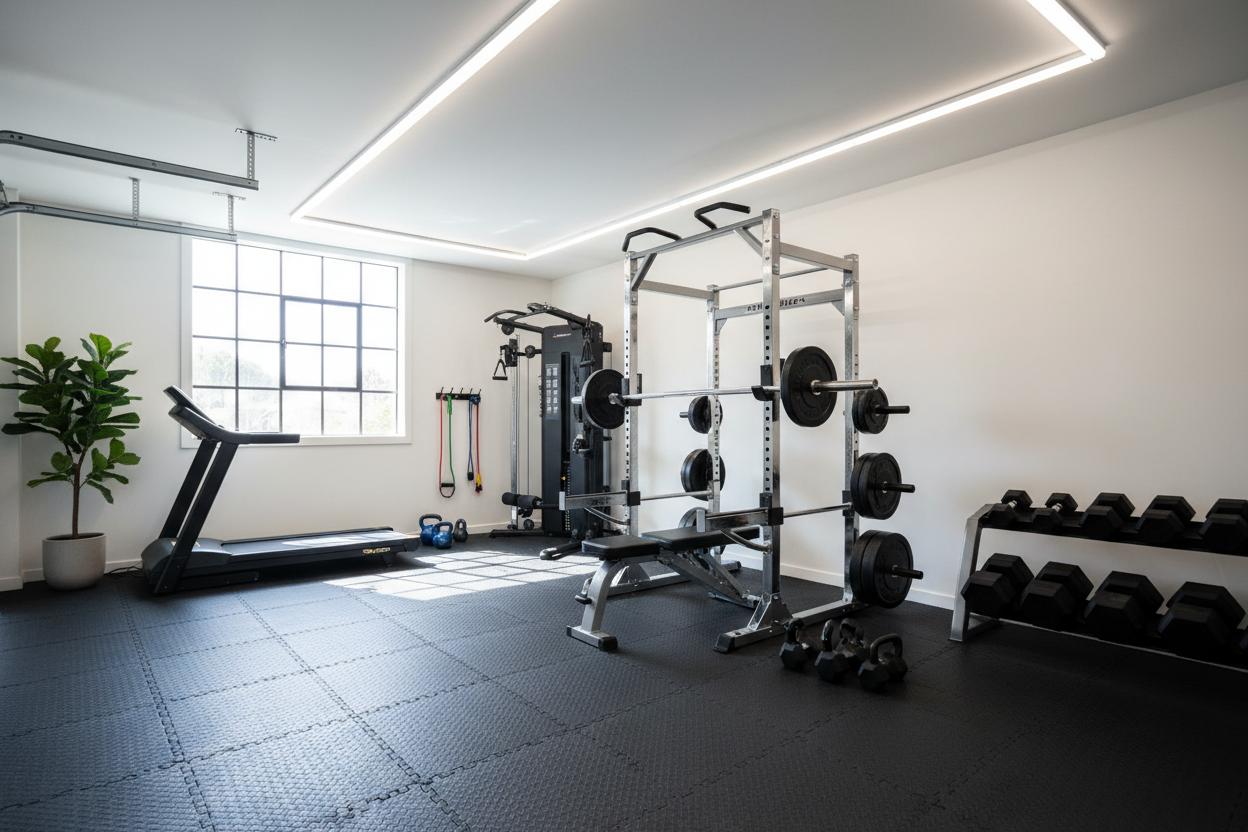
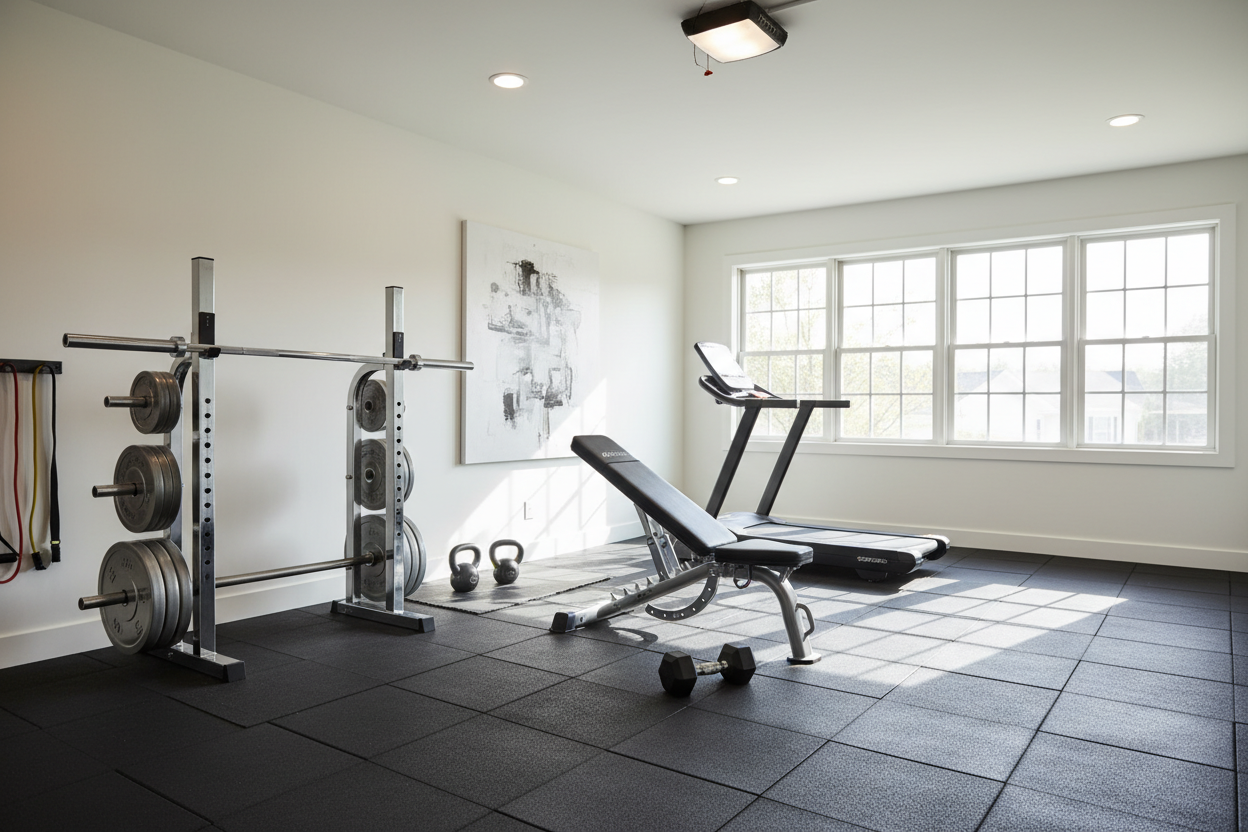
Executing a fast-paced lean body workout at home requires a safe environment. You are moving rapidly from heavy weights to explosive jumping, which means sweat will hit the floor, and weights will occasionally be dropped.
I tested this exact contrast protocol in my own garage gym for two months. The biggest downside I found initially was traction. When you are doing broad jumps or plyo pushups, a slick floor will cause your hands or feet to slide out from under you. If you sweat heavily, cheap foam puzzle mats become ice rinks.
You need a surface that grips your shoes and handles the impact of a 50-pound dumbbell being set down hastily. I recommend investing in a 6x8ft exercise mat. It provides enough surface area for lateral jumps, broad jumps, and heavy dumbbell drops without shifting across the floor. Plus, it dampens the noise of your jumps, which your downstairs neighbors will appreciate.
Frequently Asked Questions
Can I do contrast training every day?
No. Contrast training is highly taxing on your central nervous system. I recommend doing this routine 2 to 3 times a week, with at least 48 hours of rest between sessions to allow your muscles and nervous system to fully recover.
What weights should I use for the strength portion?
You should use a weight that feels like an 8 out of 10 on the difficulty scale. If the routine calls for 8 reps, you should physically only be able to complete 9 or 10 reps with perfect form. If you can easily do 15 reps, the weight is too light to trigger the post-activation potentiation effect.
Will this heavy lifting make me bulky?
Absolutely not. Building "bulk" requires a massive calorie surplus and a specific hypertrophy training volume over years. Heavy lifting paired with explosive movement in a slight calorie deficit will simply make your muscles dense, hard, and visible as you strip away the overlying body fat.