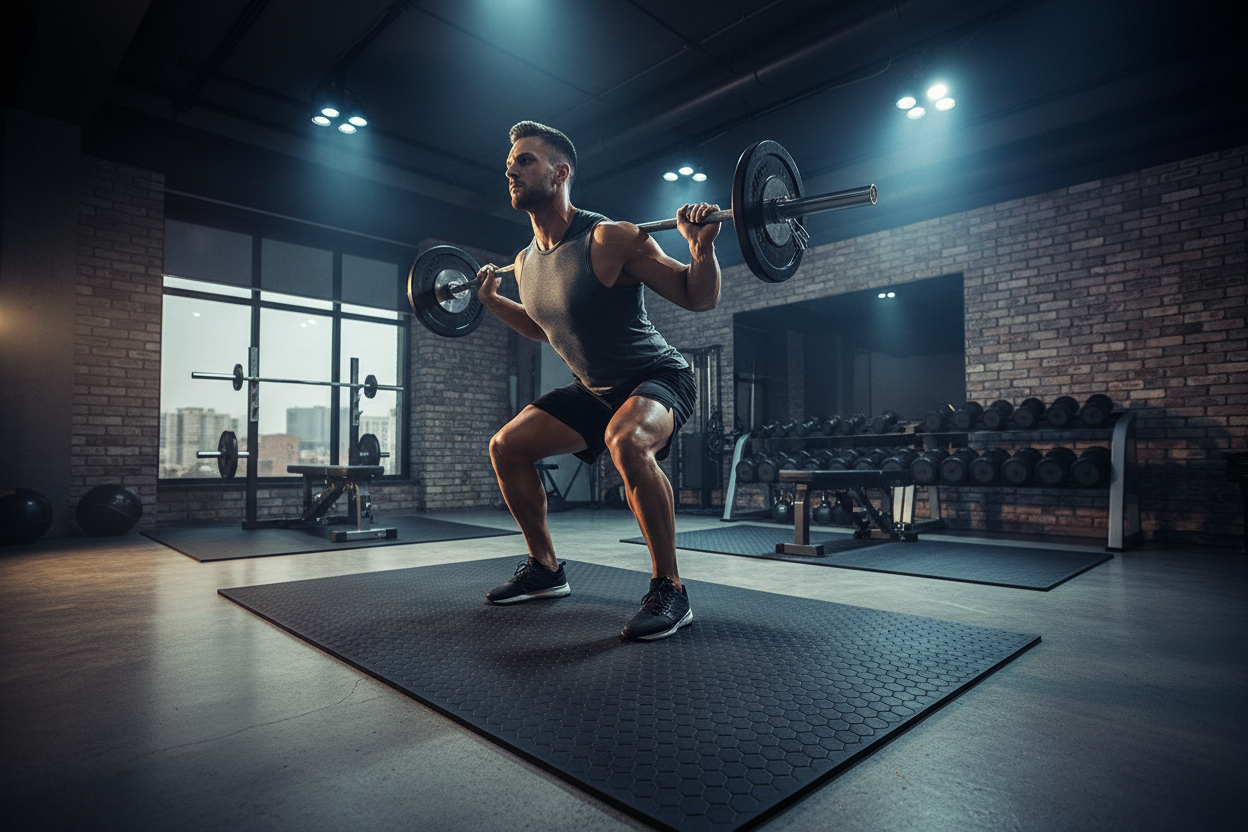
Exercise Equipment Mat Canada: The Definitive Protection Guide
You spent weeks researching the perfect treadmill or power rack. You compared specs, read reviews, and finally dropped a significant amount of cash on a machine to improve your health. But there is one crucial component most people overlook until it’s too late: what goes under that machine.
Placing heavy iron or cardio machines directly on hardwood, tile, or even carpet is a recipe for disaster. We aren't just talking about scratches; we are talking about structural damage caused by vibration and point-load weight. Finding the right exercise equipment mat canada has to offer is not just an accessory purchase—it is an insurance policy for your home.
Key Takeaways: Choosing the Right Mat
- Material Density is King: Soft foam mats compress over time, causing instability. Look for high-density PVC or recycled rubber.
- Thickness vs. Stability: Thicker isn't always better. A mat that is too soft will cause your machine to wobble. 6mm to 8mm is the sweet spot for cardio gear.
- Vibration Dampening: The primary goal is to decouple the machine from the floor to reduce noise transfer, especially in condos.
- Size Accuracy: Always measure the footprint of your machine at its widest point (including moving parts) and add 6 inches of clearance.
The Physics of Floor Protection
Many people assume a towel or a yoga mat is sufficient buffering for a stationary bike. This is incorrect. The issue comes down to PSI (Pounds per Square Inch). When you run on a treadmill, you aren't just exerting the machine's weight on the floor; you are adding the impact force of your stride, repeated thousands of times.
A proper equipment mat disperses this energy. Without it, that energy travels directly into your floorboards. On hardwood, this creates dents. On carpet, it grinds the backing into the subfloor, creating permanent indentations and wearing out the carpet fibers from the bottom up.
Why Yoga Mats Fail
Standard yoga mats are designed for bare feet and body weight. They are made of open-cell foam which is porous and soft. If you put a 200lb elliptical on a yoga mat, the machine's feet will cut right through the foam within a week. You need closed-cell, high-density materials designed to withstand constant compression without losing their shape.
Material Selection: PVC vs. Rubber
When browsing Canadian retailers, you will generally see two main material types. Here is the breakdown of which one fits your setup.
High-Density PVC (Vinyl)
This is the industry standard for cardio equipment. PVC mats are usually thinner (around 6mm) but incredibly dense. They are impervious to sweat and water, making them easy to wipe down.
Best for: Treadmills, ellipticals, spin bikes, and rowing machines. The texture prevents the machine from "walking" across the floor during intense sprints.
Recycled Rubber
If you are lifting heavy weights, PVC won't cut it. You need thick, recycled rubber (often sold as horse stall mats or specific gym flooring). Rubber offers superior impact absorption for dropped dumbbells.
Best for: Power racks, weight benches, and deadlift zones. Note that rubber often has a distinct smell initially, which can be an issue in small, unventilated Canadian basements during winter.
Regional Considerations: Sourcing in Canada
Availability can be tricky depending on your province. Shipping heavy rubber mats across the country is expensive due to weight. If you are looking for exercise mats edmonton retailers or suppliers in Calgary, you have the advantage of being closer to several industrial rubber manufacturers that supply the oil and farming industries.
In Western Canada, specifically, checking local industrial suppliers rather than big-box fitness stores can often save you money on heavy-duty rubber flooring. For the rest of Canada, online retailers specializing in fitness gear are usually your best bet for high-quality PVC mats that ship at reasonable rates.
My Training Log: Real Talk
I learned the hard way why generic foam puzzle mats are garbage for heavy equipment. A few years ago, I set up a heavy-duty spin bike in my spare room. I bought those cheap, interlocking foam tiles thinking they would protect the laminate flooring.
Two months later, I moved the bike to clean. Not only had the bike's leveling feet punched clear through the foam, but the "waffle" texture of the mat had actually imprinted onto the laminate finish because of the friction and heat generated during my sprints. It looked like a honeycomb ghost on my floor.
Even worse was the stability. During high-resistance climbs out of the saddle, I could feel the bike swaying because the foam was too squishy. It felt like riding in sand. I swapped it for a solid 6mm PVC mat the next week. The difference was immediate—the bike felt bolted to the floor, and the wobble vanished completely. Don't cheap out on the foundation.
Conclusion
Your home gym is an investment, and your home is an even bigger one. Don't jeopardize your floors or your safety to save twenty dollars. Measure your equipment, choose a high-density material that suits your training style, and secure a mat that keeps your gear grounded.
Frequently Asked Questions
How thick should a treadmill mat be?
For most residential treadmills, a thickness of 6mm (approx. 1/4 inch) is ideal. This provides enough cushioning to protect the floor and dampen noise without creating an unstable surface that causes the treadmill to bounce or wobble.
Can I use a carpet remnant instead of a mat?
It is not recommended. Carpet fibers can trap dust and debris, which then get sucked into your treadmill's motor or belt mechanism, leading to premature failure. A proper equipment mat has a smooth surface that helps keep dust away from the machine's intake.
Does an equipment mat reduce noise for downstairs neighbors?
Yes, significantly. A quality mat acts as a vibration isolator. While it won't eliminate the sound of your footfalls completely, it decouples the machine from the structure of the building, preventing that booming, rhythmic thudding from traveling through the floor joists.