Examples of Exercise Program: Building Routines With One Tool
I remember standing in a client's 400-square-foot studio apartment, staring at a corner that barely fit a yoga mat and a potted plant. She wanted to get strong, but the idea of cramming a rack, barbell, and weight plates into that tiny footprint was physically impossible. We had to get creative. If you are staring down a similar space constraint or simply want to stop overthinking your workouts, stripping your gear down to bare bones is the answer. Searching for effective examples of exercise program routines usually yields massive, equipment-heavy spreadsheets. But I have found that limiting yourself to just one tool at a time actually forces better results.
Quick Takeaways
- Single-tool workouts eliminate decision fatigue and keep you focused on movement quality over gear selection.
- A single 16kg to 24kg kettlebell can replace an entire cardio and strength circuit.
- Adjustable dumbbells (like a 5-52.5 lb set) offer the most versatile path for traditional muscle hypertrophy at home.
- Progressive overload does not always mean adding weight; tempo manipulation and isometric pauses are highly effective.
Why Equipment Constraints Create Better Workouts
When you have a massive commercial gym at your disposal, it is incredibly easy to waste twenty minutes wandering between machines. You do three sets of cable crossovers, poke at the leg press, and suddenly your hour is gone. I see this happen constantly. By restricting your home setup to a single piece of equipment, you completely eliminate decision fatigue.
Constraints breed creativity. When you only have one tool, you are forced to master fundamental human movement patterns: pushing, pulling, hinging, squatting, and carrying. You stop looking for a novel machine to target a muscle and start learning how your body mechanics actually work.
Many of my clients initially struggle with this minimalist mindset. They try Adapting an Online Fitness Program for Your Home Gym and get frustrated when they cannot perfectly replicate complex cable setups. I always tell them to simplify. Stripping a routine down to its raw mechanics using one tool ensures you actually do the work instead of stressing over the setup.
Kettlebell-Only: An Example of Fitness Program Power
If I had to pick one single piece of equipment to train with for the rest of my life, it would be a cast-iron kettlebell. A solid 16kg (35 lb) or 24kg (53 lb) bell can train absolute strength, explosive power, and cardiovascular endurance in a tiny 6x6 foot space.
A well-structured kettlebell routine divides work into ballistics (fast, explosive movements) and grinds (slow, tension-focused lifts). An excellent example of fitness program design with a kettlebell involves a full-body circuit performed three days a week. You start with 5 sets of 15 heavy two-handed swings to fire up the posterior chain and spike your heart rate. From there, you transition into grinds: 4 sets of 8 goblet squats per leg to crush the quads and core, followed by 4 sets of 5 strict overhead presses per arm.
Because you are swinging a heavy chunk of iron between your legs and occasionally setting it down hard, flooring protection is non-negotiable. I always have my clients work on a Large Exercise Mat 6X4 to absorb the impact and prevent the bell from gouging their hardwood floors during Turkish get-ups or heavy cleans.
Dumbbell-Focused Exercise Program Examples
For pure muscle hypertrophy, a set of adjustable dumbbells is incredibly hard to beat. A standard 5 to 52.5-pound adjustable set takes up about two square feet of floor space but replaces an entire rack of fixed weights.
When looking at exercise program examples for dumbbells, the classic Push/Pull/Legs (PPL) split translates perfectly. On Push day, you hit floor presses, seated overhead presses, and triceps kickbacks. Pull day covers heavy single-arm rows, dumbbell pullovers, and alternating bicep curls.
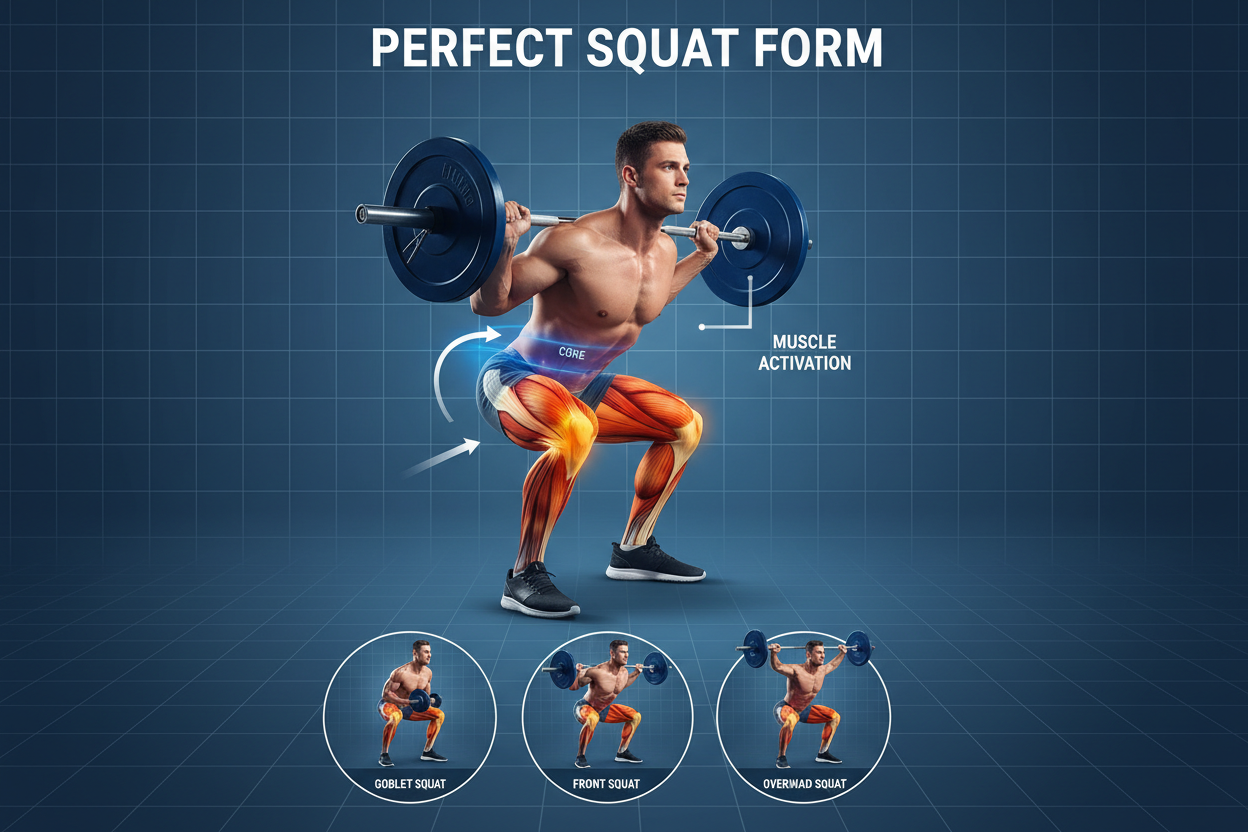
Leg day is where people usually think dumbbells fall short, but that is a myth. By holding the weights in a front-rack position or performing Bulgarian split squats, you can generate massive tension in the glutes and quads without needing a barbell across your back. If you want to dive deeper into lower body mechanics, you can Build Serious Leg Power With This Proven Squat Exercise Program to see how dumbbell placement shifts the stimulus.
Resistance Bands: A Joint-Friendly Fitness Program Example
Heavy continuous loop resistance bands are highly underrated. I have tested dozens of sets, usually ranging from a 1/2-inch red band (10-35 lbs of resistance) up to a 2.5-inch blue band (65-175 lbs). They weigh almost nothing, making them the ultimate travel companion, but they also offer a unique mechanical advantage: accommodating resistance.
A solid fitness program example using bands focuses on constant tension. For instance, doing a banded push-up. As you press up, the band stretches and the resistance increases right where you are mechanically strongest. This creates an incredible muscle pump while being forgiving on the shoulder and elbow joints compared to a rigid barbell.
My Experience Testing Band-Only Routines
I spent three months doing a band-only routine in my living room. The muscle growth was legitimate, and my joints felt fantastic. However, I have to share one honest downside: the resistance curve can feel awkward at the bottom of a movement. At the bottom of a banded squat, the band goes completely slack unless you wrap it perfectly, meaning you lose tension exactly where you usually need it most to build starting strength. It takes practice to get the setup right.
Setting Up Your Single-Tool Training Space
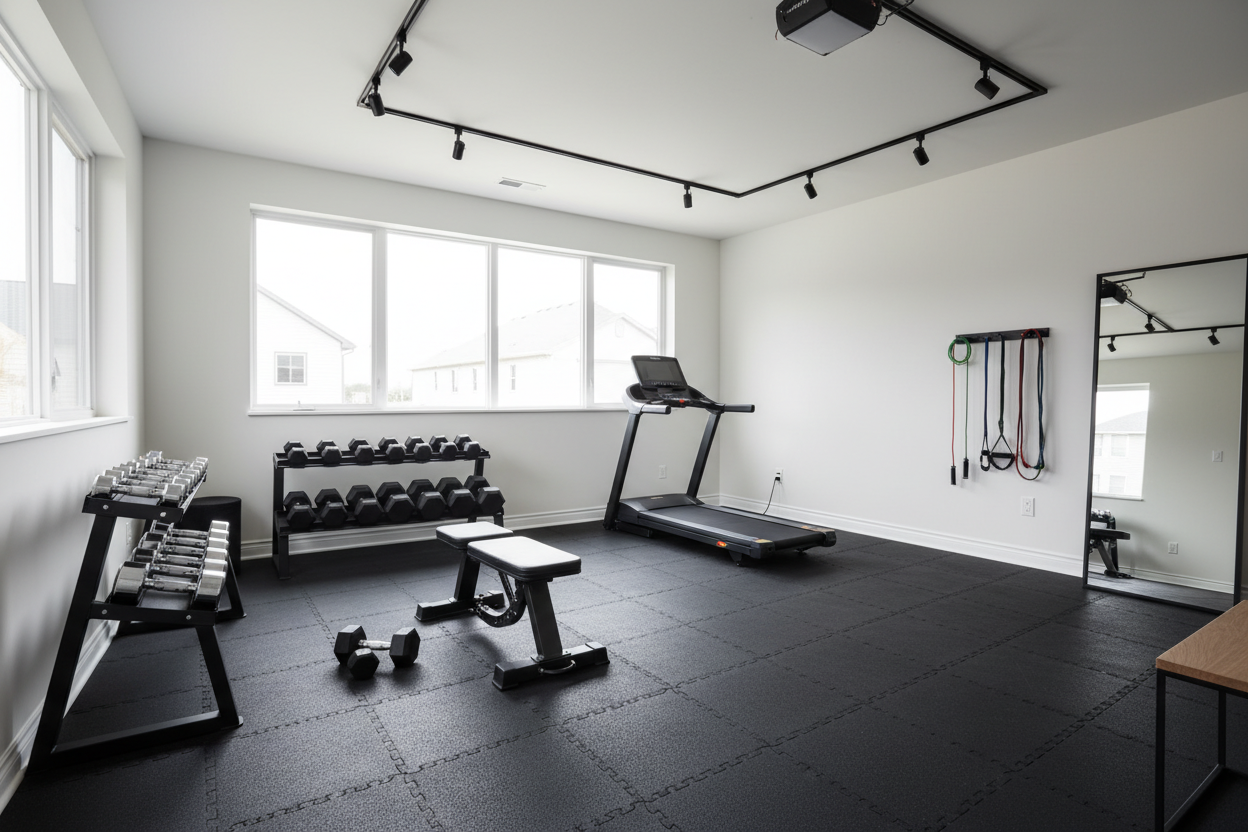
Even with minimal gear, your environment dictates your consistency. You do not need a two-car garage to build an effective home gym, but you do need a dedicated footprint. I recommend carving out a permanent 6x6 or 8x8 foot zone in your spare room, basement, or living room corner.
The foundation of this space is crucial. When you are doing heavy kettlebell swings or pushing to failure on dumbbell lunges, slipping is a real hazard. Dropping a weight on bare concrete or thin carpet is a quick way to cause damage. Laying down a high-quality Large Exercise Mat instantly transforms a random patch of floor into a legitimate training boundary. It provides the necessary traction for barefoot or shoed training and dampens the noise so you are not disturbing the neighbors during a 5 AM workout.
How to Progress Your Minimalist Routine
The biggest question I get about single-tool training is how to keep getting stronger once the weight feels light. If you only own a 50-pound dumbbell, you cannot just slap a 5-pound plate on it. Instead, you have to manipulate other variables.
Start by slowing down your tempo. A 50-pound goblet squat feels twice as heavy if you take four full seconds to descend, pause for two seconds at the bottom, and explode up. Next, increase your volume. Pushing your sets from 8 reps up to 15 or 20 reps will absolutely torch your muscles and force adaptation. Finally, shorten your rest periods. Shrinking your rest from 90 seconds to 45 seconds creates metabolic stress that drives serious results without ever buying a heavier weight.
Frequently Asked Questions
Can I really build muscle with just one kettlebell?
Yes. By focusing on high-tension movements like strict presses and front squats, and progressively increasing your reps or slowing your tempo, you can create the mechanical tension required for muscle hypertrophy.
Are adjustable dumbbells durable enough for heavy training?
Most modern adjustable sets are highly durable and tested for thousands of reps. However, they feature complex internal locking mechanisms, so you should never drop them directly onto the floor after a heavy set.
How often should I change my single-tool routine?
Stick with a specific program for at least 6 to 8 weeks. Jumping between routines too frequently prevents you from mastering the movements and tracking genuine progressive overload.