Epoxy Gym Floor Explained: What to Know Before Pouring
Building a home gym usually starts with the fun stuff: picking out a power rack, hunting for the perfect barbell, and stacking up bumper plates. But if you are setting up in a garage or unfinished basement, you quickly run into a glaring issue: the dusty, stained, and uninspiring concrete foundation. That is where a high-quality epoxy gym floor comes into play.
Whether you are tired of sweeping up concrete dust or just want that premium, commercial-facility aesthetic, upgrading your foundation changes the entire feel of your training space. In this guide, we will break down the durability, traction needs, and real-world performance of epoxy coatings to help you decide if it is the right foundation for your iron paradise.
Key Takeaways
- Extreme Durability: Epoxy seals concrete, preventing dust and resisting chemical spills, sweat, and heavy equipment compression.
- Traction is Mandatory: A bare epoxy finish is dangerously slick when wet; anti-slip additives are crucial for lifting safely.
- Rubber Mats are Still Needed: While tough, epoxy can chip under direct, heavy barbell drops. Use rubber stall mats in your deadlift zones.
- Moisture Testing: Before installing a garage gym epoxy floor, testing the concrete for moisture vapor is essential to prevent peeling.
Why Invest in Gym Epoxy Flooring?
Unmatched Protection and Easy Cleaning
Raw concrete is porous. It absorbs sweat, spilled pre-workout, and machine oil, leading to lingering odors and stains. Gym epoxy flooring creates a seamless, non-porous barrier. A quick pass with a damp mop is all it takes to keep your gym looking brand new. Furthermore, it stops concrete dusting—that fine, chalky powder that coats your expensive barbells and gets into your equipment bearings.
The Aesthetic Upgrade
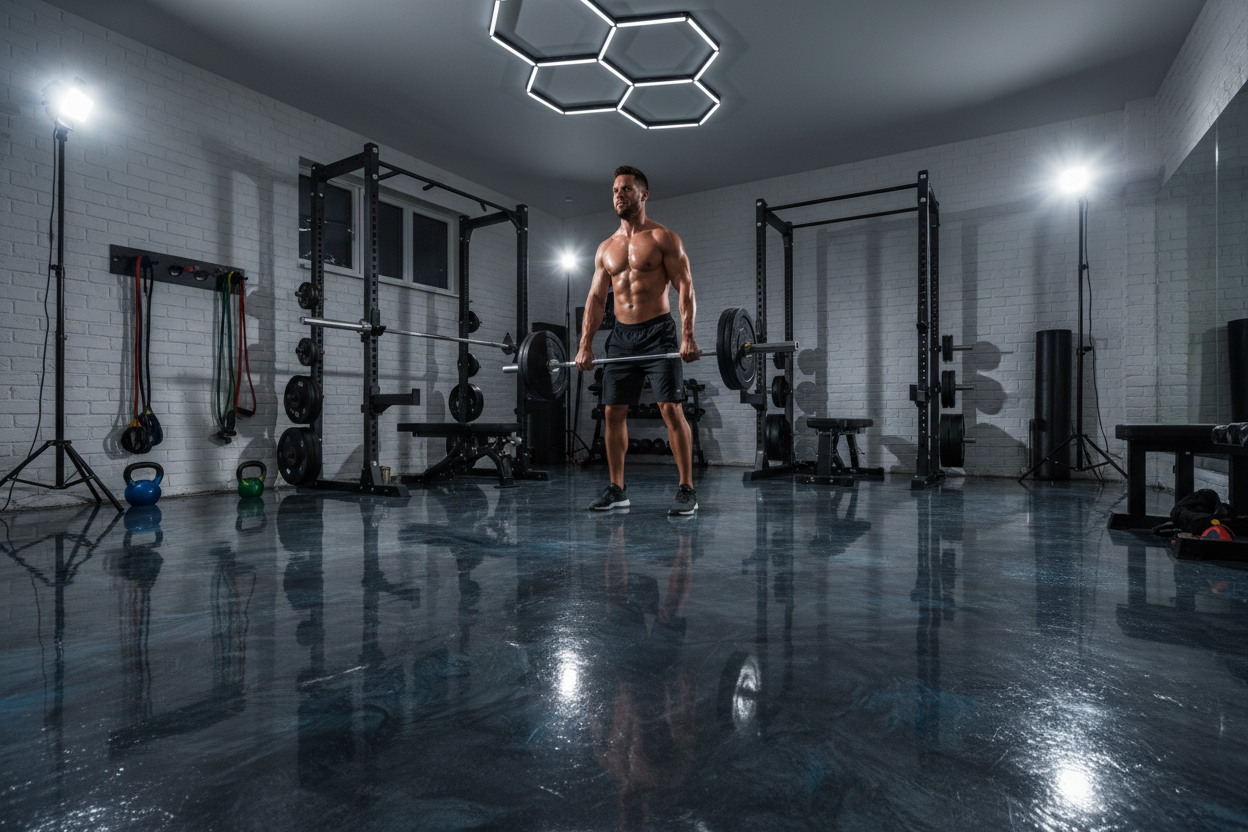
Let us be honest: a home gym should be a place you actually want to spend time in. Epoxy transforms a dingy, dark basement or garage into a bright, professional-looking studio. Because the glossy finish reflects light, it instantly brightens up spaces that typically suffer from poor overhead lighting.
Planning Your Garage Gym Epoxy Floor
Surface Preparation is Everything
The secret to a flawless garage gym epoxy floor is not the epoxy itself—it is the prep work. The concrete must be mechanically ground or acid-etched to open the pores. If you skip this step, the epoxy will peel the moment you roll a heavy-duty bench or storage rack across it.
Adding Grip for Safety
A standard epoxy finish is incredibly slippery, especially if you are sweating through a high-intensity metcon. When planning a home gym epoxy floor, you must mix an anti-slip aggregate—like aluminum oxide or silica sand—into the final clear coat. This provides the necessary grip for heavy squats and dynamic movements without tearing up your shoes.
From Our Gym: Honest Take
When we built out our main testing facility in a 400-square-foot garage, we opted for a professional-grade polyaspartic epoxy gym flooring system with vinyl flakes. Visually? It is stunning. The light reflection made our LED overheads twice as effective.
However, here is the honest truth from daily use: you cannot treat it like indestructible armor. During a heavy deadlift session, a 45-pound bumper plate bounced off the edge of our lifting platform and struck the bare epoxy. It left a small, noticeable chip in the clear coat. Epoxy has immense compressive strength for holding heavy power racks, but it lacks impact resistance. You absolutely still need 3/4-inch rubber stall mats or a dedicated wooden lifting platform in your heavy drop zones. Think of epoxy as the ultimate base layer, not the final lifting surface.
Frequently Asked Questions
Can I drop weights directly on an epoxy gym floor?
No. While epoxy is incredibly strong against static weight (like a heavy treadmill or squat rack), it is brittle against sudden, heavy impacts. Dropping dumbbells or barbells directly on it will chip or crack the coating. Always use rubber mats over the epoxy in lifting zones.
Is epoxy flooring slippery when sweating?
It can be very slippery if applied as a smooth, high-gloss finish. To make it safe for a home gym, you must ensure an anti-slip additive (like grip dust or aluminum oxide) is mixed into the topcoat during installation.
How long does an epoxy floor last in a home gym?
With proper installation and basic maintenance, a high-quality epoxy floor can easily last 10 to 20 years in a residential gym setting. Keeping heavy drop zones protected with rubber mats will significantly extend its pristine appearance.