
Effective Chest Presses at Home for Strength and Stability
Developing chest strength does not require an expensive gym membership or complex equipment. With the right technique and a clear understanding of the chest press movement, you can perform chest presses at home and achieve impressive results. This exercise targets the pectoral muscles, triceps, and shoulders, and can be modified to suit various fitness levels.
Benefits of Chest Presses at Home
Performing a chest press at home offers multiple advantages. First, it is a convenient option for individuals with busy schedules or those who prefer private workouts. Second, it can be adapted using resistance bands, dumbbells, or even household items, making it cost-effective. Finally, consistent use of the movement helps improve upper body strength, posture, and stability, which can enhance daily functional movements such as lifting and pushing.
How to Do Chest Press at Home
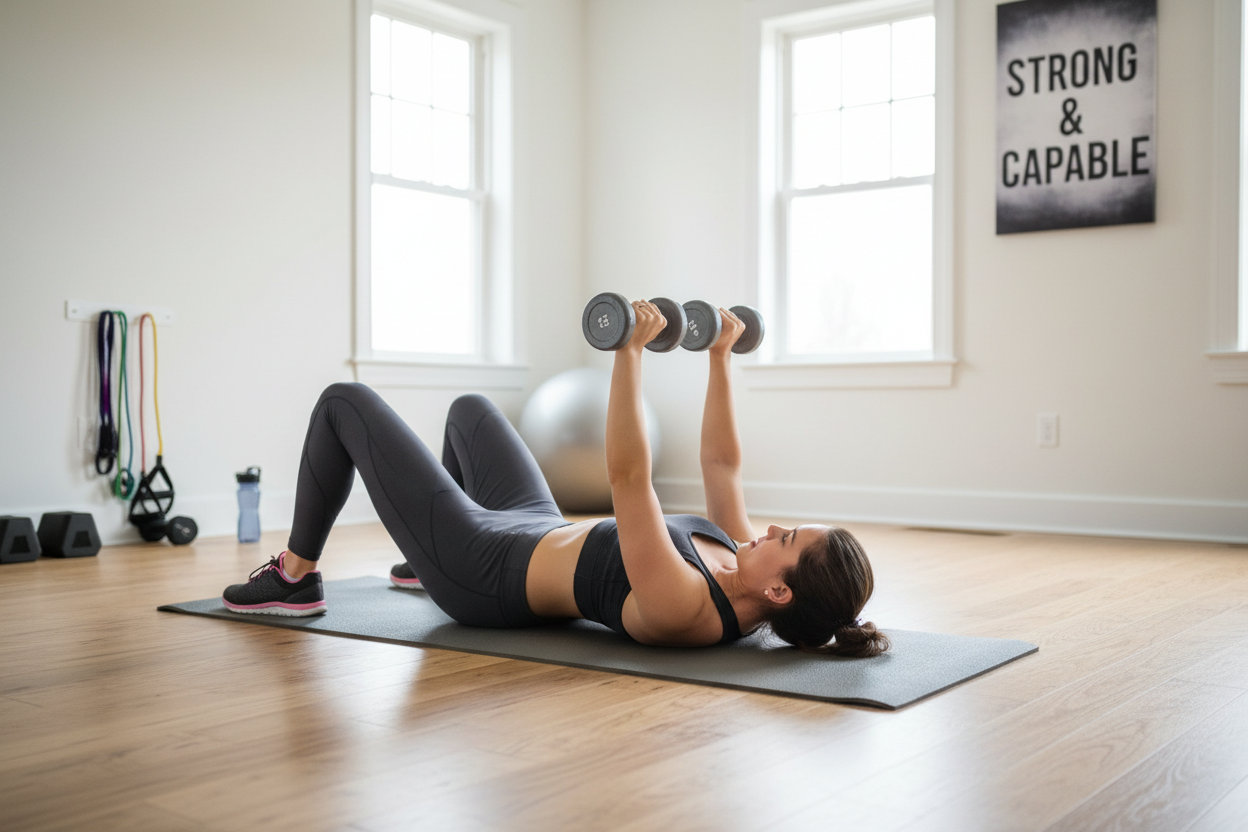
To perform the chest press correctly, start by lying on a flat surface such as a sturdy bench or the floor. Hold a dumbbell in each hand with your palms facing forward. Keep your elbows bent at approximately 90 degrees and your upper arms parallel to the floor. Press the weights upward until your arms are fully extended, pause briefly, then lower them slowly back to the starting position. This controlled motion ensures muscle engagement and reduces the risk of injury.
If you lack dumbbells, resistance bands can be an excellent alternative. Secure the band behind you—around a door anchor or a heavy piece of furniture—and follow a similar pressing motion, keeping resistance consistent throughout the movement.
Variations and Adjustments
Chest presses at home can be adapted depending on available space and equipment. Incline presses (by elevating the upper body) focus more on the upper chest, while decline presses work the lower chest. Changing grip width or using single-arm presses introduces variety and addresses muscular imbalances.
Beginners can start with lighter weights or resistance, concentrating on form and breath control. Intermediate and advanced users may progressively increase load while maintaining proper technique to encourage strength gains over time.
Safety and Best Practices
Evidence-based recommendations emphasize proper posture and controlled movement during chest presses. Avoid arching your lower back excessively, and engage your core for stability. If using weights, ensure they are appropriate for your fitness level to prevent strain. Rest between sets for adequate recovery and perform 2 to 3 sessions per week for noticeable progress.
Personal Experience and Insights
When I incorporated chest press exercises into my home routine, I found that focusing on form yielded better results than increasing load prematurely. Using resistance bands initially helped me master the motion, and gradually shifting to dumbbells provided a different type of challenge. Over time, the strength gains not only improved my performance in other exercises but also made everyday activities—such as carrying groceries—lessfatiguing.
Integration into a Home Workout Plan
Chest presses at home work well when combined with a balanced routine that targets complementary muscle groups. Pairing them with rows for the back, shoulder presses for deltoids, and core exercises promotes overall symmetry and functional strength. Depending on personal goals, chest presses can be performed as part of an upper body day or integrated into full-body sessions.
Conclusion
The chest press is a foundational movement for building upper body strength and stability. Performing the chest press at home is practical, versatile, and accessible to most individuals with minimal equipment. By focusing on technique, applying progressive overload, and maintaining consistent practice, you can achieve marked improvements in chest and upper body strength from the comfort of your home.


