Upper Chest Workouts at Home: Angles, Mechanics, and Exercise Setups
Developing a balanced chest within a home training environment requires intentional planning and an understanding of joint geometry. Standard horizontal pressing on a flat surface tends to load the sternal fibers and lower chest while leaving the upper pecs relatively understimulated. Setting up targeted upper chest workouts at home allows lifters to prioritize the clavicular head of the pectoralis major without requiring dedicated commercial equipment.
A well-shaped torso requires matching the orientation of pressing mechanics to the angle of the underlying muscle fibers. By using smart elevation, angled benches, and intentional arm paths, you can build balanced chest development regardless of whether your setup centers on bodyweight movements or free weights.
Anatomy Fundamentals: Why Upper Chest Development Demands Specific Angles
The pectoralis major consists of distinct regional fiber bundles, primarily divided into the sternocostal head and the clavicular head. While standard flat bench pressing activates the overall chest muscles, it distributes substantial force to the middle and lower chest alongside the anterior deltoids.
The fibers of the upper chest originate along the medial half of the clavicle and travel diagonally downward toward the humerus. Because of this distinct line of pull, shoulder flexion—bringing the upper arms upward and across the torso—creates focused recruitment across the clavicular fibers. To emphasize the upper pecs rather than the lower chest, a chest exercise must follow a low-to-high pressing trajectory or elevate the lower body relative to the shoulder girdle.
Decline Push Ups and Bodyweight Variations for Upper Chest
When training without free weights or an adjustable bench, gravity and foot elevation serve as your main tools to simulate an incline bench press. Elevating your feet shifts the angle of resistance, directing mechanical force higher onto the torso.
Mastering Decline Push Ups Mechanics
To perform decline push ups effectively, place your toes on a stable elevated platform, such as a sturdy box or bench, and position your hands on the floor slightly wider than shoulder width. Maintain a straight line from your ankles through your hips and torso, keeping your core tight throughout each repetition.
Lower your upper body under control until your chest approaches the floor, keeping your shoulder blades retracted and your upper arms tucked at a moderate angle rather than flared out wide. Press upward through your palms, maintaining full tension through the chest muscles until you reach the starting position. Lifters seeking additional bodyweight routines can explore this targeted upper chest exercises at home guide for alternative movement angles.
Angle Adjustments and Pike Press Dynamics
Changing the height of your feet alters the distribution of mechanical tension across your torso. A modest elevation keeps the load centered on the upper pecs, whereas elevating the feet too high transfers work away from the pectoralis major and into the shoulders. Introducing a slight hip hinge, as in a pike push-up, can also target the clavicular region when performed with strict control, bridging the gap between horizontal presses and overhead work.
Dumbbell Chest Exercise Strategies: Incline Dumbbell Bench Press and Squeeze Press
Free weights offer direct progressive loading options for home chest training. Unlike fixed bars, dumbbells allow the hands, wrists, and elbows to follow a natural pressing path that accommodates individual shoulder mechanics.
Setting the Right Incline Angle
When using an adjustable incline bench, the selected incline angle dictates muscular contribution. A steep backrest angle causes the shoulders to take over the primary pressing burden, while a nearly flat setting shifts tension back to the lower chest and sternal head. A moderate incline angle generally allows the upper pecs to perform the majority of the work while minimizing excessive shoulder involvement.
Incline Dumbbell Bench Press Form
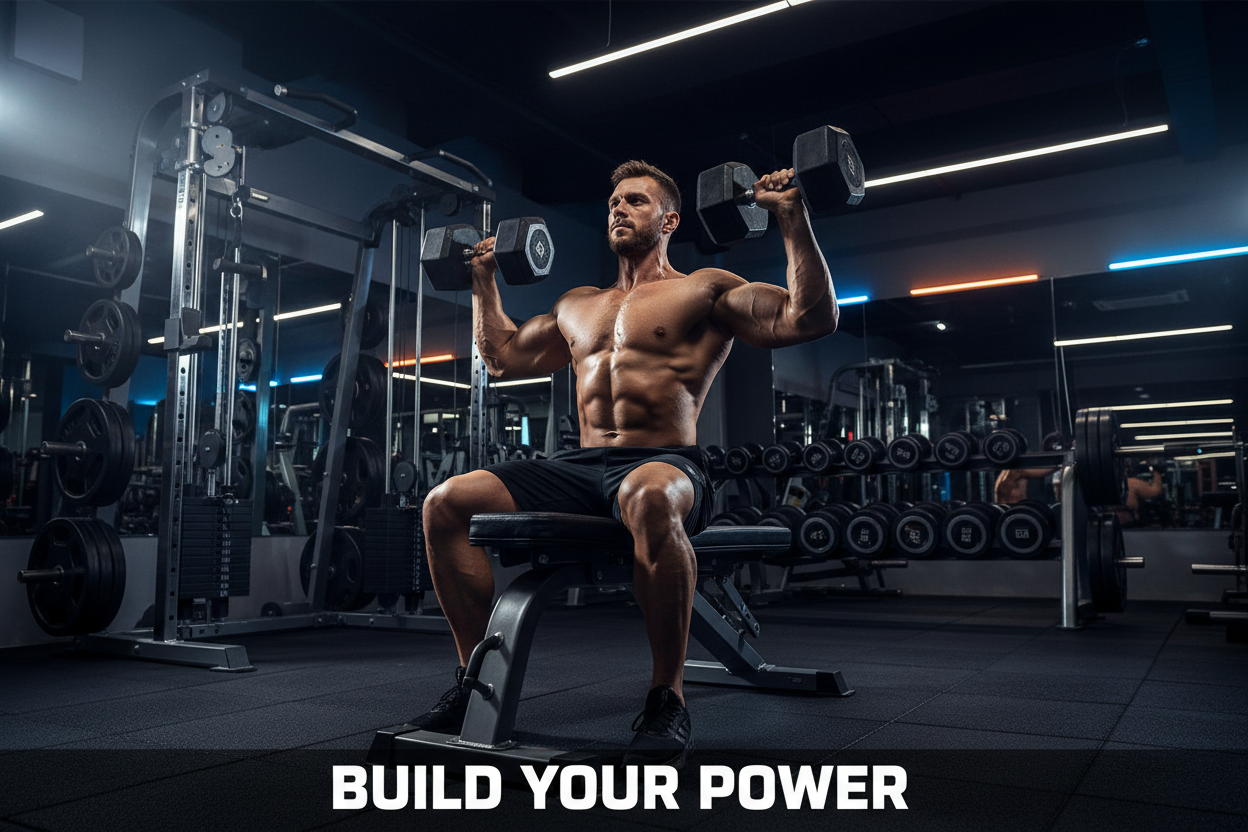
The incline dumbbell bench press serves as an exceptional upper chest exercise for building balanced pressing strength across both sides of the body. Sit back against the incline bench, plant your feet firmly on the floor, and keep your shoulder blades retracted against the back support.
Lower the dumbbells smoothly with a slight bend in the wrists, keeping your forearms vertical and your upper arms angled comfortably away from the ribcage. Press upward in a gentle converging arc toward the top, avoiding the urge to clack the weights together. For additional dumbbell-focused routines, check our dumbbell chest training at home guide to expand your movement options.
Incline Dumbbell Squeeze Press Execution
The incline dumbbell squeeze press is a valuable chest press variation when working with modest weight increments. By pressing two dumbbells tightly together along their flat surfaces while performing an incline chest press, you generate sustained horizontal adduction. This continuous squeeze creates active tension across the pectoralis major throughout the entire range of motion, providing a potent training stimulus without requiring heavy loads.
Incline Barbell Bench Press Adaptations and Bench Press Alternatives
Lifters who train with barbells often rely on the incline barbell bench press to develop upper body pressing capacity. When standard incline equipment is limited, several adaptations can recreate similar benefits at home.
Barbell Bench Press Setup and Grip Considerations
When executing an incline barbell bench press inside a home rack, set your grip slightly wider than shoulder width and keep your shoulder blades retracted firmly against the pad. Unrack the bar under control, bring it down smoothly to the upper shelf of your chest, pause briefly, and press upward to the starting position without unlocking your upper back posture.
Flat Bench Press and Reverse Grip Adjustments
If you only have access to a flat bench, you can adapt your flat bench pressing mechanics to place greater demands on the upper pecs. Adopting a reverse grip bench press, where your palms face back toward your face, naturally forces your upper arms to track closer to the ribcage during descent. This tucked arm path increases the role of the clavicular head during horizontal pressing, providing a practical workaround when an incline bench is unavailable. For further progression advice, consult our upper pectoral dumbbell progression guide.
Cable and Band Solutions: Low to High Movements
While cable machines offer continuous resistance across full ranges of motion, resistance bands provide an accessible home alternative for duplicating low to high cable flyes. Because standard free-weight flyes lose mechanical tension at the peak of the movement, bands excel by increasing tension as your hands converge.
Anchor a band near the floor or loop it securely under your feet with a shoulder width stance. Holding the handles with a slight bend in your elbows, sweep your upper arms upward and inward until your hands meet around chest level. This ascending arc matches the exact line of the clavicular fibers, ensuring the upper chest works actively through complete adduction.
Structuring a Complete Upper Chest Workout at Home
An effective upper chest workout combines compound presses with targeted isolation movements while allowing sufficient recovery between training days. Pairing vertical and angled pressing ensures balanced chest development across all portions of the pectoralis major.
Sample Upper-Focused Home Routine Structure
- Decline push ups using foot elevation on a stable platform
- Incline dumbbell bench press targeting the clavicular angle
- Incline dumbbell squeeze press with continuous inward pressure
- Low to high band flyes mimicking low to high cable mechanics
Lifters aiming to balance upper-body training with non-weighted lower-body splits can explore our bodyweight leg training routines for comprehensive home programming principles.
Frequently Asked Questions About Upper Chest Training
Why is the upper chest so hard to develop?
The upper chest is often difficult to develop because standard everyday chest training relies heavily on horizontal pushing, such as flat bench pressing and standard floor push-ups. These movements favor the larger sternocostal head and anterior shoulders. Without deliberate upward pressing trajectories, the clavicular fibers receive secondary rather than primary loading.
How do I work the upper part of my chest at home?
You can work the upper chest at home by implementing movements that require pressing along an upward line relative to your torso. Useful options include decline push ups with elevated feet, incline dumbbell presses, reverse-grip barbell pressing, and low to high band flyes that draw the hands upward and inward.
Will high daily volumes of standard push-ups build the upper chest?
Performing high volumes of standard floor push-ups primarily stimulates the mid and lower chest muscles along with the triceps. While it builds general upper-body endurance, it rarely provides the targeted mechanical angle necessary to develop the upper pecs. Transitioning standard push-ups into decline push ups or angled dumbbell presses offers a far more direct stimulus for the clavicular head.