Effective At-Home Pec Workouts for Strength and Definition
Many people assume that building powerful chest muscles requires access to a fully equipped gym, but in reality, you can achieve impressive results with the right pectoral muscle workout at home. Whether you have limited equipment or prefer the comfort of your living room, home exercise for pecs can be just as challenging and rewarding if done with proper form and consistency. It’s not only cost-effective but also gives you flexibility in your fitness routine.
Understanding Your Pectoral Muscles
Your pectoral muscles, primarily the pectoralis major and minor, are responsible for movements such as pushing, pressing, and bringing your arms together. Strengthening these muscles enhances posture, upper body strength, and overall athletic performance. The key to effective at home pec workouts lies in targeting these muscles from multiple angles.
Bodyweight Exercises for Home-Based Chest Training
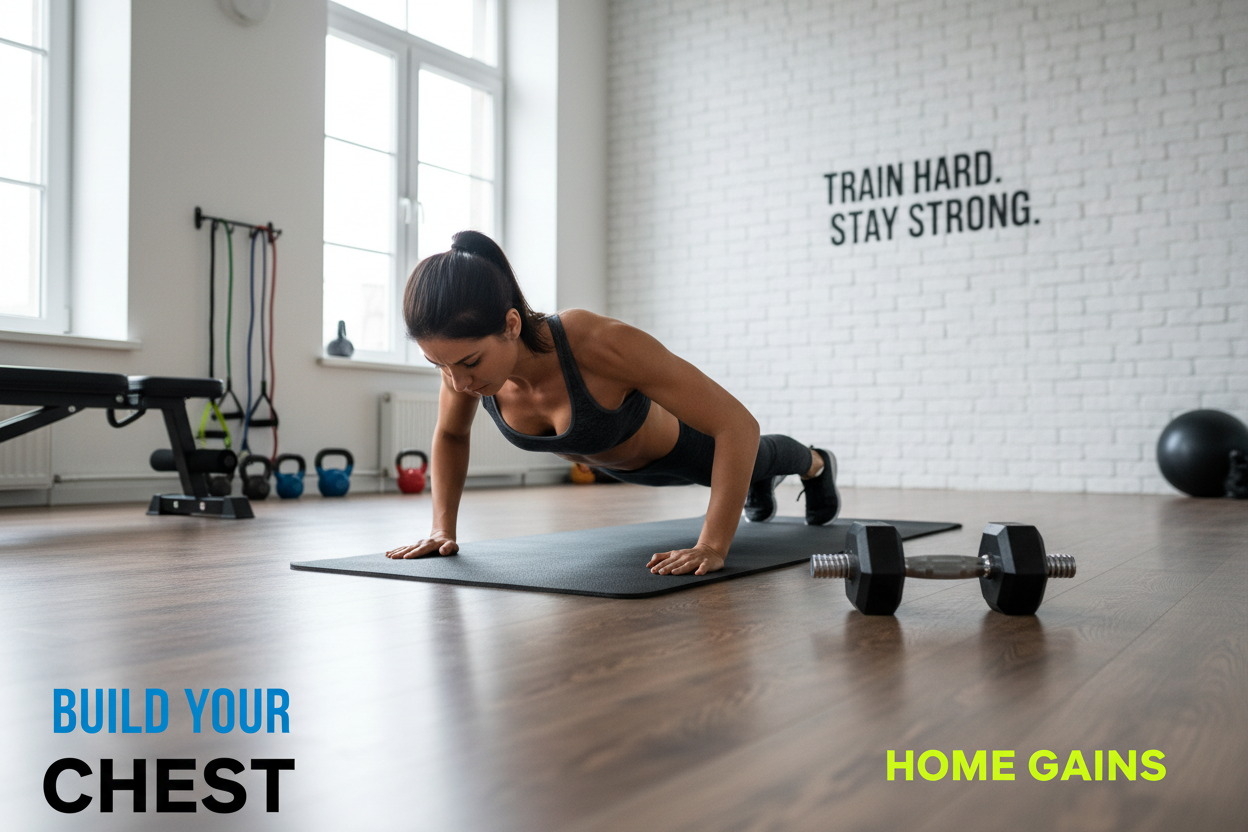
Bodyweight training is an excellent way to work your pecs without the need for expensive equipment. Push-ups are the most accessible starting point — they build both strength and endurance. Variations such as wide-grip push-ups, decline push-ups (feet elevated), and diamond push-ups target different parts of the chest. Including these variations in your pectoral muscle workout at home ensures balanced development.
Push-Up Variations
- Wide-grip push-ups: Focus on the outer chest.
- Incline push-ups: Easier for beginners and target the lower chest.
- Decline push-ups: Intensify the load on the upper chest.
- Diamond push-ups: Engage both chest and triceps strongly.
Maintaining proper alignment is crucial — keep your core engaged and avoid letting your hips sag to prevent strain.
Resistance Band Pec Workouts
If you have resistance bands, you can replicate many gym-style pec movements. Band chest presses, standing flys, and single-arm presses bring variety to your home exercise for pecs while keeping time under tension high. Resistance bands are portable, inexpensive, and allow progressive overload by simply adjusting band thickness or tension.
Sample Resistance Band Routine
Start with a light warm-up, then move into:
- Standing chest press — 3 sets of 12 reps
- Chest fly — 3 sets of 10-12 reps
- Single-arm press — 3 sets of 10 reps per side
Control each repetition carefully, focusing on a slow eccentric phase to recruit more muscle fibers.
Incorporating Simple Equipment
A pair of dumbbells or even filled water bottles can significantly expand your options for an at home pec workout. Exercises such as floor presses, dumbbell flys, and pullover variations apply heavier resistance for hypertrophy. If you don’t own dumbbells, creativity goes a long way — heavy books or milk jugs work surprisingly well.
Structuring Your Home Chest Workout
To make your pectoral muscle workout at home truly effective, plan it like a professional session:
- Warm-up for 5–7 minutes to increase blood flow.
- Mix push, press, and fly movements to hit different pec fibers.
- Progressively increase repetitions, sets, or resistance over time.
- Allow at least 48 hours rest for muscle recovery before repeating intense chest training.
My Experience with Home Pec Training
When I first started working out from home, I underestimated how much I could achieve without a bench or heavy weights. I committed to three focused sessions per week, mixing bodyweight push-ups, resistance band presses, and floor dumbbell flys. After two months, my chest felt fuller and stronger. My posture improved, and I could perform everyday tasks with more upper body strength. The convenience allowed me to stay consistent, which I realized was more important than any single exercise or piece of equipment.
Common Mistakes to Avoid
Even with the best at home pec workouts, mistakes can slow progress or cause injury. Avoid rushing through repetitions, neglecting warm-ups, or focusing only on one type of movement. Ensure you challenge both sides evenly and don’t allow other muscle groups (like shoulders or triceps) to dominate the movement pattern. Tracking your progress can help identify areas that need more attention.
Conclusion
Building a strong, defined chest is possible anywhere, with or without advanced equipment. By following a varied and deliberate pectoral muscle workout at home, you can effectively engage and grow your pecs, enhance overall upper body power, and maintain consistent fitness habits. The beauty of home exercise for pecs lies in its adaptability — you can adjust your approach to your lifestyle while still achieving serious results.