
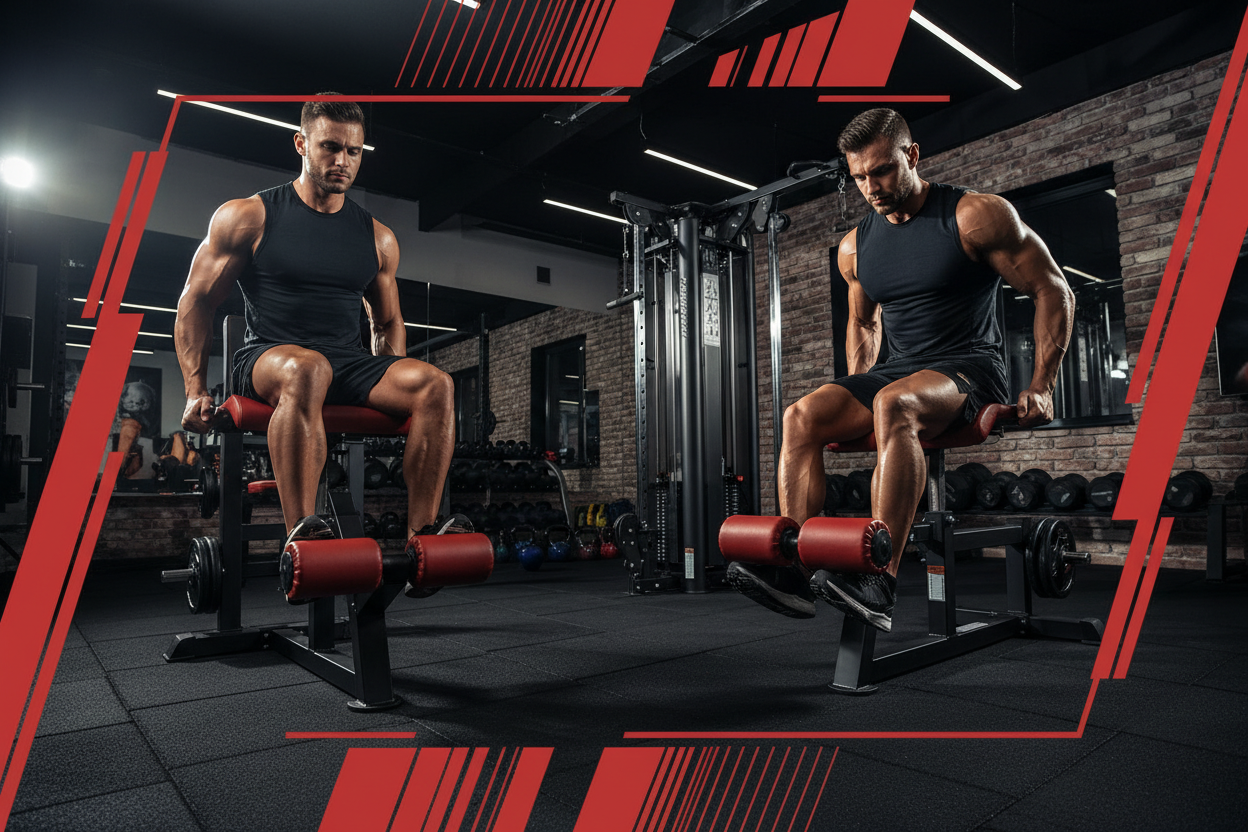
Don't Buy a Leg Extension & Curl Machine Without Reading This
Let’s be honest about training legs at home. You can squat until your vision blurs and lunge until you can't walk, but isolating the quads and hamstrings without commercial equipment is a nightmare. Dumbbell curls are awkward, and sissy squats can be brutal on the knees if your mobility isn't perfect. This is where the leg extension & curl machine enters the conversation.
It is often the first major specialty piece added to a garage gym, but it is also the one most people get wrong. Buying a cheap unit results in wobbly reps and poor resistance curves, while overspending on a commercial unit can eat up your entire floor plan. Let's break down exactly what you need to look for to build wheels of steel without wasting your budget.
Key Takeaways: Quick Summary
- Biomechanics Matter: Look for a machine with an adjustable pivot point to align with your knee joint, preventing shear force injuries.
- Plate Loaded vs. Selectorized: A plate loaded leg curl leg extension is cost-effective for home gyms, while weight stacks offer faster drop sets but cost double.
- Space Efficiency: Combo machines save space, but ensure the transition time between extension and curl setups is under 30 seconds.
- Pad Quality: Dense foam is non-negotiable; soft pads will bottom out and cause shin pain under heavy loads.
The Science of Isolation: Why You Need It
Compound movements are the foundation of size, but they have limitations. When you squat, your hamstrings act as stabilizers rather than prime movers. To fully shorten the hamstring muscle fibers, you need knee flexion against resistance, which is best achieved through a curl.
Similarly, the rectus femoris (a head of the quad) only fully contracts when the hip is flexed and the knee is extended. You simply cannot achieve this peak contraction with a barbell squat. This is why a dedicated machine isn't just a luxury; it's a biomechanical necessity for complete leg development.
Choosing Your Fighter: Machine Types
The Plate Loaded Advantage
For most garage athletes, a plate loaded leg curl leg extension unit is the gold standard. It uses the standard Olympic plates you already own, drastically reducing the shipping weight and cost of the machine. The mechanical leverage on these has improved significantly in recent years. The resistance curve on a high-quality leg extension leg curl machine plate loaded model can now rival commercial selectorized units, provided the pivot points are engineered correctly.
Seated vs. Prone (Lying)
This is the biggest debate in hypertrophy training. A plate loaded seated leg curl puts the hamstrings in a lengthened position at the hip, which studies suggest is superior for hypertrophy. However, a lying prone leg curl extension machine often feels more natural for the lower back and allows for a deeper squeeze at the top of the movement.
If you have the space, a machine that allows for lying curls is often more versatile, but the seated variation is generally easier to set up and get in and out of quickly.
The Home Gym Layout: Space and Function
Space is the currency of the home gym. You might see a massive leg press leg curl machine combo and think it's the ultimate solution. Be careful here. These all-in-one behemoths often do two things poorly rather than one thing well. They take up a massive footprint (often 20+ square feet) and the leg press angle is often compromised to fit the curl mechanism.
The best leg extension machine for home gym setups is usually a standalone combo unit with a small footprint (roughly 4x4 feet) that allows you to switch from quads to hams by simply pulling a pop-pin and moving the swing arm.
My Training Log: Real Talk
I need to share a specific detail that specs sheets won't tell you. I owned a budget leg extension unit about five years ago—one of those sub-$300 attachments that goes on a bench. The biggest issue wasn't the weight capacity; it was the shin pads.
When I went heavy on extensions (anything over 100 lbs), the foam was so cheap that the metal bar inside would press through the padding and dig directly into my shins. It felt like getting kicked in the shin bone on every rep. It made me dread leg day.
Furthermore, on that cheap plate-loaded unit, there was a "dead spot" at the bottom of the movement. For the first three inches of the lift, there was zero tension because the pendulum swung too freely. I had to manually lift the weight slightly before starting the rep to get any engagement. When I finally upgraded to a unit with a proper cam system and high-density vinyl rollers, the difference in quad pump was immediate. Don't skimp on the contact points.
Conclusion
Building a complete set of legs requires more than just heavy squats. A leg extension & curl machine bridges the gap between strength training and aesthetic sculpting. Focus on the pivot point alignment, the density of the rollers, and the ease of transition between exercises. Your knees (and your jeans fit) will thank you later.
Frequently Asked Questions
Can I build mass with just a leg extension and curl machine?
While these machines are excellent for hypertrophy and isolating specific muscles, they are best used as accessory work. Compound movements like squats or lunges should still form the base of your routine for overall mass and hormonal response, with the machine used to fatigue the muscles fully.
Is a seated or lying leg curl better for hamstrings?
Recent research suggests the seated leg curl may be slightly superior for growth because it trains the hamstrings in a more lengthened position (due to hip flexion). However, the "best" machine is the one that allows you to feel the strongest contraction without lower back pain.
Are leg extensions bad for your knees?
Leg extensions are generally safe if performed correctly. The danger arises from using excessive weight that causes grinding, or using a machine where the pivot point doesn't align with your knee joint. Controlled, smooth reps are safe for most healthy knees.


