Does Smith Machine Reduce Weight? Bar Mechanics Explained
Ever loaded up a Smith machine, pushed the bar up, and thought, Wow, I am incredibly strong today? You aren't alone. One of the most common questions we get from home gym owners and commercial gym goers alike is: does smith machine reduce weight?
When you are trying to track your progressive overload, guessing your bar weight is incredibly frustrating. Whether you are planning to buy a Smith machine for your basement gym or just trying to log your workouts accurately, this guide will break down exactly how the mechanics of a Smith machine alter the weight you are actually lifting.
Key Takeaways
- Counterbalances make it lighter: Most high-quality Smith machines use a hidden pulley system that reduces the starting weight of the bar.
- Starting weight varies: Unlike a standard 45-pound Olympic barbell, a Smith machine bar typically weighs between 15 and 25 pounds.
- Friction plays a role: The guide rods create drag, making the bar feel slightly heavier on the way up and lighter on the way down.
- Fixed path mechanics: Because the machine stabilizes the weight for you, less core and stabilizer muscle engagement is required, making the lift feel easier.
The Physics of the Bar: Why It Feels Lighter
Counterbalance Systems Explained
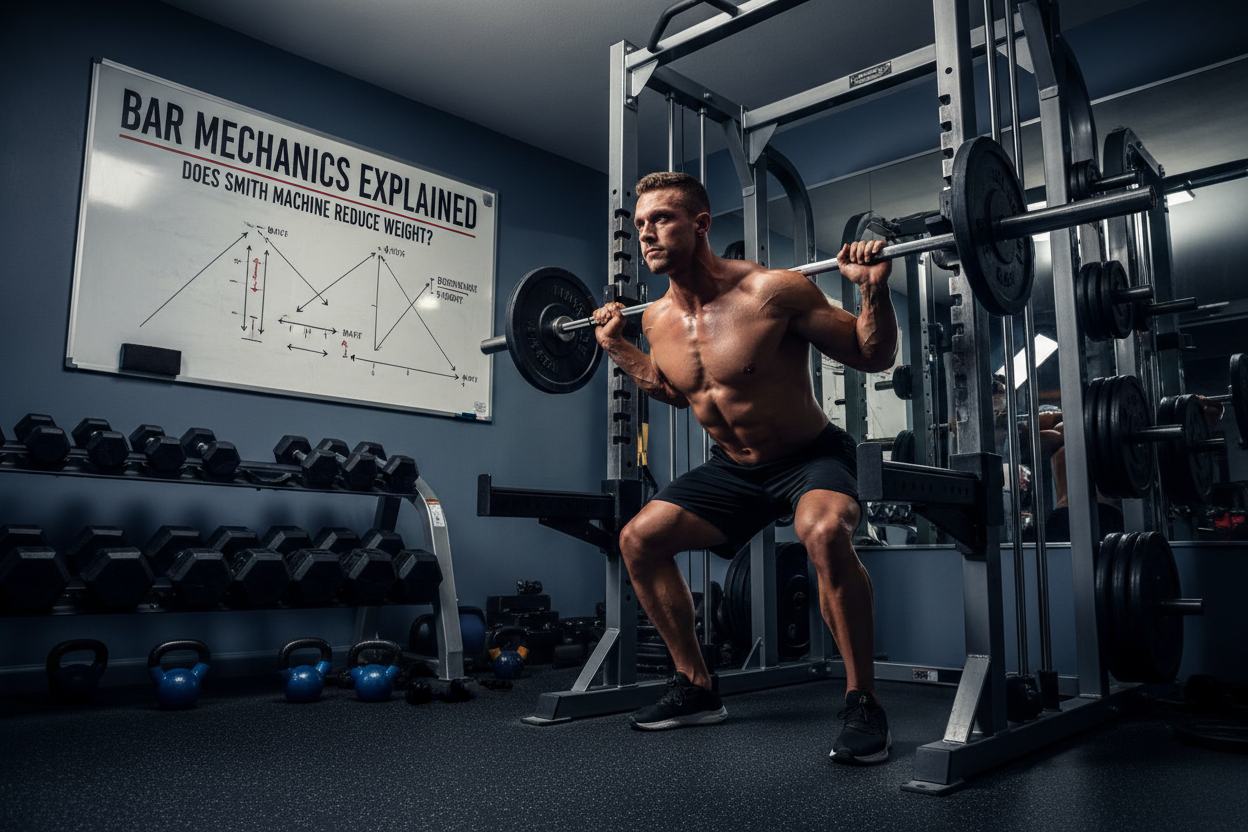
The primary reason a Smith machine feels lighter is by design. Commercial-grade and premium home gym Smith machines feature a counterbalance system. Inside the vertical uprights of the frame, there are heavy steel counterweights connected to the bar via cables and pulleys. These weights pull upward, offsetting the heavy solid steel of the barbell. This allows users of all fitness levels to perform exercises like shoulder presses or lunges without being crushed by a heavy starting weight.
The Friction Factor
Even though the bar might have a resting weight of 20 pounds, friction changes the dynamic weight during your set. As you push the bar up (concentric phase), the drag against the guide rods adds a small amount of resistance. As you lower the weight (eccentric phase), that same friction slows the bar down, effectively reducing the load your muscles have to control. This is a crucial factor to keep in mind when tracking your volume.
Free Weights vs. Smith Machine: Tracking Your Lifts
How to Calculate Your True Working Weight
If you find yourself asking, do smith machines reduce weight across the board, the answer is yes, but the exact reduction depends entirely on the manufacturer. To calculate your true working weight, you must find the machine's starting weight (often printed on a placard on the side of the frame) and add the weight of the plates you slide onto the sleeves. Never assume the bar is 45 pounds, or your training log will be wildly inaccurate.
Home Gym Space & Buying Considerations
Linear Bearings vs. Bushings
If you are shopping for a Smith machine for your garage or basement gym, the guide rod mechanism is the most important spec to check. Entry-level machines often use nylon or plastic bushings. These are cheaper but create a lot of jerky friction, which artificially alters the weight you feel. Premium models use linear bearings—tiny steel balls that roll smoothly against the guide rods. Linear bearings provide a fluid motion that closely mimics the feel of free weights, minimizing the friction factor.
From Our Gym: Honest Take
We recently tested a popular mid-tier Smith machine in our primary garage gym setup. The manufacturer claimed the starting weight was 20 pounds, but when I attached a digital luggage scale to the bar, it actually weighed in at 16.5 pounds. The difference might seem small, but when you are programming strict hypertrophy blocks, every single pound counts.
One thing I noticed during testing: the knurling on the bar was surprisingly aggressive for a Smith machine, which I loved because my chalked grip held solid through heavy rack pulls. However, because this specific unit used a cheaper nylon bushing system instead of linear bearings, the friction made the bar feel about 5 pounds heavier on the way up and 5 pounds lighter on the way down. If you are investing in a Smith machine for your home, I highly recommend saving up for a model with linear bearings. The smooth glide is absolutely worth the premium price tag.
Frequently Asked Questions
What is the starting weight of a Smith machine bar?
While a standard Olympic barbell weighs exactly 45 pounds (20.4 kg), a Smith machine bar typically weighs between 15 and 25 pounds due to the built-in counterbalance system. Always check the manufacturer specifications for your specific machine.
Should I count the bar weight on a Smith machine?
Yes, you should always count the starting weight of the bar when tracking your lifts. Just make sure you are using the actual starting weight of the machine (e.g., 20 pounds) rather than defaulting to the standard 45 pounds used for free weights.
Is a Smith machine worth it for a home gym?
Absolutely. While they require a decent amount of floor space and ceiling clearance, they offer incredible safety for solo lifters pushing to failure without a spotter. They are particularly valuable for hypertrophy training, allowing you to safely isolate specific muscle groups without worrying about balancing the load.