Does Performance Exercise Equipment Actually Make You Faster?
I spent three years chasing a 500-pound squat, convinced that moving massive weight would automatically make me a monster on the basketball court. It didn't. I just became a slower, heavier guy who could move a lot of iron in a straight line while my vertical jump stayed exactly the same. Realizing that performance exercise equipment isn't just a marketing buzzword for overpriced plastic saved my knees and finally gave me the explosive first step I was actually looking for.
Quick Takeaways
- Most 'agility' gear is just fancy cardio that doesn't build real power.
- The push sled is the undisputed king of athletic development.
- Plyometrics and medicine balls offer the best bang-for-your-buck.
- Proper flooring is non-negotiable for high-impact explosive movements.
The Difference Between Getting Strong and Getting Fast
Standard strength equipment is the foundation of any garage gym, but it has a ceiling when it comes to athleticism. You can squat until the sun goes down, but that doesn't mean your nervous system knows how to fire those muscles fast enough to matter in a sprint. Traditional lifting focuses on force production, while performance fitness equipment focuses on the rate of force development.
If you want to be an athlete, you have to bridge the gap between being 'gym strong' and 'field fast.' This means moving weights at high velocities and training your body to absorb force just as well as it produces it. A power rack is great for building the engine, but you need specific tools to tune that engine for speed.
The Agility Ladder Scam (And Other Gimmicks to Avoid)
Let's talk about the plastic junk cluttering your social media feed. Agility ladders are the biggest scam in the fitness industry. They don't teach agility; they teach you how to be good at a specific footwork dance. Real agility is about reacting to an external stimulus and changing direction with power. A ladder teaches you to stare at the ground and move your feet in a pre-set pattern that has zero carryover to actual sports.
The same goes for those cheap speed parachutes. Unless you're already running a sub-11-second 100m dash, a parachute is just going to tangle around your ankles and mess up your mechanics. Most of this gear is designed to look 'athletic' for the 'gram, but it lacks the resistance needed to actually change your physiology. If it weighs less than a pound and fits in a drawstring bag, it’s probably not going to make you faster.
The Undisputed King of Athletic Power: The Push Sled
If I could only keep one piece of gear for the rest of my life, it would be a heavy-duty push sled. Nothing else comes close. The sled is unique because it allows for maximum concentric effort—meaning you can push it as hard as humanly possible—without the eccentric load that leaves you sore for four days. This is exactly how to build true athletic power with performance exercise equipment because it mimics the 45-degree lean of a sprinting start.
I recommend a sled with at least a 400-lb capacity and replaceable skis. If you're training on asphalt, you're going to grind those feet down, so look for a model with bolt-on plastic liners. When you load a sled with three or four 45-lb plates and try to sprint, your central nervous system has no choice but to adapt. It is brutal, it is simple, and it actually works.
Plyo Boxes and Med Balls: Cheap Gear That Actually Works
You don't need a $5,000 motorized treadmill to get explosive. A solid 24-inch wooden or foam plyo box and a set of rubberized medicine balls are all you need for a world-class power session. Box jumps teach you how to generate vertical force, while med ball slams and rotational throws build the 'rotational' power that most lifters completely ignore.
I prefer foam plyo boxes because I've seen too many people (myself included) cheese their shins on the edge of a wooden box during a missed jump. It's a mistake you only make once, but it’s better to avoid it entirely. Keep an eye on home gym equipment deals during the off-season to grab a 20-lb med ball and a box for a fraction of what you'd pay for 'tech' gear. These are low-tech tools that deliver high-tech results.
Protecting Your Joints (And Your Garage Floor)
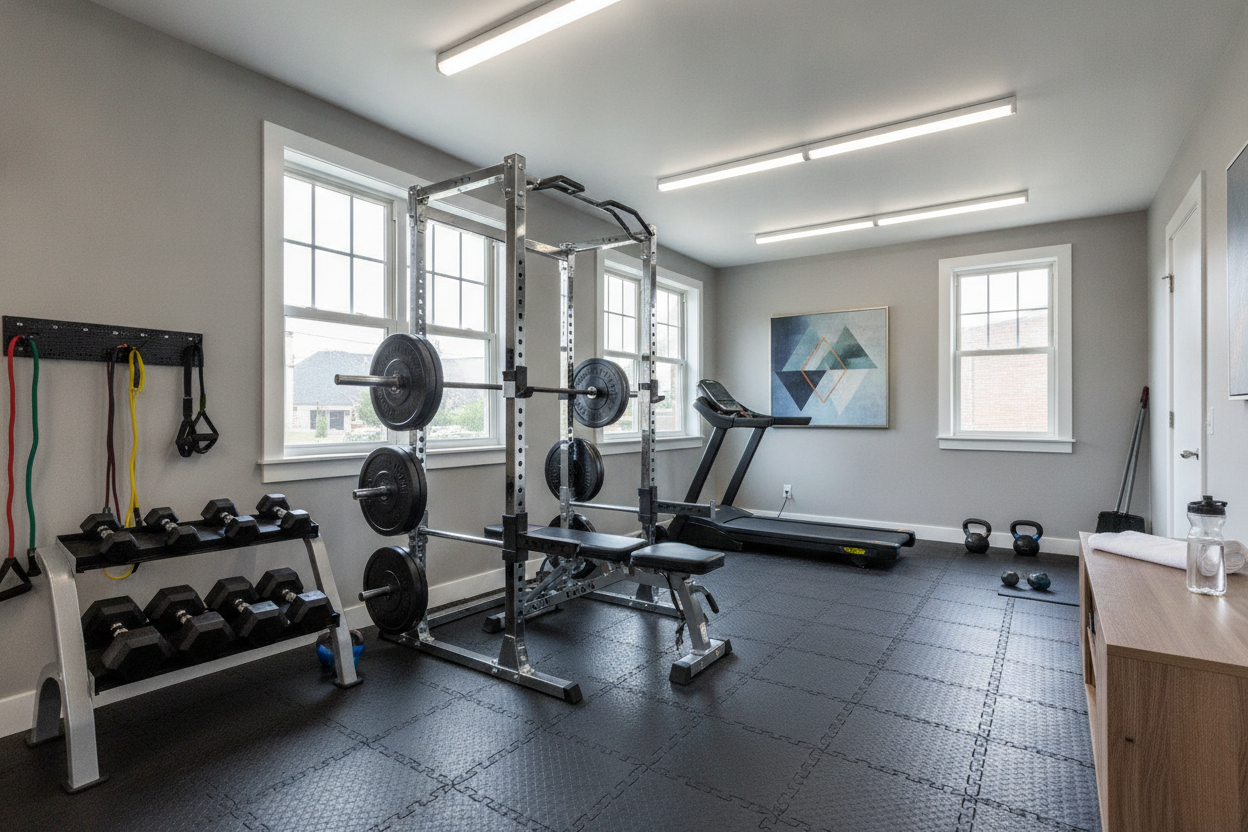
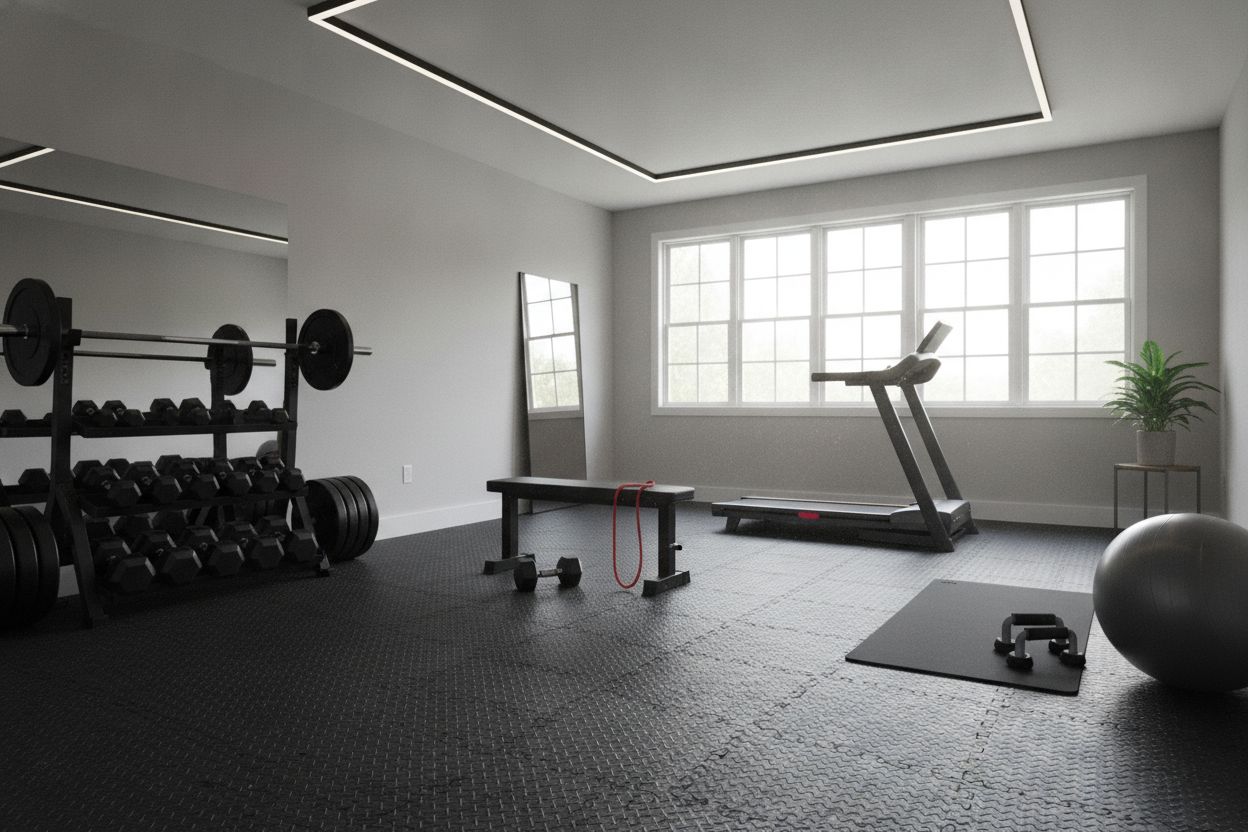
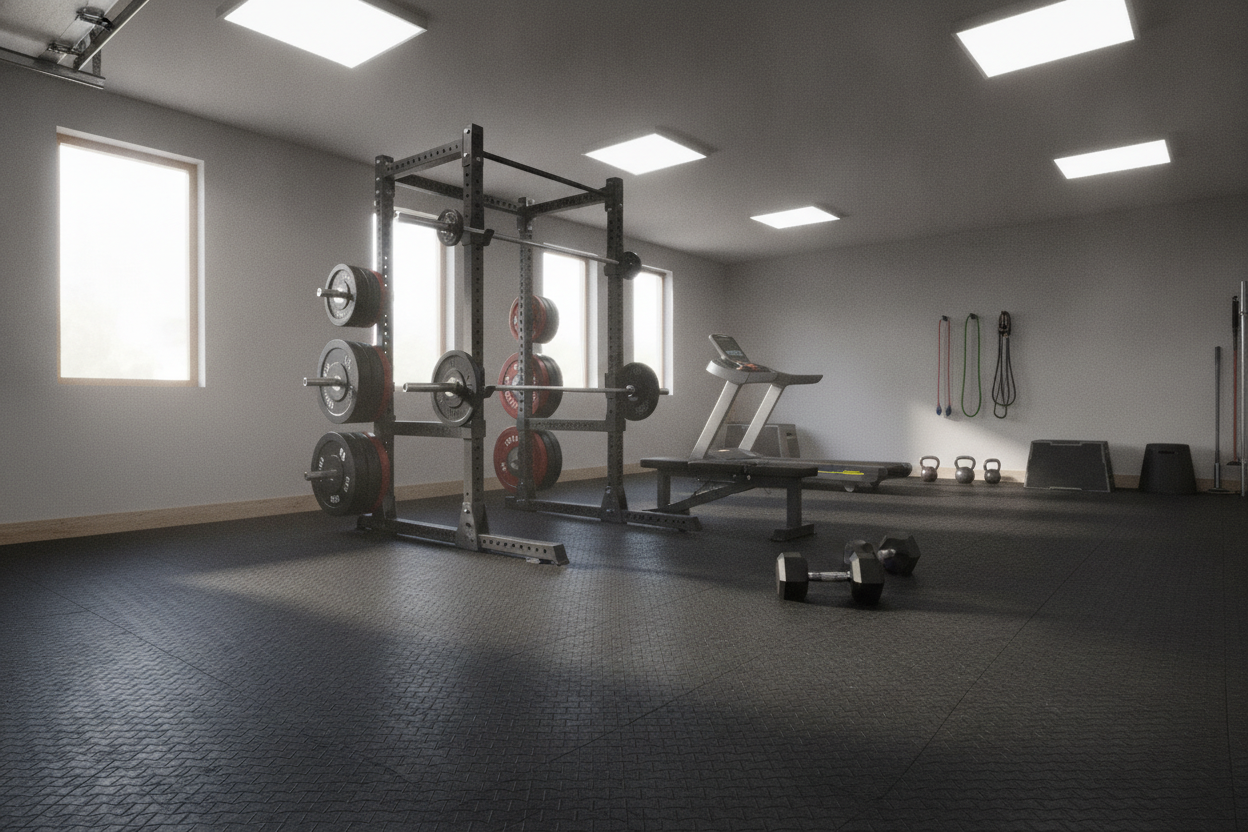
Explosive training is violent by nature. Whether you're dropping a 150-lb sandbag or landing a max-effort broad jump, your joints and your concrete floor are taking a beating. Standard 3/4-inch stall mats are okay, but for dedicated performance work, you need something with better shock absorption. I use a Large Exercise Mat 6X4 to provide a landing zone that doesn't feel like jumping onto a sidewalk.
Proper flooring isn't just about comfort; it's about longevity. If every jump feels like a shockwave going through your spine, you aren't going to train consistently. Invest in a thick, high-density mat that stays put. Your knees—and your neighbors who have to listen to your 5:00 AM med ball slams—will thank you.
My Biggest Gear Mistake
Years ago, I bought a 'weighted vest' from a big-box store that used sand-filled packets. Within two weeks of doing box jumps and sprints, the seams blew out, and I looked like a leaking hourglass running down the street. Cheap gear fails when you move fast. If you're going to buy performance equipment, buy stuff that is over-engineered for the task. It’s cheaper to buy one $200 vest than four $60 pieces of trash.
Performance Gear FAQ
Do I need a weight vest for speed work?
Only if you can already move your body weight with perfect mechanics. Adding 20 lbs to a sloppy sprint just makes you slower and increases your injury risk. Get fast first, then add the vest.
Are curved treadmills worth the money?
They are incredible for sprint mechanics, but they're a luxury. A $500 sled and a local hill will give you 95% of the same results for a fraction of the cost.
How often should I use performance gear?
Twice a week is the sweet spot for most people. Performance work is taxing on the nervous system, so you need to be fresh to see the benefits. Don't do it at the end of a heavy leg day.