Ditch the Gym Membership: How to Build Strong Legs With Just Two Dumbbells
Many people believe that building an impressive lower body requires a squat rack, a leg press machine, and a gym membership costing hundreds of dollars a year. That assumption often keeps people from starting at all. The reality is that gravity works the same way in your living room as it does in a high-end fitness center. You can build significant strength, muscle tone, and endurance using nothing but a pair of hand weights. A leg workout with dumbbells for beginners is often superior to machine-based training because it forces your body to stabilize itself, engaging more core muscles and improving your overall balance.
I remember when I first decided to get serious about training my legs. I was working out in a cramped basement apartment with low ceilings that made overhead pressing impossible and zero room for a barbell. I had a pair of adjustable dumbbells and a lot of skepticism. I assumed I would hit a plateau within weeks. Instead, I found that exercises like lunges and split squats left me more sore and shaky than any leg extension machine ever had. The limited equipment forced me to slow down my reps and focus on the quality of movement rather than just moving a pin down a weight stack. That period of training taught me that intensity matters far more than inventory.
Why Dumbbells Are Enough for Leg Day
Free weights offer a distinct advantage over machines: freedom of movement. Machines lock your joints into a fixed path, which is safe but doesn't necessarily mimic how your body moves in real life. When you perform simple leg workouts with dumbbells, your smaller stabilizing muscles have to fire rapidly to keep the weight steady. This results in a more functional kind of strength.
Dumbbells also allow you to easily perform unilateral training—working one leg at a time. Most of us have one leg that is slightly stronger than the other. Barbell squats can mask this imbalance as the dominant leg takes over. Dumbbells expose these weaknesses immediately, allowing you to correct them before they lead to injury.
The Essential Dumbbell Leg Movements
You don't need a dozen different movements to see results. You need to master the fundamental patterns: the squat, the hinge, and the lunge. Here is a breakdown of the most effective leg exercises with dumbbells for beginners.
1. The Goblet Squat
If you are learning to squat, putting a bar on your back is often the wrong place to start. It requires shoulder mobility that many beginners lack. The Goblet Squat fixes this. By holding one dumbbell vertically against your chest (cupping the top end like a goblet), you naturally shift your center of gravity backward. This helps you keep your torso upright and allows you to squat deeper without your heels coming off the ground.
Stand with feet slightly wider than shoulder-width. Lower your hips as if sitting in a low chair, keeping your chest up. Your elbows should brush the inside of your knees at the bottom. Drive back up through your heels. This movement targets the quads and glutes heavily while teaching excellent posture.
2. The Dumbbell Romanian Deadlift (RDL)
While squats handle the front of the legs, you need to balance that with work for the hamstrings and lower back. The RDL is a hip-hinge movement. Hold a dumbbell in each hand in front of your thighs. Keep a slight bend in your knees—do not lock them out, but do not squat either.
Push your hips backward as if trying to close a car door with your glutes. Lower the weights toward your shins, keeping them close to your legs. You should feel a deep stretch in your hamstrings. Once the weights pass your knees or your back begins to round, squeeze your glutes to pull yourself back to a standing position.
3. Reverse Lunges
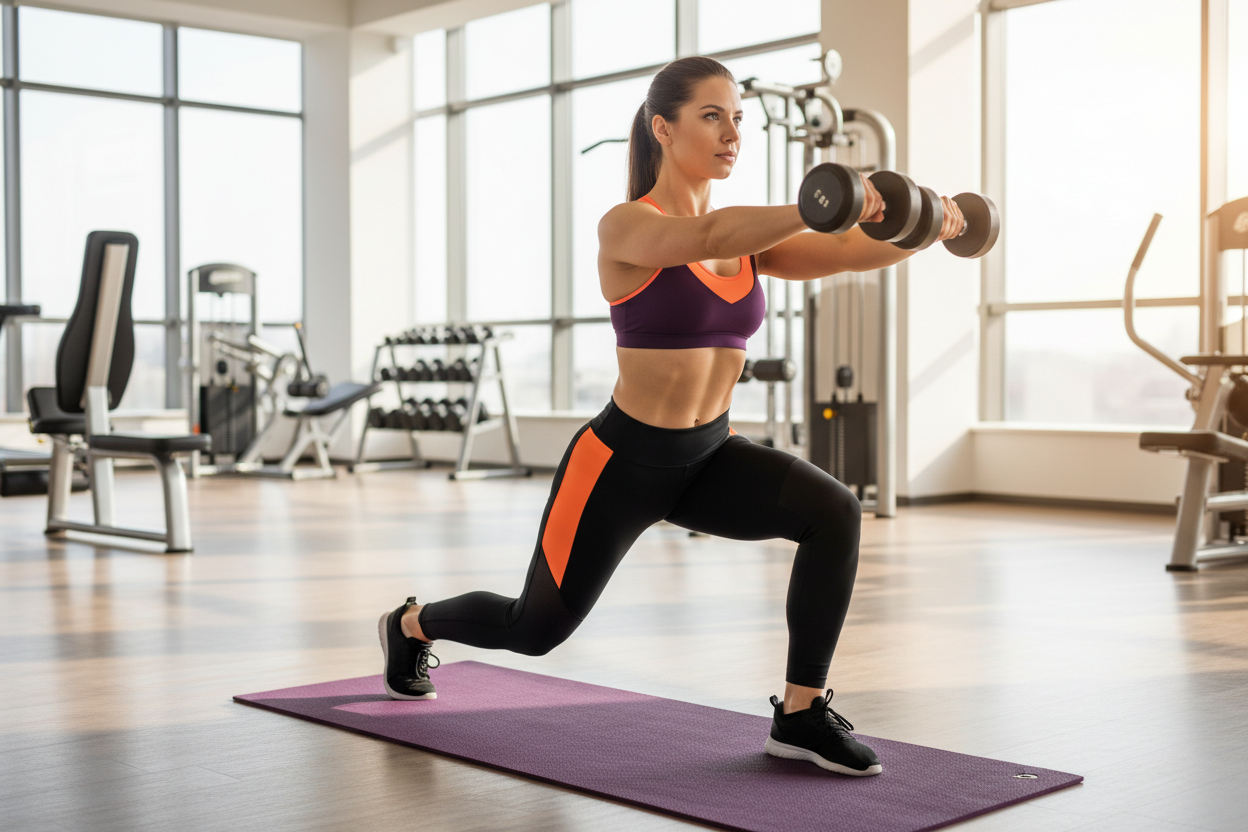
Lunges are a staple in any dumbbell leg workout for beginners, but the direction matters. Walking lunges or forward lunges can put significant stress on the knees if your form isn't perfect. Reverse lunges are generally more joint-friendly and easier to control.
Hold a dumbbell in each hand by your sides. Take a controlled step backward with one foot, lowering your back knee until it almost touches the floor. Your front thigh should be parallel to the ground. Push through the heel of your front foot to return to the starting position. This exercise destroys the glutes and quads while challenging your balance.
4. Dumbbell Calf Raises
The calves are often stubborn, but they contribute to ankle stability and knee health. Hold your weights at your sides. Stand on a flat surface (or the edge of a sturdy step for more range of motion). Press up onto your toes as high as possible, hold for a second, and lower slowly. The pause at the top is crucial; bouncing through the reps won't stimulate growth.
Structuring Your Routine
Knowing the moves is only half the battle; putting them together creates the results. A solid dumbbell leg workout for beginners doesn't need to be complicated. Aim to perform this routine twice a week with at least two days of rest in between.
- Goblet Squats: 3 sets of 10–12 reps
- Romanian Deadlifts: 3 sets of 10–12 reps
- Reverse Lunges: 3 sets of 10 reps per leg
- Calf Raises: 3 sets of 15–20 reps
Rest for about 60 to 90 seconds between sets. If the weights feel too light, slow down your tempo. Take three full seconds to lower yourself into the squat or lunge. This increases "time under tension," which is a primary driver of muscle growth.
Common Mistakes to Avoid
The most frequent error beginners make is sacrificing form for weight. If your back rounds during a deadlift or your knees cave inward during a squat, the weight is too heavy. Your muscles grow from tension, not from ego. Another issue is neglecting the eccentric (lowering) phase of the lift. Don't just drop into a squat; control the descent. That control is where a lot of the strength is built.
Finally, consistency trumps intensity. Doing a perfect workout once a month does nothing. Doing a basic workout consistently for three months changes your entire physique. Stick to the basics, master the form, and your legs will get stronger.
Frequently Asked Questions
How heavy should my dumbbells be for leg workouts?
Select a weight that allows you to complete your target reps (e.g., 12 reps) with good form, but leaves you feeling like you could only do 1 or 2 more. If you can easily do 15 or more reps, the weight is too light; if you can't hit 8, it's likely too heavy.
Can I do this leg workout every day?
No, muscles need rest to repair and grow. Leg muscles are large and require significant recovery time. It is best to perform this routine 2 or 3 times per week with at least 48 hours of rest between sessions.
What if I feel pain in my knees during lunges?
Check your form to ensure your front knee isn't caving inward and that you are stepping back far enough. If pain persists, try reducing the range of motion (don't go as deep) or switch to static split squats where your feet don't move during the set.