Ditch the Gym: How to Build Massive Legs with Just Dumbbells at Home
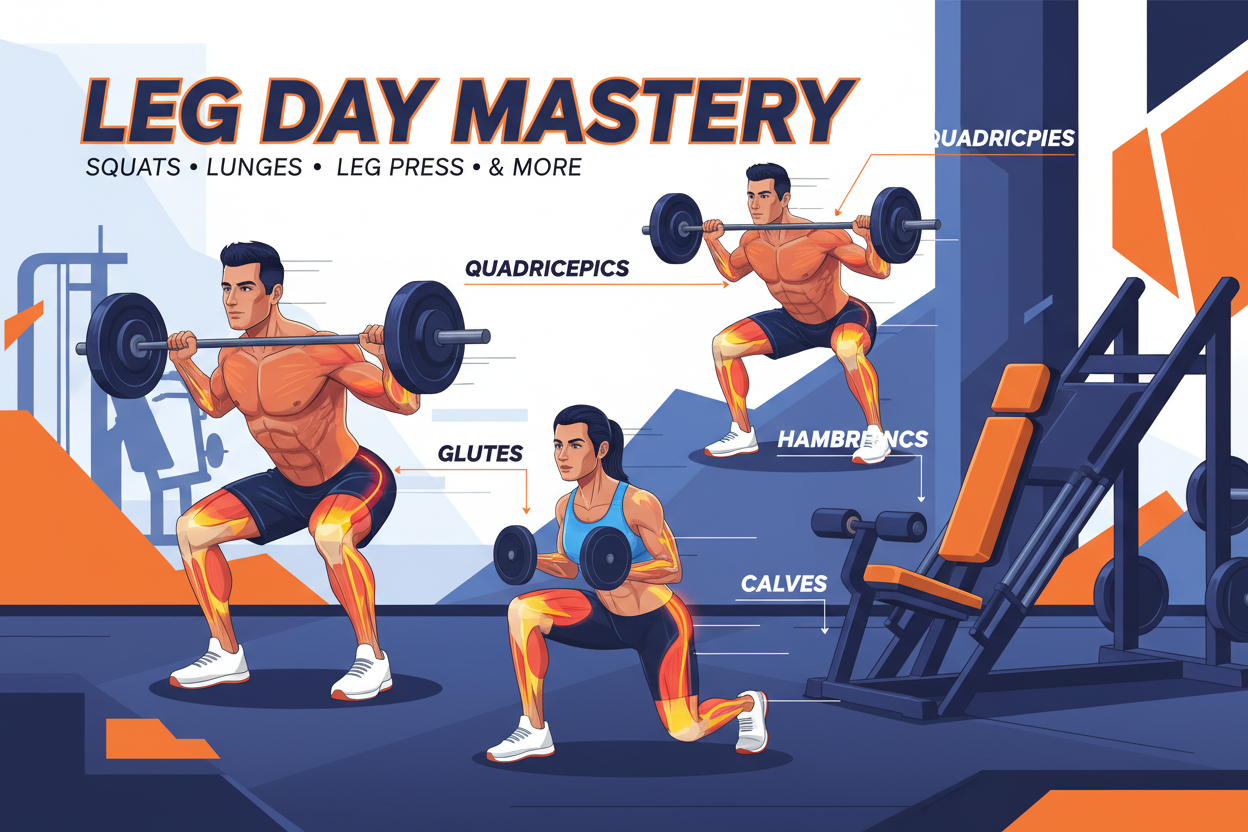
You do not need a squat rack or a leg press machine to build a powerful lower body. There is a persistent myth in the fitness industry that effective leg training requires heavy barbells and industrial-sized machinery. That is simply untrue. You can generate significant hypertrophy and strength gains using a leg workout with weights at home, provided you understand biomechanics and intensity. If you have a pair of dumbbells and a few square feet of floor space, you have everything required to construct a comprehensive routine that targets your quads, hamstrings, glutes, and calves.
The secret lies not in the absolute load on the bar, but in how you apply tension to the muscle. When you remove the stability of a machine, your body has to work harder to balance the weight, recruiting more stabilizer muscles and increasing the overall metabolic demand of the session. A full leg workout with dumbbells can actually be more humbling than a heavy barbell session because it exposes imbalances between your left and right sides that bilateral machines often hide.
My Experience with Limited Equipment
I learned the true value of minimal equipment the hard way. A few years ago, during a period where I couldn't access a commercial facility for several months, I was terrified I would lose all the lower body strength I had spent years building. All I had was a pair of adjustable dumbbells in my garage. I was forced to get creative with leg weights at home. I shifted my focus from moving maximum weight to mastering time under tension and unilateral movements. To my surprise, my legs didn't shrink. They actually became more defined, and my chronic knee pain from heavy back squatting vanished. That experience taught me that intensity is a feeling, not just a number on a plate.
The Fundamentals of Dumbbell Leg Training
To get the most out of an at home leg workout with weights, you must prioritize range of motion. Since you likely won't have 300 pounds of external load, you need to extend the distance the weight travels. This means squatting deeper, lunging further, and controlling the eccentric (lowering) phase of every repetition. Gravity is free; use it to your advantage by slowing down the descent to a three or four-second count.
Compound movements should still form the foundation of your routine. These are exercises that move multiple joints and muscle groups simultaneously. When figuring out how to workout legs with dumbbells, start with variations of the squat and the deadlift. These provide the most "bang for your buck" regarding hormonal response and muscle fiber recruitment.
The Goblet Squat
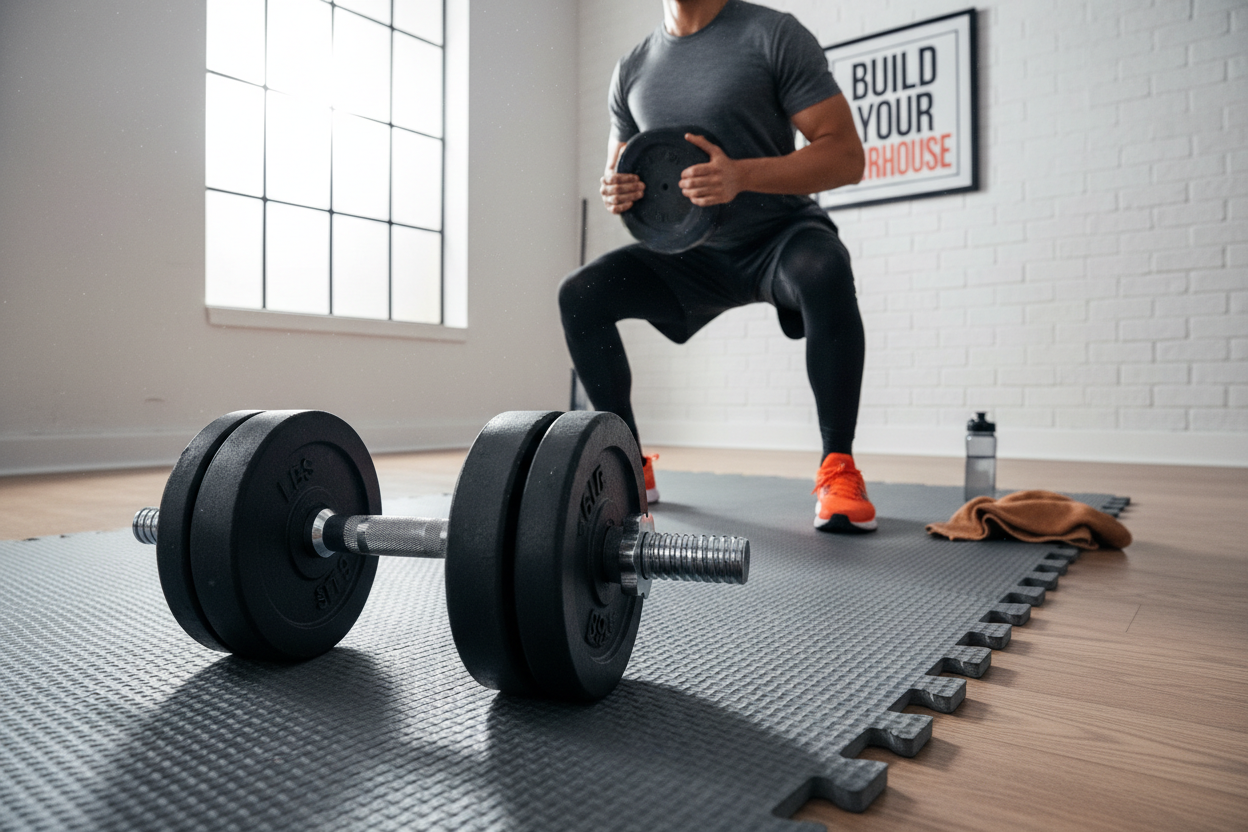
The goblet squat is the king of home leg exercises. Hold a single dumbbell vertically against your chest, cupping the top end with both hands. This front-loaded position forces you to keep your torso upright, which engages the core and reduces shear force on the lower spine. Because the weight is in front of you, it acts as a counterbalance, allowing most people to squat much deeper than they can with a bar on their back.
Drive your knees out as you descend and aim to get your elbows inside your knees. This depth stretches the glutes and quads under load. If you have two heavy dumbbells, you can progress to a front-rack squat, resting one dumbbell on each shoulder, but the goblet variation is usually sufficient for high-repetition growth.
Romanian Deadlifts (RDLs)
For the posterior chain—the hamstrings and glutes—the dumbbell Romanian Deadlift is non-negotiable. Unlike a standard deadlift where you bend your knees to drop the hips, the RDL is a hinge movement. Hold a dumbbell in each hand in front of your thighs. Keep your legs relatively straight, with just a soft bend in the knees, and push your hips backward as if you are trying to close a car door with your butt.
Lower the weights toward your shins, keeping them close to your legs. You should feel a deep stretch in your hamstrings. Stop before your lower back starts to round, then drive your hips forward to return to the standing position. This creates a highly effective home leg workout with weights that targets the often-neglected backside of the legs.
Unilateral Training: The Secret Weapon
Since dumbbells are lighter than barbells, the best way to overload the muscles is to train one leg at a time. This effectively doubles the resistance relative to the working limb. A workout with dumbbells for legs is incomplete without split squats or lunges.
Bulgarian Split Squats
This exercise is notorious for a reason. Place the top of one foot on a bench, chair, or couch behind you. Hold a dumbbell in each hand (or one at your chest) and lower your back knee toward the floor. The front leg does all the work. Because stability is compromised, your glute medius has to fire aggressively to keep you from tipping over. This movement builds incredible athletic strength and fixes size asymmetries quickly.
Walking Lunges
If you have a hallway or a bit of space, walking lunges are excellent for finishing off the legs. Holding weights at your sides creates a pendulum effect that challenges your grip and your traps while your legs do the heavy lifting. Step forward, drop the back knee, and drive through the front heel to bring your feet together before stepping with the other leg. High-rep lunges are metabolic conditioning as much as they are strength training.
Structuring Your Routine
A solid legs workout at home with weights should follow a logical flow. Start with your heaviest compound movement while you are fresh, move to unilateral work, and finish with isolation or high-repetition burnout sets. Here is a sample structure:
- Goblet Squats: 4 sets of 10-12 reps
- Romanian Deadlifts: 4 sets of 12-15 reps
- Bulgarian Split Squats: 3 sets of 10 reps per leg
- Dumbbell Calf Raises: 4 sets of 20 reps
Rest periods should be kept short—around 60 to 90 seconds. Since the absolute load is lower than a gym max-out, keeping the heart rate elevated ensures you are fatiguing the muscle fibers effectively.
Progressive Overload Without More Weight
You might eventually reach a point where your dumbbells feel too light. This does not mean the workout is obsolete. You simply need to change the variables. Slow down your tempo. Instead of one second down and one second up, try four seconds down and two seconds up. Pause at the bottom of every squat for a full second to kill the momentum. These techniques increase the time under tension, making a 30lb dumbbell feel like 60lbs.
Consistency remains the primary driver of results. A home routine eliminates the friction of traveling to the gym, making it easier to stick to your schedule. By focusing on form, intensity, and unilateral movements, you can build a set of legs that look like they were forged in a squat rack, right in your living room.
Frequently Asked Questions
Can I really build muscle mass with just dumbbells?
Yes, your muscles respond to tension, not the type of equipment used. As long as you are nearing failure in your sets and progressively increasing the difficulty (through reps, weight, or tempo), you will stimulate hypertrophy.
How often should I do this leg workout?
For most people, training legs twice a week is optimal for growth. This frequency allows for sufficient recovery time (48-72 hours) between sessions while providing enough volume to stimulate adaptation.
What should I do if my grip gives out before my legs do?
This is common with dumbbell training. You can use lifting straps to secure your grip to the weights, or you can switch to holding a single heavier dumbbell in the goblet position, which removes the strain from your forearms.