Ditch the Bro Split in Your Strength Training Program for Muscle Growth
I spent years following the 'International Chest Monday' ritual, destroying my pecs with twenty sets until they felt like bags of wet cement, only to ignore them for the next six days. It is a classic trap. If you are training in a garage with a power rack and a barbell, you need a strength training program for muscle growth that actually respects how your body builds tissue, not one designed for chemically-enhanced bodybuilders with four hours to kill.
Most home lifters fail because they try to port a commercial gym routine into a space that does not support it. You do not have twelve different cable stations to 'sculpt' your delts from every angle. You have iron, gravity, and hopefully a solid floor. To see real results, we need to stop chasing the 'pump' once a week and start triggering growth more frequently.
Quick Takeaways
- Muscle protein synthesis peaks and drops within 48 hours, making once-a-week splits inefficient.
- High-frequency training (hitting muscles 3x per week) allows for more 'growth triggers' with less total daily fatigue.
- Compound movements like squats, presses, and rows should be the foundation of any muscle building exercise routine.
- Home gym owners should prioritize stability and joint protection to handle the increased frequency.
The Trap of the Once-a-Week Muscle Demolition
The traditional 'bro split'—where you dedicate an entire session to just one or two muscle groups—is a relic of the 90s muscle mags. It relies on high volume to cause massive damage, requiring a full week of recovery. For a natural lifter in a home gym, this is an incredibly inefficient muscle gain training program. When you only have a barbell and a bench, you cannot easily hit the 'finishing' moves that make high-volume days tolerable.
If you destroy your legs on Tuesday and can't walk until Friday, you aren't 'working harder,' you're just recovering slower. In a home setting, you want to stay fresh enough to move well. A gym program for muscle gain that leaves you sidelined for half the week is a recipe for consistency issues. You need a muscle building plan that keeps the engine humming, not one that blows the head gasket every Monday.
Why Frequency Beats Daily Volume for Natural Lifters
Biology does not care about your 'no pain, no gain' mantra. Muscle protein synthesis (MPS) is the process where your body repairs and grows new muscle tissue. For most of us, MPS spikes after a workout and returns to baseline within 24 to 48 hours. If you only train your back on Thursdays, you are spending Friday and Saturday growing, and then Sunday through Wednesday just waiting around. That is four days of wasted potential in your muscle growth program.
By shifting to a full body workout for muscle and strength, you can hit every major group three times a week. You might do fewer sets per session, but the total weekly volume stays the same—or even increases—while your muscles spend more time in an anabolic state. This is the best workout program to build muscle because it maximizes the time your body spends actually building, rather than just idling.
The 48-Hour Recovery Window Explained
Think of your muscle building weight training program like a light switch. A workout flips the switch 'on' for growth. After about two days, the switch flips 'off.' If you wait a full seven days to hit that muscle again, you are leaving that switch in the 'off' position for five days. A weight lifting plan to build muscle that hits the muscle every 48 to 72 hours keeps the switch 'on' almost indefinitely. This is how you actually see a change in the mirror without needing a pharmacy of 'supplements.'
Drafting Your High-Frequency Home Setup
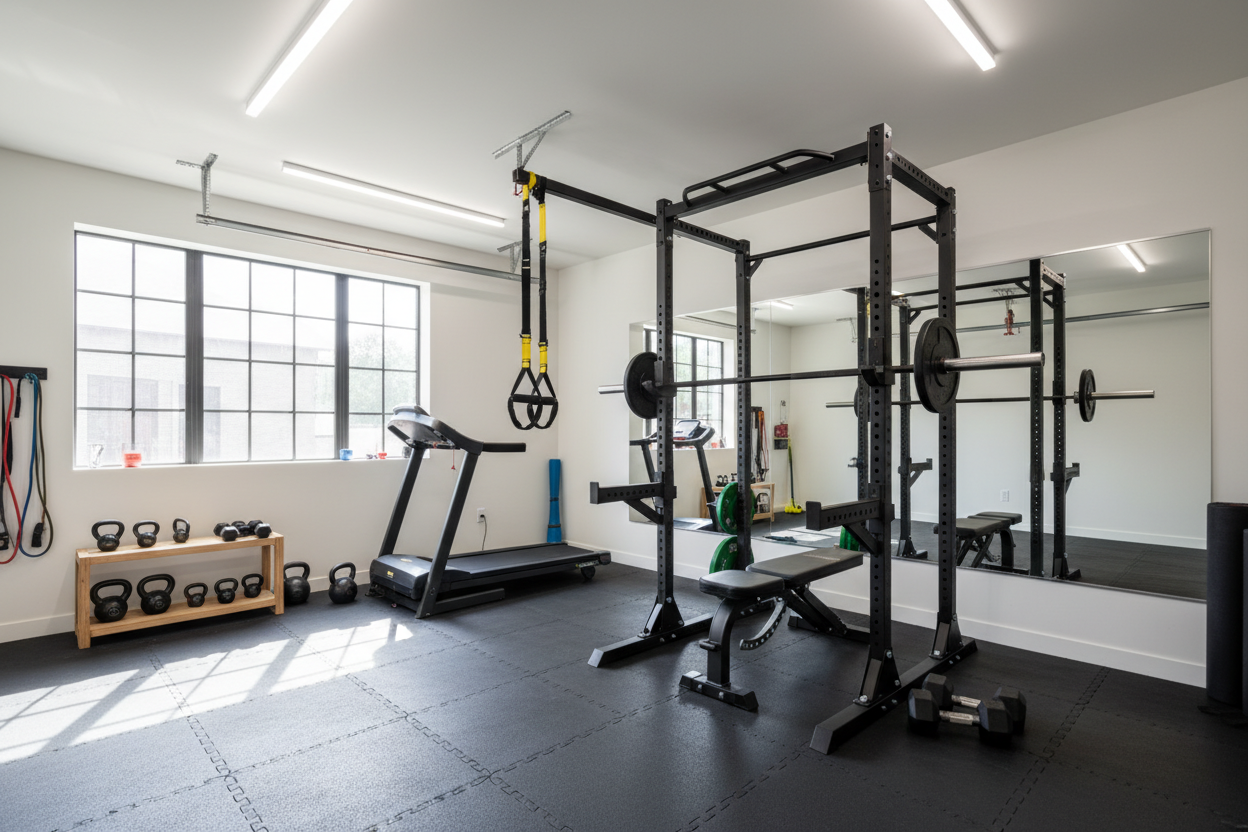
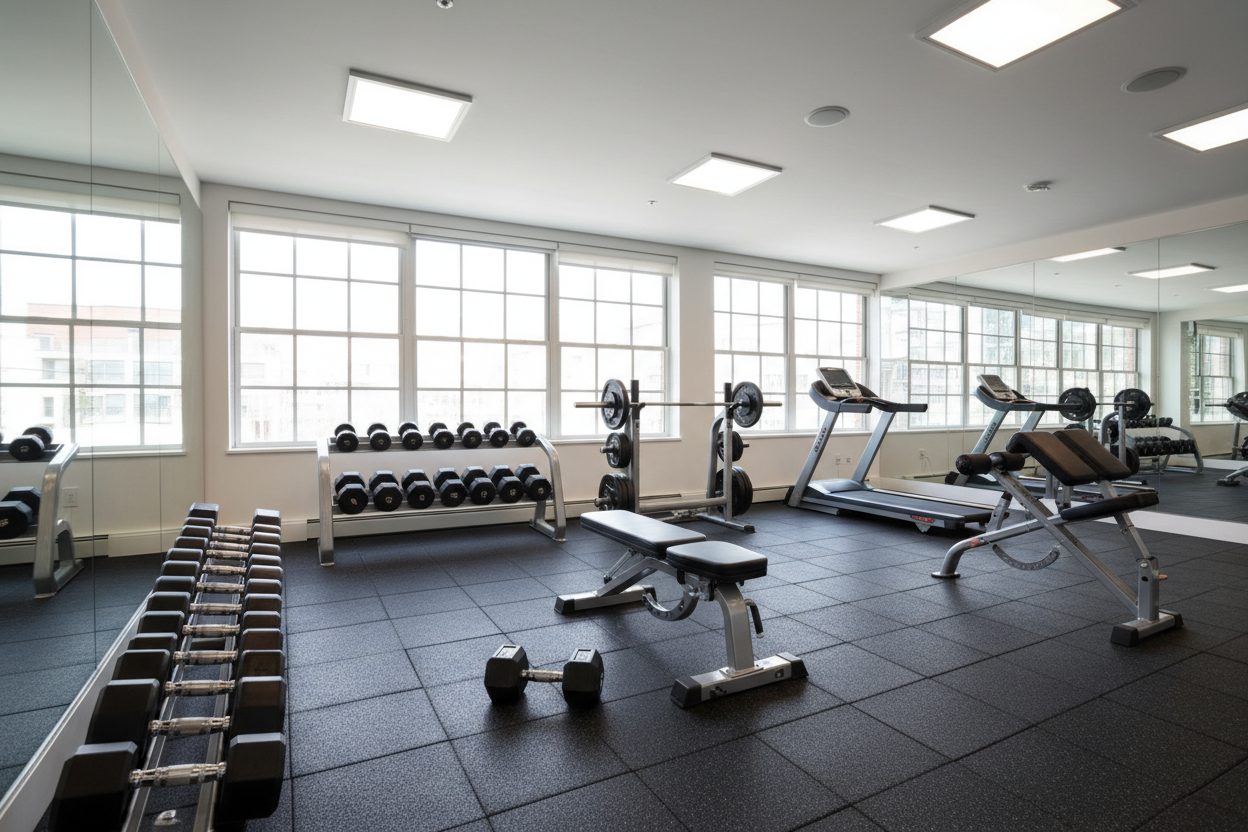
You do not need a 5,000-square-foot facility to run a workout plan for muscle growth. You need a build muscle routine centered on heavy carries, pulls, and pushes. A 3-day full-body split or a 4-day upper/lower split is the sweet spot for most home lifters. This allows you to use your rack and bench to their full potential without needing thirty different weight lifting machines to see progress.
To replicate the stability of those machines at home, focus on 'bracing' exercises. Use a wall for a supported dumbbell row or use your power rack's uprights for stability during split squats. These weight lifting routines to build muscle work because they prioritize mechanical tension over 'feeling the burn.' If you are moving more weight more often, you will grow. It is physics.
Picking the Right Anchor Lifts
Your training program for building muscle should be built around 'anchor' lifts. These are the big compound movements that allow for the most weight to be moved. Think back squats, overhead presses, and weighted pull-ups. If you are doing a gym routine gain muscle, 80% of your energy should go into these. Save the curls and lateral raises for the last ten minutes. If you aren't getting stronger on the big lifts, your muscle mass plan is just cardio with heavy objects.
How to Protect Your Joints When Lifting More Often
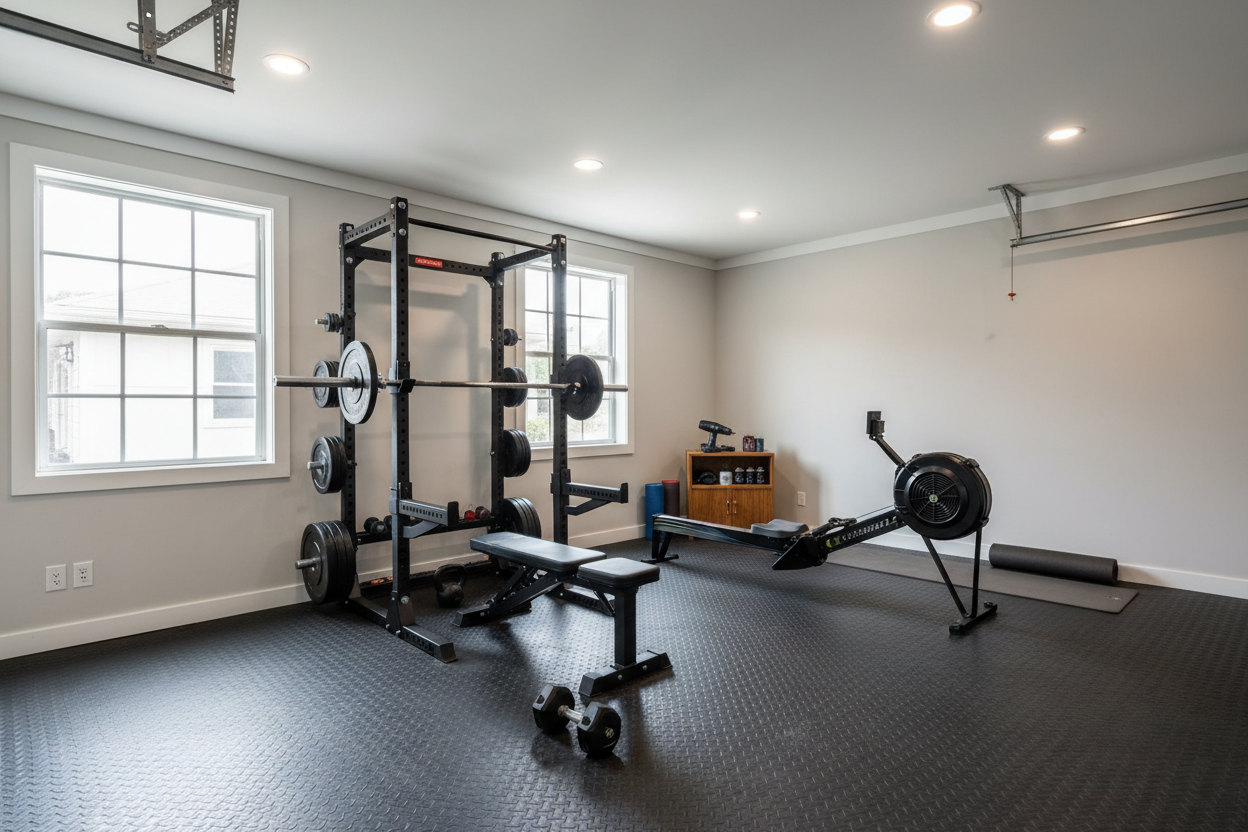
The biggest fear with a high-frequency workout program gain muscle is joint wear and tear. If you are squatting three times a week, your knees will feel it if you aren't smart. First, stop training to absolute failure on every set. Leave one or two reps in the tank. This keeps the stimulus high but the systemic fatigue low. Second, look at your environment. Lifting on bare concrete is a fast track to tendonitis.
I highly recommend investing in shock-absorbing gym flooring for home workout. It might seem like a luxury, but when you are performing heavy triples or high-frequency weight lifting programs to build muscle, that extra bit of dampening under your feet makes a massive difference in how your ankles and knees feel the next morning. A 6x8 ft mat is usually enough to cover your rack's footprint and give you a safe landing zone.
My Personal Experience
I used to be a volume junkie. I thought if I didn't do 6 exercises for chest, I wasn't trying. My bench press was stuck at 225 lbs for nearly two years, and my shoulders constantly ached. I finally swallowed my pride and switched to a strength and muscle building workout plan that hit chest three times a week with just two exercises per session (Bench and Incline). Within three months, I hit 275 lbs for reps. The downside? I had to get used to not feeling 'destroyed' after every workout. You have to trust the process, even when you aren't crawling out of your gym on all fours.
FAQ
Is high frequency better for beginners?
Absolutely. A gym program for muscle gain that uses high frequency allows beginners to practice the movements more often. The more you squat, the better your form gets, and the faster you can add weight safely.
How many sets should I do per muscle group?
In a workout program build muscle with high frequency, aim for 3-5 sets per muscle group per session. This totals 9-15 sets per week, which is the 'sweet spot' for hypertrophy for most natural lifters.
Can I build muscle with just dumbbells?
Yes, but you will eventually need heavy ones. A build muscle training program using adjustable dumbbells (like the ones that go up to 80 or 90 lbs) is great for home use, but eventually, you will want a barbell for lower body growth.
What if I miss a day in a full-body split?
Don't sweat it. Unlike a bro split where missing 'Leg Day' means waiting a week, a muscle building workout regimen based on frequency is forgiving. Just pick up where you left off. Every day is a growth day.