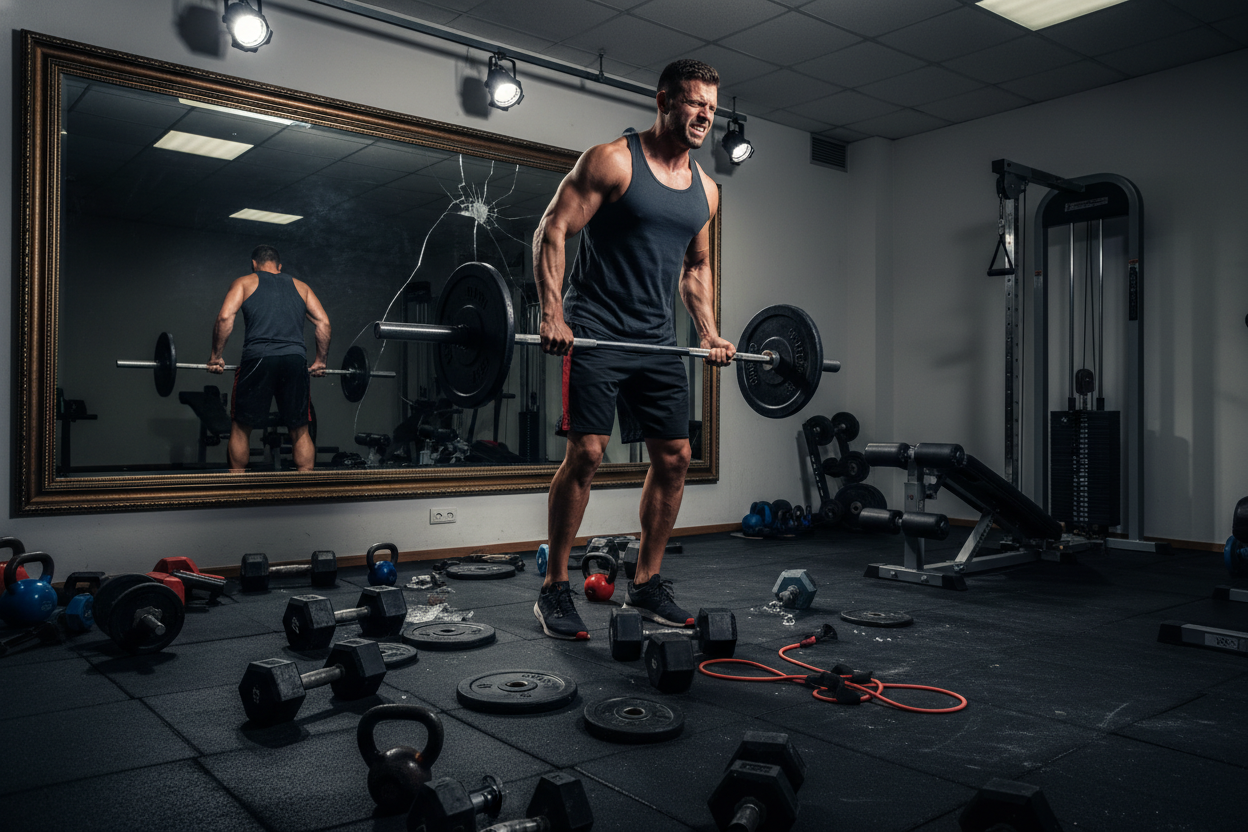
Disadvantages of Free Weights: The Truth Before You Buy
Building a home gym usually starts with a classic barbell and some dumbbells. But while social media glorifies the heavy deadlift, very few talk about the disadvantages of free weights when designing a personal workout space. If you are battling limited square footage, training alone, or hitting a plateau, you might be realizing that iron isn't always the perfect solution.
In this guide, we are diving deep into the hidden drawbacks of traditional iron. From the spatial demands of a garage gym to the biomechanical limitations of standard gravity-based lifting, understanding the disadvantages of free weight training will help you make smarter equipment investments.
Key Takeaways
- High space requirements: A full rack, barbell, and plate tree demand significant floor space.
- Safety risks for solo lifters: Pushing to failure without a spotter or proper safety catches can lead to serious injury.
- Inconsistent resistance curves: Gravity-based weights often fail to provide constant tension throughout the entire range of motion.
- Steep learning curve: Proper form requires time and mobility, making them less beginner-friendly than guided machines.
Space and Budget Constraints
The Hidden Footprint
When planning a home gym, many people underestimate the operational footprint of a barbell. While a bar is only 7 feet long, you need at least 10 feet of width to load and unload plates safely. Add a power rack, a flat bench, and a weight tree, and you have instantly consumed half of a standard one-car garage. For apartment dwellers or basement gyms with low ceilings, overhead presses with a standard barbell are often physically impossible.
The Cost of Scaling Up
Dumbbells seem budget-friendly at first, but scaling up becomes incredibly expensive. Buying individual pairs from 5 to 100 pounds takes up an entire wall and costs thousands of dollars. While adjustable dumbbells mitigate this, they are often bulky and delicate compared to solid hex dumbbells. With free weights, you are constantly paying for more cast iron as you get stronger.
Safety and Biomechanics
Injury Risks Without Spotters
One of the most glaring issues is safety. Pushing to muscular failure on a heavy bench press or squat without a spotter is a high-risk scenario. If you fail a rep, you are relying entirely on the structural integrity of your rack's safety pins—assuming you remembered to set them at the correct height.
The Resistance Curve Problem
Free weights rely entirely on gravity, which means resistance is only applied vertically. During exercises like dumbbell flyes or lateral raises, the tension on the muscle drops to zero at the bottom or top of the movement. This lack of constant tension is a major reason why home gym owners often supplement with cable machines.
From Our Gym: Honest Take
As much as I love my power bar, I learned about these drawbacks the hard way. Last winter in my garage gym, I was pushing for a PR on the bench press. I failed the rep and got pinned. Because I hadn't set up my safety pins properly—a common mistake when rushing—I had to do the 'roll of shame' with 225 pounds across my hips. It left a massive bruise and damaged my confidence for weeks. Furthermore, dropping heavy dumbbells has completely destroyed two of my high-density horse stall mats over the past year. Free weights are fantastic tools, but you absolutely have to respect the spatial and safety demands they place on a solo lifter.
Frequently Asked Questions
Are free weights bad for beginners?
Not necessarily, but they do require more coaching and body awareness. Beginners must prioritize form over load, whereas machines can safely guide a novice through the correct plane of motion, minimizing early injury risks.
Can I build a complete home gym without free weights?
Absolutely. Functional trainers, resistance bands, and high-quality leverage machines can provide a full-body workout while eliminating many of the risks associated with dropping heavy iron.
How do I minimize the risks of free weights at home?
Always use a power rack with heavy-duty safety straps or pins. Invest in high-quality crash pads if you plan on dropping weights, and never use spring collars on heavy overhead lifts where you might need to dump the plates in an emergency.