Diet and Exercise Plan to Build Muscle at Home
Foundations of a Diet and Exercise Plan to Build Muscle
Committing to a diet and exercise plan to build muscle requires a synchronized approach where what you eat directly supports the physical demands of your training. Lifting heavy weights without sufficient caloric and nutritional backing limits muscular adaptation, while eating in excess without progressive physical tension leads to unwanted fat storage rather than quality mass. When structured thoughtfully, an integrated diet and exercise plan to build muscle directs your body to synthesize new tissue, improve power output, and maintain structural longevity in your training space.
Muscular adaptation depends on the principle of progressive overload paired with nutritional replenishment. When you challenge muscle fibers through resistance training, microscopic disruptions occur within the tissue. Your body requires amino acids and energy to rebuild these fibers thicker and stronger. Consequently, embarking on a diet and exercise plan to build muscle means viewing your meals and training sessions as two halves of a single system. In a home gym setting, consistency becomes your greatest ally, requiring deliberate planning around meals, training schedules, and equipment setups.
How Do You Balance Diet and Exercise Plan to Build Muscle at Home?
You balance a diet and exercise plan to build muscle at home by matching your daily caloric surplus and meal timing directly to the intensity and frequency of your lifting sessions. When training at home, convenience can sometimes lead to haphazard snacking or skipped sessions. Balancing your diet and exercise plan to build muscle involves establishing predictable eating windows that fuel workouts and promote repair during planned recovery days.
To build muscle effectively, your body thrives in a modest caloric surplus, giving it the spare energy needed to manufacture lean mass without accumulating excessive fat. Emphasize whole food sources such as poultry, fish, eggs, legumes, complex grains, and healthy fats. Distribute your protein intake evenly throughout the day rather than loading it all into dinner, ensuring a continuous supply of building blocks for muscle growth. On intense training days focused on heavy compound lifts, increase complex carbohydrate intake to ensure muscle glycogen remains topped off for maximum lifting capacity.
Structuring Your Daily Meals for Muscle Growth
A well-structured diet and exercise plan to build muscle prioritizes quality ingredients over empty volume. While gaining mass requires eating more energy than you burn, relying on processed snacks can leave you sluggish during challenging sessions. Centering your diet on nutrient-dense whole food sources optimizes energy balance, supports joint health, and aids digestion.
Consider organizing your nutrition across several core areas:
- Steady Protein Distribution: Divide your protein intake across three to five meals each day. Spacing protein from whole food sources gives your body continuous access to essential amino acids, which is necessary to stimulate muscle growth after tough sessions.
- Complex Carbohydrates for Energy: Fuel your workouts with slow-digesting carbohydrates such as oats, brown rice, sweet potatoes, and quinoa. These foods sustain energy levels across strenuous sets of compound lifts.
- Essential Healthy Fats: Incorporate avocados, nuts, seeds, and olive oil to support hormone balance and overall wellness during demanding training phases.
- Hydration and Micronutrients: Drink water consistently throughout the day to support nutrient delivery and maintain muscular endurance, helping you build muscle without premature fatigue.
By treating meal preparation with the same discipline you apply to lifting, your diet and exercise plan to build muscle provides the foundational fuel needed for serious progress.
Designing Workout Plans and Diets for Muscle Building
Balancing workout plans and diets for muscle building requires an organized weekly split that targets major muscle groups without causing excessive physical burnout. When lifting in a home gym, relying on dumbbells and barbells allows you to execute fundamental multi-joint exercises that yield the greatest return on effort. You can review a detailed 7-day muscle building workout plan to understand how different movement patterns fit into a balanced training calendar.
Effective workout plans and diets for muscle building typically utilize an upper-lower or push-pull-legs structure. This organization ensures that every muscle group receives adequate stimulus while providing dedicated recovery days between workouts. Prioritize compound lifts such as squats, deadlifts, overhead presses, and bent-over rows. These movements recruit multiple muscle groups simultaneously, serving as a powerful catalyst for muscle growth.
When you execute a diet and exercise plan to build muscle, your training days must reflect deliberate progressive overload. Strive to add a small amount of weight, an extra repetition, or improved control to your lifts over time. Structure your rest periods between heavy sets to allow cardiovascular recovery and full strength renewal, keeping each repetition technically sound. Coordinating workout plans and diets for muscle building ensures your diet and exercise plan to build muscle produces tangible physical adaptation.
Equipment Placement and Floor Protection for Home Lifting
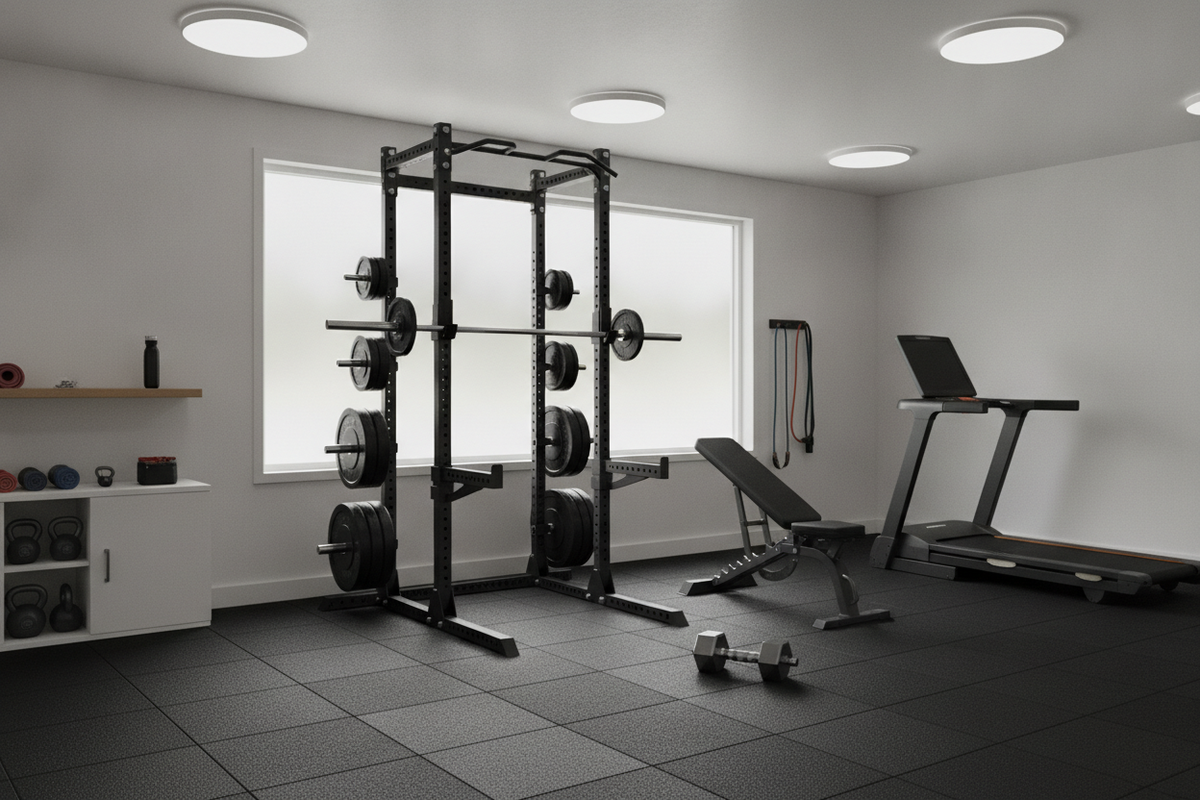
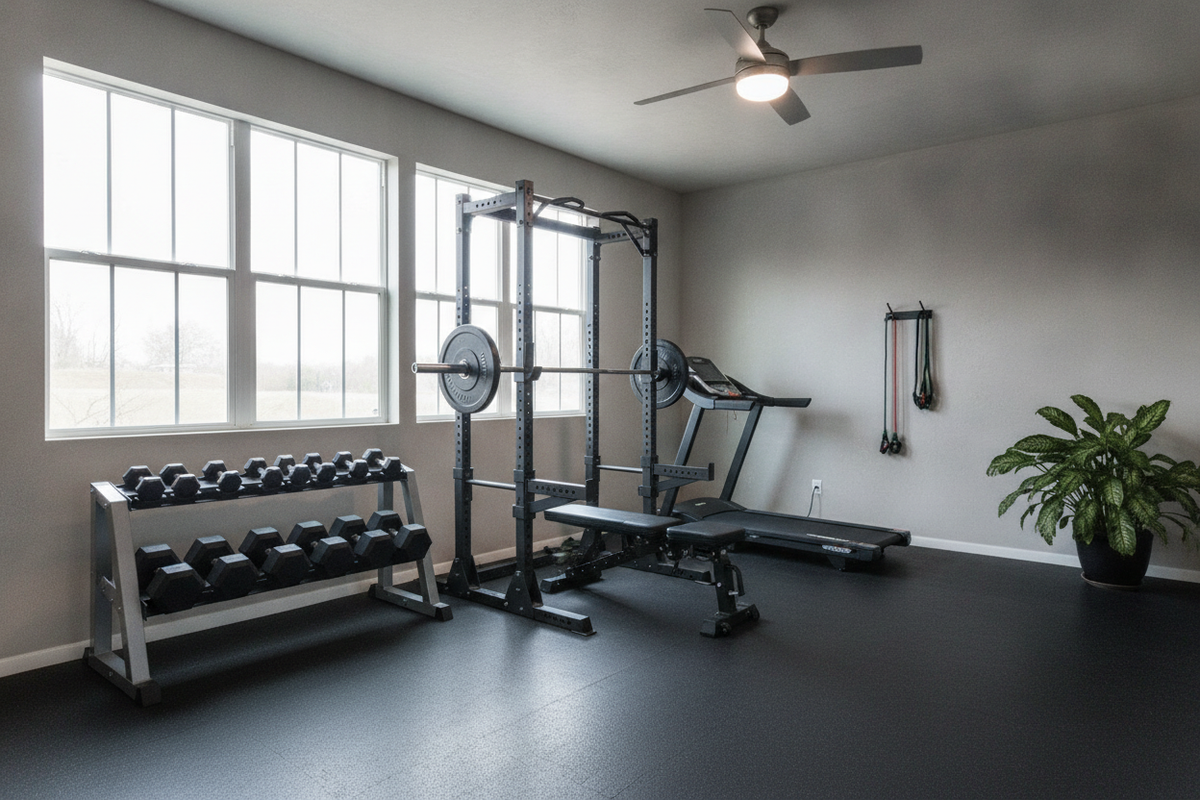
Executing a diet and exercise plan to build muscle in your living quarters demands thoughtful equipment placement to preserve both your household surfaces and your equipment. Free weights such as dumbbells and barbells can place significant localized stress on home flooring. Dropping weights or repeatedly setting heavy loads down on bare concrete, tile, or hardwood can quickly cause costly subfloor damage.
Designating a permanent lifting zone keeps your gear organized and creates a safe, dedicated environment for regular training. Explore our dedicated exercise mat collection to find durable protective options that suit your available square footage. When arranging your home gym, position your heaviest weights near reinforced walls or directly over structural joists. Keep walkways clear so you can navigate safely between sets without tripping over plates or collars.
Integrating dedicated floor protection gives you the confidence to perform heavy strength training lifts without holding back. When you are not worried about cracking ceramic tiles or scuffing delicate floor finishes, you can fully focus on bracing properly, executing lifts through a complete range of motion, and driving consistent muscle building progress.
How Do You Protect Your Floors During Heavy Home Workouts?
You protect your floors during heavy home workouts by installing a high-density exercise mat directly over your subfloor to absorb dropped weight impact and prevent surface gouges. Standard thin yoga mats compress instantly under load and offer virtually no protection against heavy iron or repetitive foot impacts during strength training.
A heavy-duty base such as a large 6x10ft exercise mat for home workouts delivers both floor protection and essential joint cushioning. When selecting gym flooring for muscle building routines, look for specific performance attributes:
- Impact Absorption: A dense mat provides necessary shock absorption, diffusing downward energy when setting down heavy dumbbells and barbells to eliminate the risk of subfloor damage.
- Firm Footing: A dependable high-density exercise mat provides stable compression resistance, ensuring your feet do not sink or wobble during heavy squats and overhead presses.
- Traction and Grip: Textured mat surfaces supply vital traction and grip, preventing foot slippage during sweaty, high-effort sets.
- Joint Cushioning: Dedicated padding offers joint cushioning for knees, hips, and wrists during floor-based movements like push-ups, planks, and lunges.
A complete diet and exercise plan to build muscle accounts for both physical exertion and the resilience of your training environment. Laying down a large workout mat creates a defined boundary that safeguards your home while elevating your training performance.
Why Is Recovery as Important as Lifting for Muscle Growth?
Recovery is as important as lifting for muscle growth because muscular tissue actually repairs and enlarges during rest periods, not while you are actively straining under weight. Resistance training provides the physical stimulus for breakdown, but tissue rebuilding takes place only when your body has sufficient downtime, sleep, and nutrient availability.
Following a diet and exercise plan to build muscle requires giving muscle fibers adequate downtime between workouts. Incorporating regular recovery days ensures your central nervous system recharges and connective tissues adapt to increased loading. Use these lighter days for light mobility drills, walking, and maintaining steady protein intake to facilitate muscle building. Managing cumulative fatigue prevents chronic plateaus and keeps you excited for every upcoming session.
Maintaining your home gym surfaces is also part of your overall recovery protocol. Regularly wipe down your large workout mat with mild soap and water to clear accumulated sweat and chalk, preserving its traction and grip over years of heavy use. Keeping your exercise mat clean and your space organized ensures you always return to an inviting training area. Any sustainable diet and exercise plan to build muscle must respect the balance between hard work on the floor, calculated rest periods, and diligent self-care. Maintaining this diet and exercise plan to build muscle over months and years will build muscle, cultivate discipline, and maximize your strength training results at home.