Design Your R and R Gym: The Ultimate Home Recovery Space
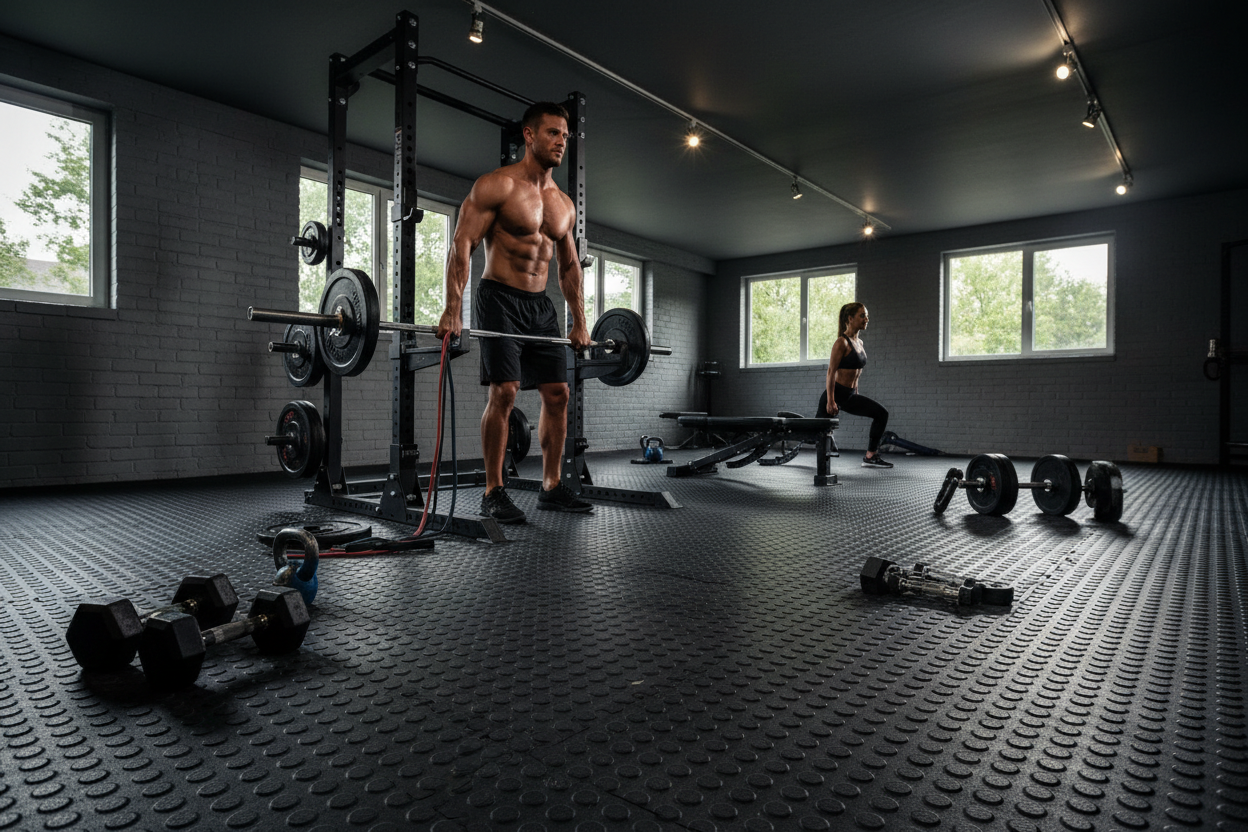
You finally bought the heavy iron. You have the 3x3 inch steel power rack, the 5 to 52.5 lb adjustable dumbbells, and you are grinding out heavy 5x5 squats in your garage at 6 AM. But three weeks into the program, your knees ache, your lower back feels like a tight guitar string, and you are skipping sessions. I see this constantly with my personal training clients. They build incredible spaces for breaking muscle down, but completely ignore the space needed to build it back up. That is where designing a dedicated r and r gym comes into play.
Focusing on rest and recovery is the missing variable in almost every residential workout space I evaluate. If you want to push heavy weights consistently without destroying your joints, you need a dedicated zone for tissue work and decompression.
Quick Takeaways
- Active recovery requires dedicated floor space, ideally a minimum of 6x6 feet for unrestricted movement.
- Thick, supportive flooring prevents joint pain during prolonged mobility holds.
- A proper recovery routine down-regulates your central nervous system after heavy lifting.
- Basic tools like high-density rollers and resistance bands offer massive ROI for tissue health.
The Rise of the R and R Gym Concept
When I consult on residential gym builds, clients always want to talk about pulley ratios and rack attachments. I always steer the conversation toward their recovery footprint. The concept of an r&r gym zone is gaining serious traction because lifters are realizing that crushing your body with heavy loads four days a week without a decompression strategy inevitably leads to burnout and injury.
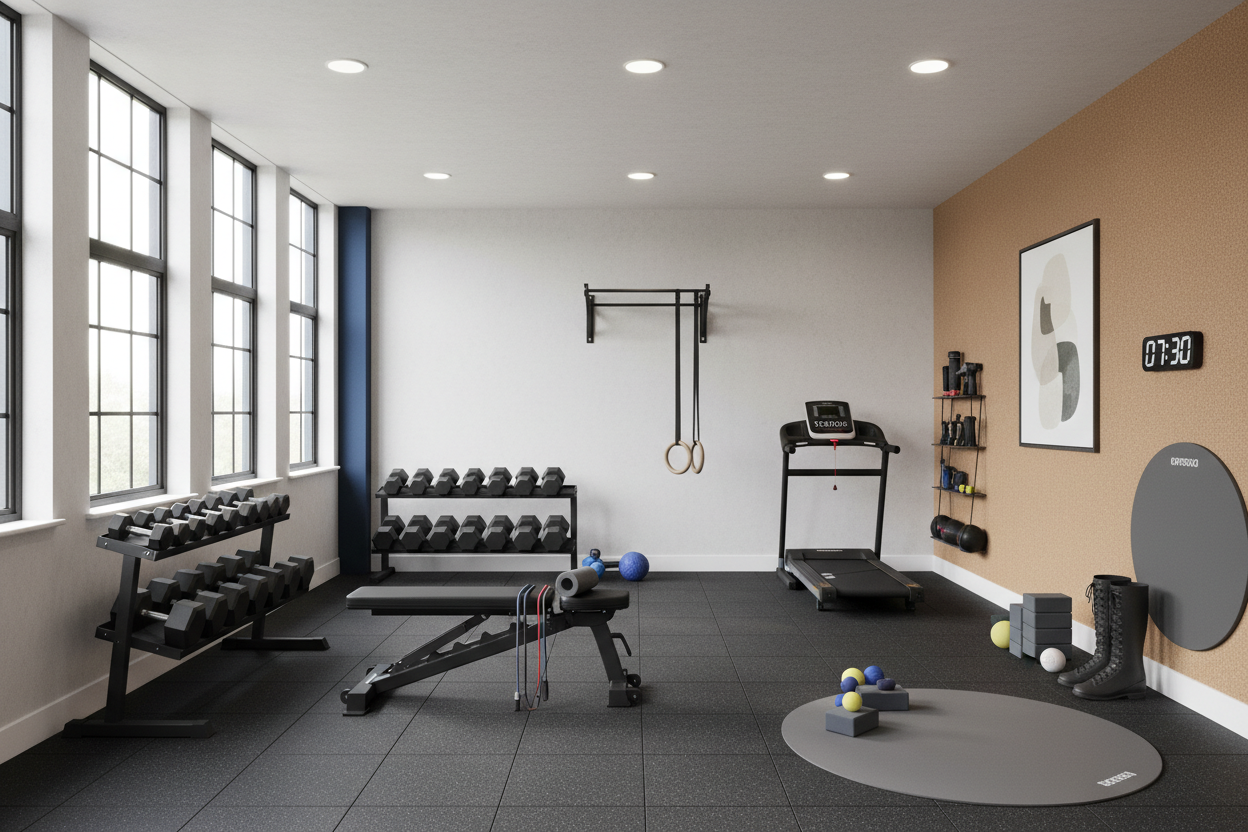
An r and r gym is a designated, distraction-free area focused entirely on tissue health, joint mobility, and mental reset. You do not need a massive footprint to make this work. A 40-square-foot corner is plenty of room to roll out tight fascia, perform deep static stretches, and reset your breathing. It serves as a physical boundary between the high-stress environment of the squat rack and the low-stress environment needed for repair.
Why R and R Fitness is the Key to Muscle Growth
You do not build muscle while deadlifting; you build muscle while recovering from deadlifting. That is the core philosophy behind r and r fitness. When you lift heavy, you create micro-tears in the muscle fibers and spike your central nervous system into a sympathetic fight-or-flight state. If you stay in that heightened state, cortisol levels remain elevated, which directly blunts hypertrophy and stalls fat loss.
Implementing r&r fitness principles forces your body into a parasympathetic rest-and-digest state. This is when nutrient partitioning happens and your circulatory system clears metabolic waste like lactic acid from your tissues. By dedicating a physical space to this process, you create a powerful psychological trigger. When you step into your recovery zone, your brain knows it is time to down-regulate.
I have tracked client metrics using wearable devices for years. The data is clear: clients who spend just 15 minutes in their recovery space post-workout see a 20 percent faster return to their baseline resting heart rate compared to those who just hit the shower immediately after their last set.
Essential Gear for Your R&R Gym Layout
You do not need to spend thousands of dollars on pneumatic compression boots or infrared saunas to get elite-level recovery. The best tools are often the simplest and most accessible. Start with a high-density EPP foam roller. I prefer the 36-inch models because they allow you to lie vertically along the spine for deep chest openers. Next, grab a set of mobility bands ranging from 10 to 35 pounds of resistance for joint distraction exercises.
A percussive massage gun is highly effective for localized trigger points, but I have a word of caution from personal testing. I have used dozens of massage guns, and while a 40-pound stall force is great for deep tissue work on the glutes, many of them run at 60+ decibels. If you are trying to do a quiet recovery session at 10 PM while the house sleeps, that noise level is incredibly disruptive. I often recommend sticking to manual tools like a dense lacrosse ball for late-night tissue work.
The absolute most critical piece of gear, however, is your flooring. You cannot relax into a two-minute pigeon pose on hard concrete or thin, cheap puzzle mats. You need expansive, thick cushioning. I always advise clients to invest in a high-quality 6x8ft exercise mat yoga mat. This provides the foundational flooring needed for expansive stretching and foam rolling without triggering joint pain in your knees or wrists. Depending on the exact dimensions of your spare room or garage, you might need to browse for a large exercise mat for home gym to perfectly cover your designated recovery space.
Structuring Your RR Fitness Recovery Routine
Having the space is only half the battle; executing a structured routine is where the real physical changes happen. On your off-days, I recommend a 20-minute rr fitness protocol designed to restore range of motion and calm the nervous system.
Minute 0 to 5: Start with global foam rolling. Spend one minute each on your calves, hamstrings, quads, glutes, and upper back. Do not just roll back and forth quickly. When you find a tender spot, hold the pressure for 15 seconds until the tissue physically releases and relaxes.
Minute 5 to 15: Move into deep static stretching. Focus heavily on the hips and thoracic spine, as these areas get locked up from sitting at a desk and heavy lifting. Perform a couch stretch against the wall, holding for two minutes per leg. Follow this with a deep pigeon pose, again holding for two minutes per side. The thick flooring you installed will make these prolonged holds comfortable rather than painful.
Minute 15 to 20: Finish with box breathing. Lie flat on your back, close your eyes, and inhale for 4 seconds, hold for 4 seconds, exhale for 4 seconds, and hold empty for 4 seconds. This simple breathwork protocol drastically lowers your heart rate and signals to your brain that the physical stress of the week is officially over.
Bridging the Gap: From Recovery to Heavy Resistance
The ultimate goal of your recovery space is to make your training space more effective. When you spend time clearing out fascial adhesions and improving your ankle and hip dorsiflexion, you can squat deeper and press with much better mechanics. This synergy is what creating the ultimate home gym setup is all about. It is a complete ecosystem where recovery fuels performance.
If you have invested in commercial-grade equipment, your body needs to be physically prepared to handle those heavy loads. You might own the best exercise machines for home use, but if your shoulders are too tight to achieve full range of motion on a lat pulldown, you are leaving muscle growth on the table. Your recovery zone prepares your joints to safely and effectively tackle the heavy resistance waiting for you on the other side of the room.
Conclusion: Investing in Your Body's Longevity
Treating rest as an active discipline rather than a passive afterthought will dramatically extend your lifting career. By carving out a specific corner of your house for an r and r gym, you are prioritizing your long-term joint health and mental well-being. Stop letting your heavy equipment steal all the square footage. Build your recovery space, put in the daily mobility work, and watch your strength numbers climb.
How much space do I need for a recovery zone?
You need enough room to lie down fully extended with your arms overhead. A 6x6 foot or 6x8 foot area is generally the sweet spot for unrestricted movement with foam rollers and bands.
Can I do active recovery on the same day as heavy lifting?
Yes, but keep it brief. A 5 to 10-minute cool-down focusing on breathwork and light rolling is great post-workout. Save the intense 20-minute mobility holds for your actual rest days.
Are massage guns better than foam rollers?
They serve entirely different purposes. Massage guns are excellent for targeted, deep trigger points, while foam rollers are better for global fascial release and spinal mobilization.