Daily At Home Workouts: Managing Intensity for Results
I see it happen all the time. A client decides they want to get in shape, clears out a corner of their living room, and commits to a daily at home fitness plan. Monday is a grueling HIIT session. Tuesday is heavy dumbbells. Wednesday is a frantic sprint through a plyometric circuit. By Thursday? Their central nervous system is completely fried, their knees ache, and the couch looks a lot more appealing than their kettlebells.
Building an everyday exercise routine at home isn't about crushing yourself seven days a week. It is about managing fatigue. If you want a daily workout habit that actually sticks, you have to learn how to cycle your intensity. You need to know when to push the limits and when to back off.
Quick Takeaways
- Cycle your intensity: Alternate between high-tension strength days and low-impact recovery sessions to prevent burnout.
- Stimulus vs. Flush: Use heavy days to break down muscle and light days to move blood and clear lactic acid.
- Prioritize joints: Dedicated mobility days keep your everyday home workouts sustainable long-term.
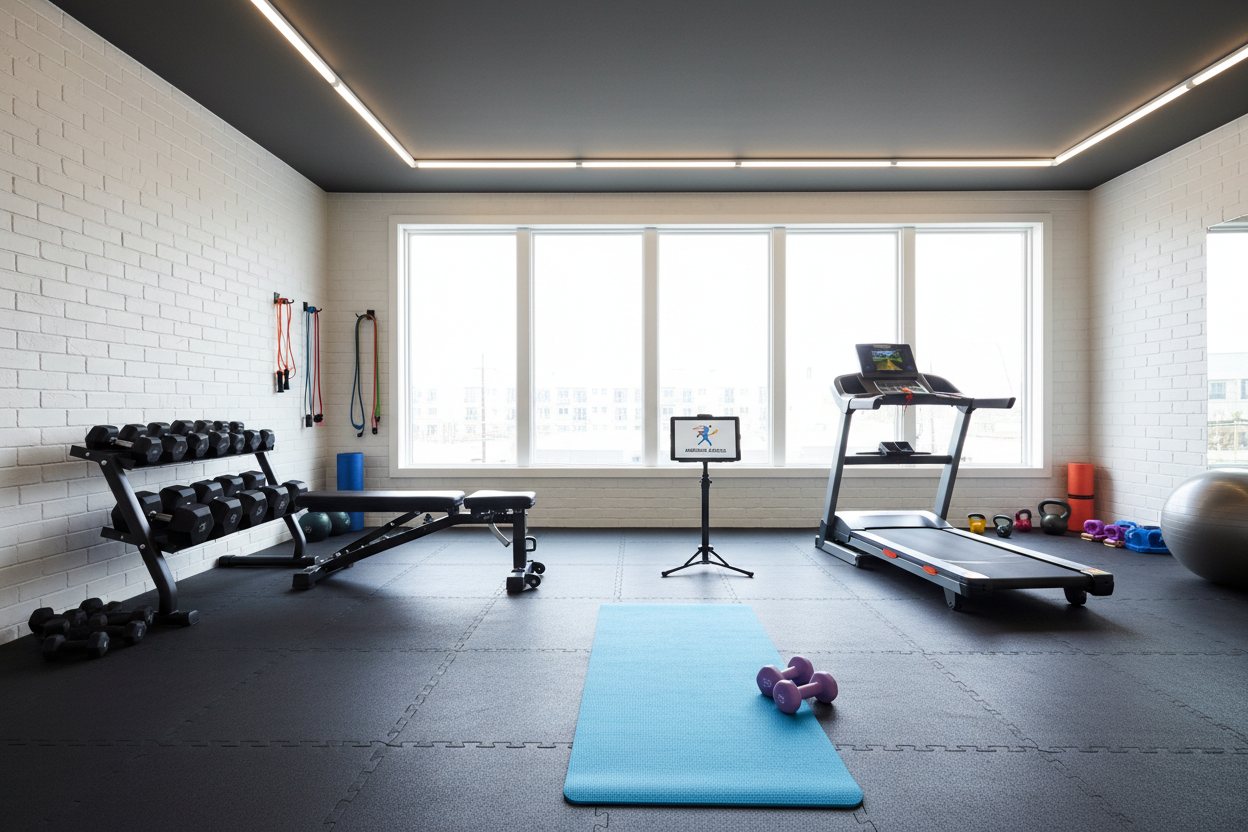
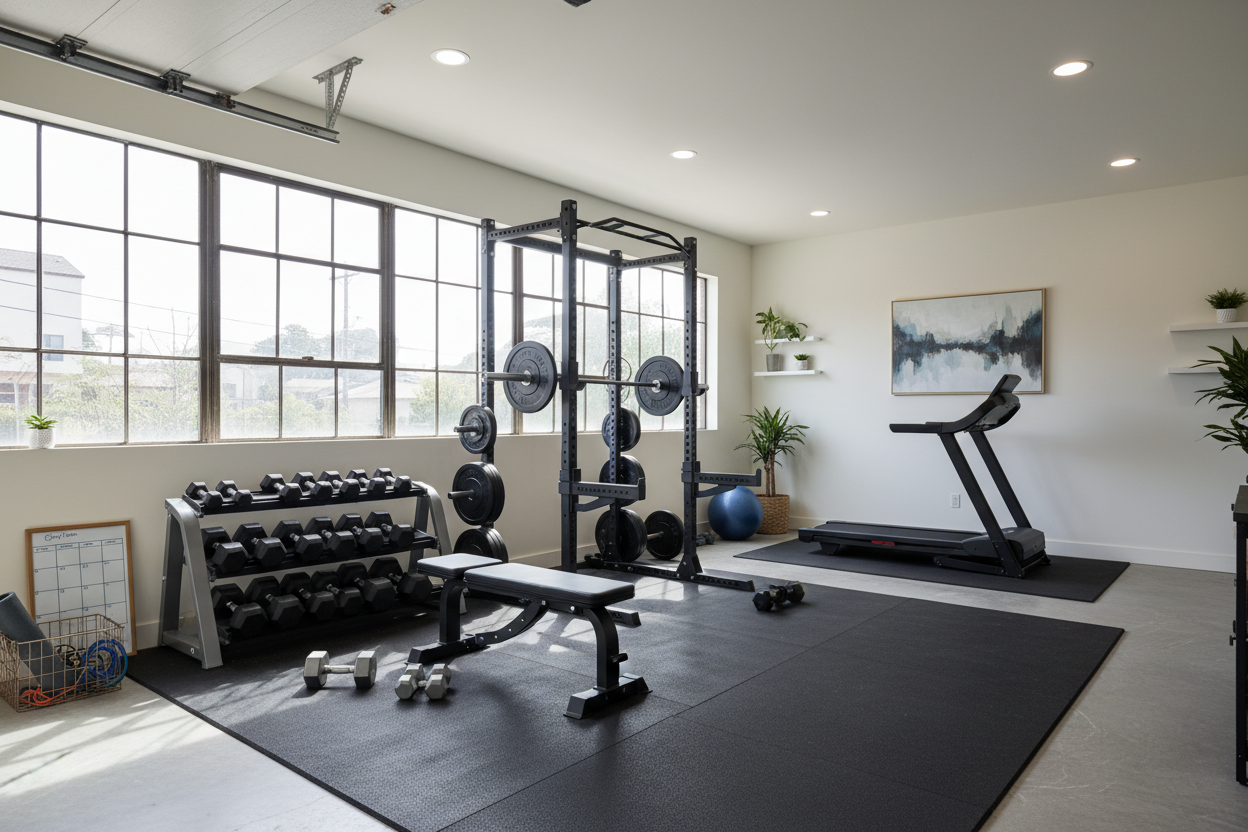
- Set up your space: A permanent workout zone removes the friction of rolling out equipment every single day.
The Trap of Maximum Effort Every Single Day
Let's talk about why chasing maximum effort during your daily exercise at home is a fast track to failure. When you train at high intensities—pushing close to failure with heavy weights or spiking your heart rate with burpees—you aren't just taxing your muscles. You are placing a massive demand on your central nervous system (CNS) and your joints.
If you attempt a maximum effort fit exercise at home session every single day, your body never gets the chance to repair the micro-tears in your muscle fibers. You end up in a chronic state of under-recovery. Performance drops, sleep quality suffers, and your injury risk skyrockets. I've had clients come to me with tendinitis in their elbows and knees simply because they thought everyday home workouts meant doing 100 push-ups and jump squats seven days a week.
To make daily home exercise work, you have to shift your mindset. You aren't training to see how tired you can get; you are training to stimulate an adaptation. That means giving yourself permission to have easy days. A sustainable daily fitness routine at home relies on the concept of intensity cycling. You hit the gas pedal hard on certain days, and on others, you just cruise. This approach keeps the habit alive, keeps you moving, and actually accelerates muscle growth because you are finally allowing your body to recover.
Defining the Three Tiers of a Daily Home Exercise Plan
To safely sustain a daily workout home schedule, I teach my clients to categorize their sessions into three distinct tiers: Stimulus, Flush, and Maintenance. This framework ensures you get the physical and mental benefits of moving every day without grinding your joints into dust.
Think of your weekly schedule as a wave. The crests of the wave are your Stimulus days. These are the days where you challenge your muscles with mechanical tension and progressive overload. You are lifting heavier weights, pushing closer to failure, and deliberately breaking down tissue.
The troughs of the wave are your Flush days. After a heavy Stimulus day, your muscles are full of metabolic waste and micro-trauma. Instead of sitting completely still—which often leads to severe stiffness—you perform low-intensity, rhythmic movements. This pumps fresh, nutrient-rich blood into the recovering muscles without adding any new stress.
Finally, the steady baseline of the wave is your Maintenance days. These bridge the gap between heavy lifting and active recovery. Maintenance days focus entirely on joint health, core stability, and end-range control. By rotating through these three tiers, your everyday exercise routine at home becomes a self-sustaining loop. The Flush days help you recover from the Stimulus days, and the Maintenance days ensure your mechanics stay clean so you can push hard again when the next Stimulus day rolls around.
Tier 1: The Stimulus Days (High Tension)
Your Stimulus days are the anchor of your daily at home workout program. This is where you actually build muscle and gain strength. On these days, the goal is mechanical tension. You want to focus on compound movements like goblet squats, floor presses, Romanian deadlifts, and heavy rows.
I typically program rep ranges between 6 and 12 for these sessions, stopping about two reps shy of technical failure. Because you need adequate resistance to force an adaptation, this is where investing in heavier gear or at home exercise machines pays off. For example, a pair of adjustable dumbbells ranging from 5 to 52.5 lbs gives you enough runway to progressively overload your muscles for months.
Keep the volume moderate. Pick four to five exercises, do three to four sets each, and focus heavily on eccentric control—taking three full seconds to lower the weight. A proper Stimulus session should take about 40 to 45 minutes. You should finish feeling fatigued in the specific muscles you targeted, but not completely drained of energy.
Tier 2: The Flush Days (Active Recovery)
The day after a heavy Stimulus session, your body needs movement, not more breakdown. This is the perfect time for a Flush day. A simple daily exercise routine at home on a Flush day is designed purely to elevate your heart rate to about 110-120 BPM and generate a light sweat.
You aren't trying to build muscle here. You are trying to act as a human pump, clearing out lactic acid and delivering oxygen to sore tissues. I like to program 20-minute, continuous bodyweight flow circuits. Think bear crawls, light kettlebell halos, bodyweight glute bridges, and slow bird-dogs.
Because you spend a lot of time on the floor during these active recovery flows, having a comfortable, spacious area is crucial. Rolling around on a hard hardwood floor or a thin, cheap mat will just beat up your knees and wrists. I always recommend my clients lay down a large exercise mat for home gym spaces so they can transition smoothly between floor-based movements without constantly readjusting their position.
Tier 3: The Maintenance Days (Mobility & Core)
Maintenance days are the secret weapon for longevity in any daily home exercise plan. If you only ever lift heavy and do light cardio, your joints will eventually stiffen up. Maintenance days are dedicated entirely to preserving your range of motion and fortifying your core.
During these sessions, I have clients focus on isometric holds, deep stretching, and targeted joint rotations. We spend 15 to 20 minutes working through sticky areas like the thoracic spine, ankles, and hip flexors. Incorporating dedicated hip mobility exercises is especially important if you sit at a desk all day, as tight hips will inevitably lead to lower back pain during your heavy squat and deadlift days.
Pair this mobility work with core stability exercises like dead bugs, side planks, and Pallof presses. You aren't crushing your abs with hundreds of crunches; you are teaching your core to resist rotation and extension. This protects your spine and ensures you have a rock-solid foundation for your next high-tension workout.
Structuring Your Daily Fitness Routine At Home
Knowing the three tiers is only half the battle; sequencing them correctly is what makes your everyday home workouts effective. You never want to stack two heavy Stimulus days targeting the same muscle groups back-to-back.
Here is a sample 7-day template I use for clients who want to train every single day without burning out:
- Monday: Lower Body Stimulus (Heavy squats, lunges, RDLs)
- Tuesday: Upper Body Stimulus (Push-ups, dumbbell rows, overhead presses)
- Wednesday: Flush Day (20 minutes of continuous, low-impact bodyweight flow)
- Thursday: Full Body Stimulus (Moderate weight, high tension compound lifts)
- Friday: Maintenance Day (Deep mobility, core stability, isometric holds)
- Saturday: Full Body Stimulus (Focus on unilateral movements and weak points)
- Sunday: Flush Day (Light walking, yoga, or gentle cycling)
This structure ensures you hit your major muscle groups with heavy resistance two to three times a week, which is optimal for hypertrophy, while using the off-days to actively speed up recovery. To make this daily cycling seamless, your environment needs to support the constant shifting from heavy lifting to floor work. Installing proper gym flooring for home workout spaces gives you the shock absorption needed for dropping dumbbells on Monday, and the cushioning required for a deep pigeon pose on Friday.
Adapting the Routine to Your Living Space
One of the biggest hurdles to maintaining a daily exercise at home habit is environmental friction. If you have to spend 10 minutes moving the coffee table, unrolling a curling mat, and dragging kettlebells out of a closet every time you want to train, you will eventually skip workouts.
To make your routine stick, you need a dedicated, permanent setup. Even if you live in a cramped apartment, you can carve out a functional training zone. You don't need an entire two-car garage to get an effective fit exercise at home session. A footprint as small as 24 square feet is plenty of room for dumbbells, kettlebells, and bodyweight flows.
If space is truly at a premium, rolling out a high-quality 6x4ft yoga mat in the corner of your bedroom or home office creates an instant, defined workout boundary. Leave your adjustable dumbbells at the edge of the mat. Having your equipment visible and ready to go acts as a daily visual cue, drastically reducing the mental barrier to starting your workout.
My Experience with Intensity Cycling
In my own home gym, I tested this exact intensity cycling method using a set of 5-52.5 lb adjustable dumbbells and a heavy-duty 6x8 floor mat. For a solid six months, I committed to training every single day. The adjustable dumbbells were fantastic for the Stimulus days, allowing me to quickly jump from 20 lb lateral raises to 50 lb goblet squats.
However, one honest downside I found with most adjustable block-style dumbbells is their bulkiness during certain movements; they can feel clunky when doing tight bicep curls or triceps extensions. Despite that, having a permanent mat setup and ready-to-use weights meant I never missed a Flush or Maintenance day. My joints felt better at month six than they did at month one.
Frequently Asked Questions
Can I really do a daily at home workout without overtraining?
Yes, as long as you manage your intensity. By cycling heavy lifting days with low-impact flush and mobility days, you allow your central nervous system and muscles to recover while still maintaining the daily habit of movement.
How long should my everyday exercise routine at home take?
Stimulus days should take about 40-45 minutes. Flush and Maintenance days can be much shorter, typically 15-20 minutes. Consistency matters more than marathon sessions.
What is the minimum equipment needed for this routine?
You can start with just your bodyweight and a good floor mat. As you progress, adding a pair of adjustable dumbbells (ranging up to 50 lbs) and a few resistance bands will give you everything you need for years of progressive overload.