Crush Leg Day at Home: The Ultimate Bodyweight Routine That Actually Works
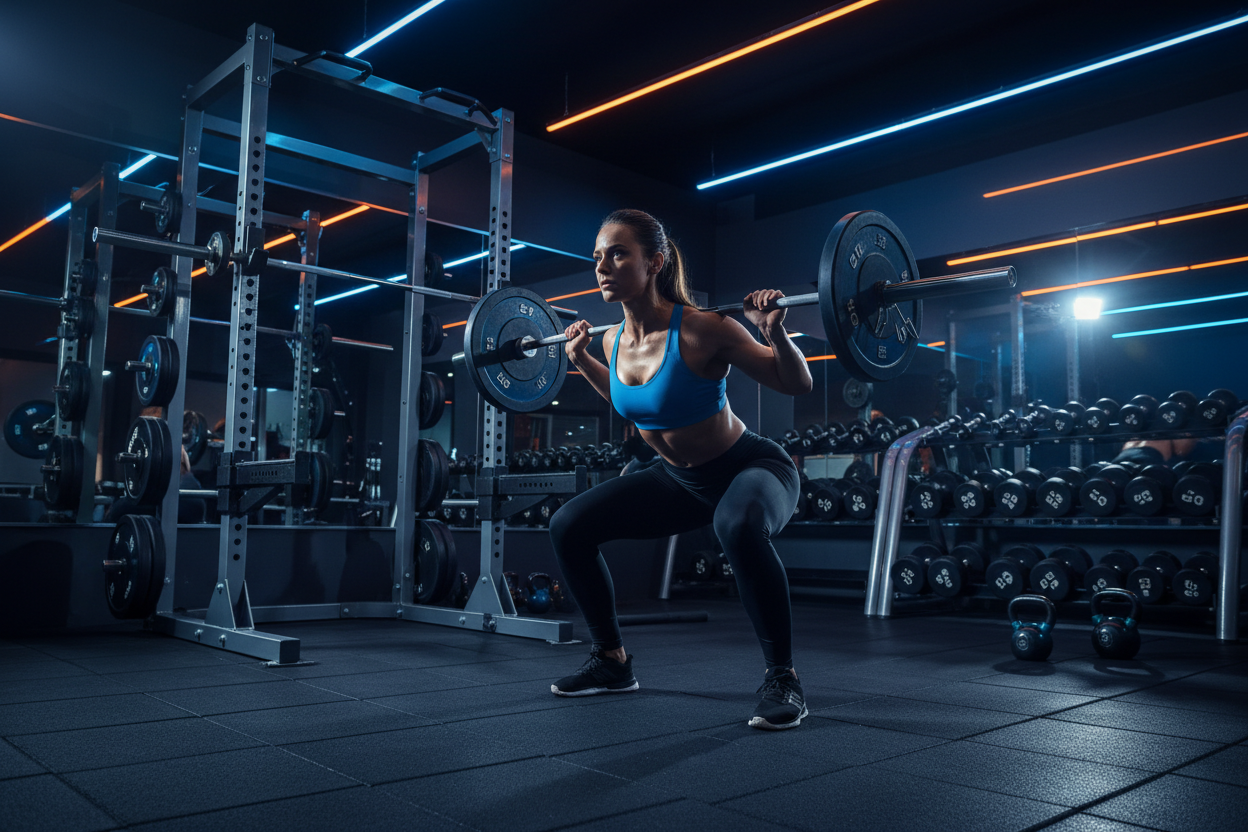
You absolutely do not need a squat rack, a leg press machine, or heavy dumbbells to build strong, muscular legs. While heavy loads are great for maximal strength, you can stimulate muscle growth and endurance effectively by manipulating leverage, tempo, and volume. The secret to a killer leg workout with zero gear lies in unilateral training—working one leg at a time—and increasing time under tension. If you push close to failure, your quads and hamstrings won't know the difference between a barbell and your own body weight.
I remember a specific trip a few years back where I was stranded in a remote cabin without so much as a resistance band. I was convinced my progress would stall. Out of boredom and necessity, I started experimenting with high-volume pistols and walking lunges. By the third day, walking up the stairs was a challenge. That experience shifted my perspective entirely; I realized that gravity is a harsh enough mistress if you know how to use her against yourself. You can get a massive pump and serious strength gains right in your living room.
The Mechanics of Bodyweight Leg Training
To make a leg exercise without equipment effective, you have to stop treating it like a warm-up. Doing 10 rapid-fire air squats isn't going to trigger hypertrophy (muscle growth) for anyone but a complete beginner. You need to mechanically disadvantage your muscles.
When you remove external weight, you must increase the stress on the muscle fibers through other means. This usually involves shifting your center of gravity to load one leg, slowing down the eccentric (lowering) phase of the movement, or eliminating momentum. By pausing at the bottom of a movement, you remove the "stretch reflex"—the elastic energy that helps you bounce back up—forcing your muscles to do all the work from a dead stop.
The King of Home Leg Workouts: The Bulgarian Split Squat
If you only do one movement, make it this one. The Bulgarian Split Squat puts an immense load on the front leg while stretching the hip flexor of the rear leg. It requires balance, mobility, and raw strength.
Find a couch, a chair, or even a sturdy coffee table. Place the top of one foot on the surface behind you and step the other foot forward. Lower your hips until your back knee almost touches the floor. The key here is to keep your weight in the front heel and avoid letting your front knee cave inward. If you want to target the glutes more, lean your torso forward slightly. For more quad dominance, keep your torso upright.
Because you are lifting nearly your entire body weight with one leg, the intensity rivals that of a weighted back squat. Aim for sets of 12 to 15 reps. If that feels easy, take three full seconds to lower yourself on every single rep.
Mastering the Pistol Squat Progression
The pistol squat is the gold standard for no equipment leg exercises. It requires extreme mobility in the ankle and hip, along with serious strength. Many people can't do these immediately, and that is fine. You can regress the movement to build up to it.
Start with a "box pistol." Stand in front of a chair or couch on one leg, with the other leg extended in front of you. Sit back slowly onto the chair, then drive through your heel to stand back up without letting your other foot touch the ground. This builds the neurological connection required for the full movement. Once you master the box version, try doing them standing on a sturdy elevated surface (like a step) so your non-working leg can hang down rather than having to be held straight out. This removes the hamstring flexibility constraint while you build strength.
Posterior Chain Power: Glutes and Hamstrings
Most home workouts are quad-dominant because squats and lunges are intuitive. Neglecting your backside is a recipe for knee pain and bad posture. You need to hinge.
Single-Leg Glute Bridges
Lie on your back with your knees bent. Lift one leg in the air and drive through the heel of the planted foot to lift your hips toward the ceiling. Squeeze hard at the top. The trick is to not over-arch your lower back; the movement should come entirely from the hip extension. This isolates the glute max and hamstrings effectively.
Sliding Leg Curls
If you have a hardwood or tile floor, put on thick socks or place a towel under your feet. Lie on your back, lift your hips into a bridge position, and slowly slide your feet away from you until your legs are straight. Then, curl them back in while keeping your hips high. This mimics the leg curl machine at the gym and is absolutely brutal on the hamstrings. If you are on carpet, paper plates work surprisingly well as sliders.
Explosive Power and Conditioning
Slow strength work is vital, but legs also need to be explosive. Plyometrics bridge the gap between strength and speed. Jump squats are a staple here. Descend into a normal squat and explode upward, lifting your feet off the ground. Land softly and immediately go into the next rep.
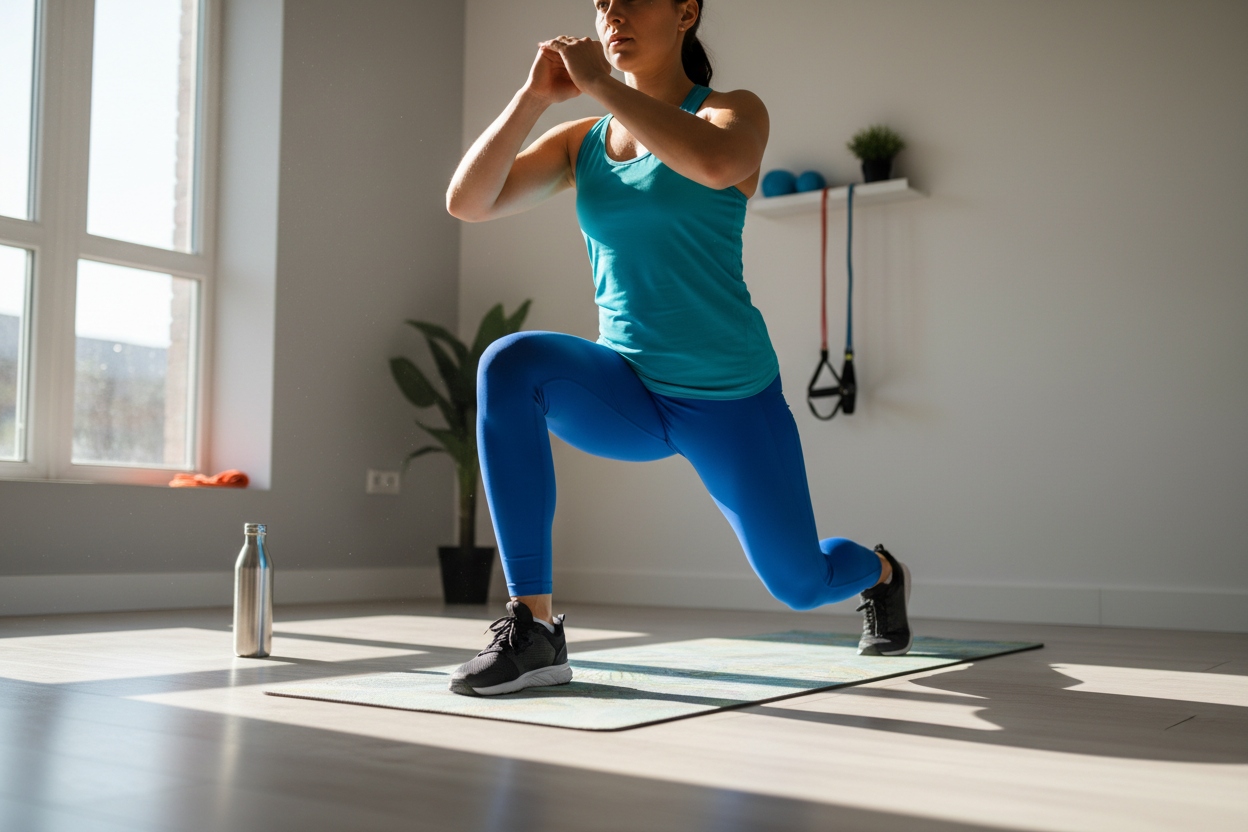
For a harder variation, try alternating jump lunges. These ramp up the heart rate immediately and burn out the muscle fibers that regular squats might miss. Be careful with your landing mechanics; your knees should always track over your toes, never collapsing inward.
Structuring Your Routine for Growth
Randomly doing a few lunges while watching TV is better than nothing, but a structured approach yields results. Since you don't have heavy weights, you need volume. A circuit style works best to keep the heart rate up and the muscles under tension.
Try this sequence, performing exercises back-to-back with no rest:
- Bodyweight Squats: 20 reps
- Alternating Reverse Lunges: 20 reps (10 per leg)
- Single-Leg Glute Bridges: 15 reps per leg
- Jump Squats: 15 reps
Rest for 90 seconds after completing all four movements, then repeat the circuit 4 times. By the fourth round, your legs will be shaking. If you need to make it harder without adding weight, use the "1.5 rep" technique. Go all the way down, come halfway up, go back down, and then come all the way up. That counts as one rep. This increases the time under tension significantly and forces you to control the hardest part of the movement.
Consistency is the Only Magic Pill
The biggest pitfall with home training is the lack of urgency. It's easy to skip a rep or cut a set short when no one is watching. Treat your living room floor with the same respect you'd give a gym platform. Focus on the quality of movement. Squeeze the muscle at the top, control the descent, and embrace the burn. Your legs can grow without iron, but they won't grow without effort.
Frequently Asked Questions
Can I actually build muscle mass with just bodyweight leg exercises?
Yes, you can build muscle mass, especially if you are a beginner or intermediate trainee. The key is to train close to muscular failure and use progressive overload by increasing reps, decreasing rest times, or using more difficult single-leg variations to keep the stimulus high.
How often should I train legs if I'm not using weights?
Because bodyweight exercises generally cause less systemic fatigue and joint stress than heavy weightlifting, you can train legs more frequently. A frequency of 3 to 4 times per week is effective, provided you allow for adequate recovery and aren't sore to the point where your form degrades.
What should I do if I feel knee pain during lunges or squats?
Knee pain often stems from poor hip mobility or improper tracking. Ensure your knee is aligned with your toes and not collapsing inward, and try reducing the range of motion or focusing on posterior chain exercises like glute bridges until your stability improves.