Building Your Perfect Home Gym: From Cluttered Corner to Personal Fitness Sanctuary
Walking past that neglected exercise bike in the corner or stepping over dumbbells scattered across the floor is a feeling many of us know too well. The dream of a convenient, effective home fitness setup often clashes with the reality of limited space, confusing equipment choices, and a lack of direction. The transition from a collection of random gear to a cohesive, motivating home training system is where the real transformation happens—not just for your body, but for your entire fitness mindset.
Beyond the Basics: What Truly Defines a Home Workout System?
When we talk about a home workout system, it's easy to picture a single machine. But a truly effective setup is far more nuanced. It's a synergistic combination of equipment, space, and strategy designed to deliver consistent results. Think of it not as a product you buy, but as an ecosystem you build. This ecosystem should address your specific fitness goals, fit seamlessly into your living environment, and provide the variety and progression needed to maintain long-term engagement.
The core of any successful home training system is functionality over fads. It's about selecting tools that offer the greatest return on investment in terms of space, cost, and workout efficiency. A jumble of trendy gadgets will only lead to confusion and clutter. A well-considered system, however, creates a flow that makes it easy to start and complete a workout, eliminating the common barriers of inconvenience and setup time.
Mapping Your Fitness Goals to the Right Equipment
Before investing in any home fitness gym equipment, the most critical step is to define your objectives. Are you aiming for strength gains, cardiovascular health, muscle toning, or functional mobility? Your goals will directly dictate the components of your system.
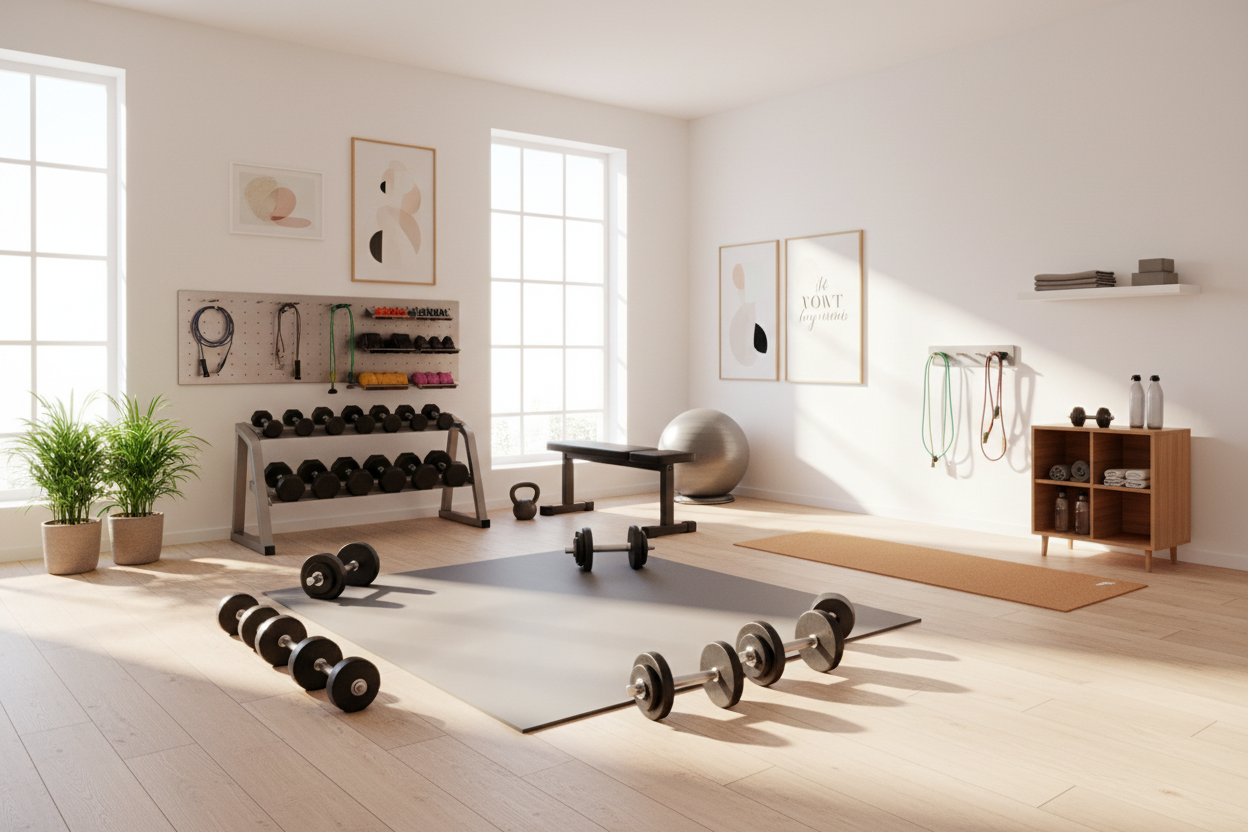
For strength-focused individuals, the foundation often lies in adjustable dumbbells, a kettlebell, resistance bands, and a sturdy bench. These few items can replicate hundreds of gym exercises with a minimal footprint. For those prioritizing cardio, a jump rope, a high-quality yoga mat, and perhaps a compact rowing machine or foldable treadmill can form the heart of the system. The key is to avoid the 'kitchen sink' approach—buying everything in sight. Instead, curate your collection with intentionality.
Creating Workout Stations at Home in Limited Spaces
Spatial constraints are the most common hurdle, but they can also inspire the most creativity. You don't need a dedicated room to create effective workout stations at home. The concept of 'zoning' is powerful here. A corner of your living room can become your strength station with a compact rack and weights. A clear wall space can host your suspension trainer for bodyweight exercises. Your hallway can be your cardio track for lunges and high-knees.
The magic lies in multi-functional equipment. A simple pull-up bar that fits in a doorway instantly creates an upper-body station. A set of gymnastics rings can be hung from a sturdy beam or even a tree outside, providing a full-body training tool that stores in a drawer. By viewing your entire home as a potential gym, you can design a distributed workout system that feels expansive, even in a small apartment.
My Journey From Garage Chaos to a Cohesive Home Gym
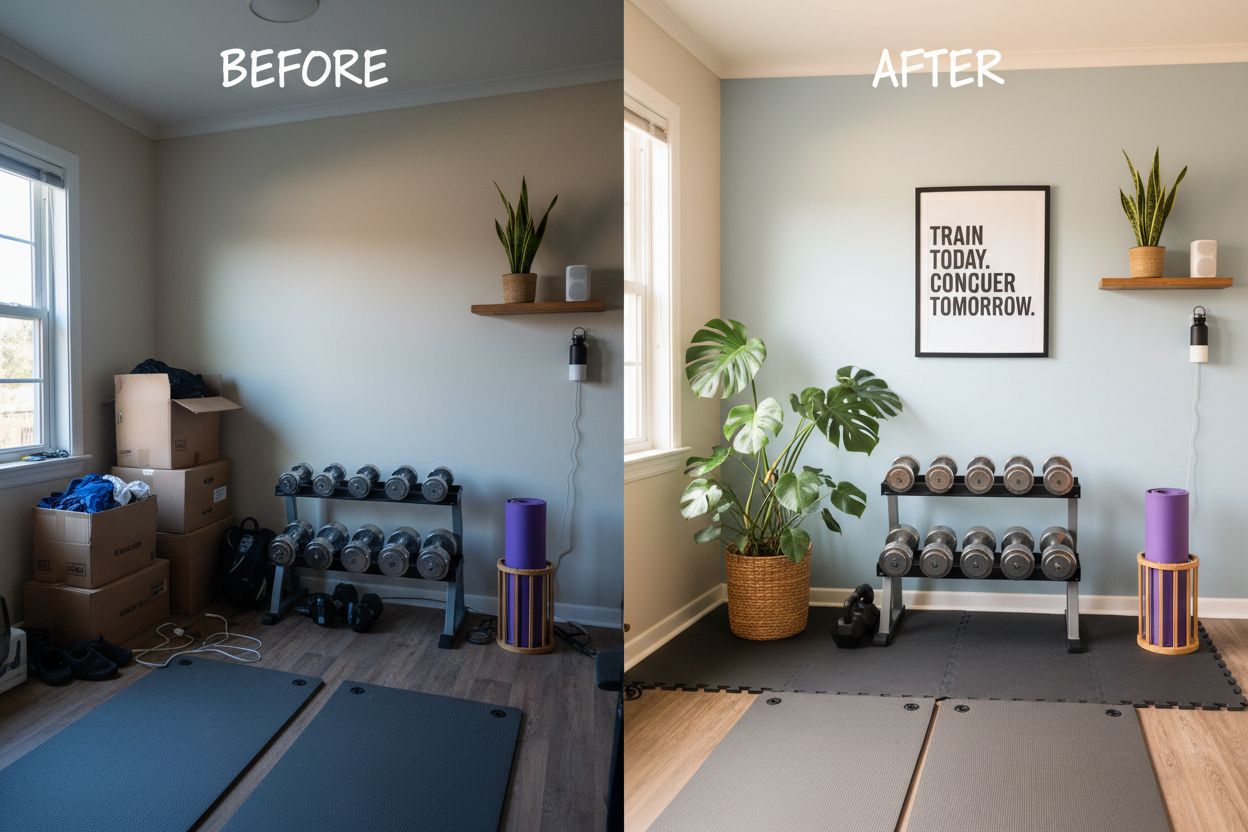
I remember my own starting point: a garage filled with a mismatched assortment of equipment. I had a bulky, single-purpose machine, a pile of standard dumbbells, and a growing sense of overwhelm. My workouts were unfocused, and the clutter was demotivating. The turning point came when I decided to sell the large machine and invest in a few key, versatile upgrades.
I replaced the dumbbell set with a space-saving adjustable pair. I mounted a pull-up bar and acquired a set of resistance bands with different tension levels. I cleared a specific zone and laid down interlocking rubber flooring to define the space. This transformation wasn't about spending more money, but about spending smarter. Suddenly, my workouts had structure. The defined space was inviting, and the logical flow of equipment made my routine efficient and enjoyable. The garage was no longer a storage dump; it was my personal training ground.
Integrating Digital Tools for a Smart Home Exercise System
In today's world, a modern home training machine or system is often enhanced by technology. Fitness apps, streaming workouts, and online trainers can provide the guidance and community that a home gym might otherwise lack. A tablet holder on your treadmill or a large screen in your workout area can connect you to virtual classes, ensuring your form is correct and your motivation stays high.
This digital layer acts as the 'coach' for your physical setup. It provides the programming and progression that turns random exercises into a structured plan. Whether you follow a daily streaming service or use an app to track your lifts, this integration is what elevates a collection of gear into a true system gym experience at home.
Sustaining Momentum: The Key to Long-Term Success
The final, and perhaps most important, component of any home work out system is the psychological one. Your environment must inspire you to show up. This means keeping it clean, organized, and personal. Add a speaker for music, ensure good lighting, and maybe even a fan. Your home gym should be a place you want to be.
Regularly reassess your setup. As your fitness evolves, so should your system. Perhaps you need to add a heavier kettlebell or a new type of resistance band. This process of gradual refinement keeps the experience fresh and aligned with your progressing abilities. The ultimate goal is to create a home training system that is not a temporary fix, but a permanent and rewarding part of your lifestyle, transforming the dream of convenient, effective fitness into your everyday reality.