Choosing the Best Treadmill for Home: The Ultimate Buyer's Guide
You have decided to stop renting your cardio time from a gym and start owning it. That is a smart move. But typing best treadmill for home into a search engine usually results in a flood of affiliate links rather than actual advice. You are hit with terms like CHP, belt ply, and roller size, leaving you more confused than when you started.
The reality is that the "perfect" machine does not exist in a vacuum. A marathon runner in a garage needs a completely different setup than a power walker in a second-floor apartment. This guide cuts through the marketing noise to help you understand the mechanics, durability, and features that actually matter.
Quick Summary: How to Choose
- Check the CHP: Look for 2.5 CHP for walking and at least 3.0 CHP for the best home treadmill running experience.
- Size Matters: A running belt should be at least 60 inches long and 20 inches wide to accommodate your stride.
- Cushioning is Key: The best rated treadmills feature variable cushioning to protect joints compared to road running.
- Tech vs. Function: Decide if you need built-in streaming (expensive subscriptions) or a best no-frills treadmill with a tablet holder.
- Weight Capacity: A durable machine usually supports at least 50 lbs more than your body weight.
The Engine Room: Understanding Motor Power
When looking at the best running machines, the motor is the first place manufacturers try to trick you. You will see two ratings: HP (Horsepower) and CHP (Continuous Horsepower).
Ignore peak HP. That is the maximum power a motor can hit for a split second before burning out. You need to look at CHP. This is what the motor can sustain over a 45-minute session without overheating.
Minimum Specs for Your Goals
If you are looking for the best home running machine, do not settle for anything under 3.0 CHP. If the motor is underpowered, the belt will hesitate or "slip" slightly every time your foot lands, which throws off your gait and strains the machine.
The Deck: Space and Mechanics
The best treadmills are heavy. Stability comes from weight. If a machine feels too light to move, that is usually a good sign for stability, but a bad sign for a small apartment.
Belt Dimensions
For the best home treadmill experience, you need room to drift. When you get tired, you don't run in a perfectly straight line. A 20-inch width is standard, but 22 inches is luxury. Length-wise, if you are over 6 feet tall, a 60-inch belt is non-negotiable for sprinting. Anything shorter changes your stride mechanics, leading to potential injury.
Tech Features: Do You Need the Screen?
This is where the price gap widens. The best treadmills for home often come with massive HD touchscreens and locked-in subscriptions (like iFit or Peloton). These are fantastic for motivation, but they render the machine partially useless if you stop paying the monthly fee.
If you prefer using your own iPad or watching Netflix on a TV, look for the best no-frills treadmill. These machines invest the budget into the frame and motor rather than a fancy screen. Brands like Horizon or Sole are often the best treadmills home use buyers prefer because they offer "Bring Your Own Device" capability.
My Training Log: Real Talk
Let me tell you something the spec sheets won't. A few years ago, I bought what was marketed as one of the best rated treadmills for a budget price. It had decent specs on paper.
The problem wasn't the motor speed; it was the frame rigidity. Every time I pushed the pace past 8 mph, the entire console would start to vibrate violently. It wasn't just a noise issue; my water bottle would literally walk itself to the edge of the cup holder and fall off. And the "cushioning"? It felt spongy, like running in sand, which sapped my energy faster than pavement.
I eventually swapped it for a heavy-duty, no-frills model. It's ugly and takes up half the guest room, but when I'm doing intervals, that thing is planted like a tank. The lack of wobble allows me to focus on my breathing rather than worrying if the plastic housing is going to crack. That stability is what you are actually paying for.
Conclusion
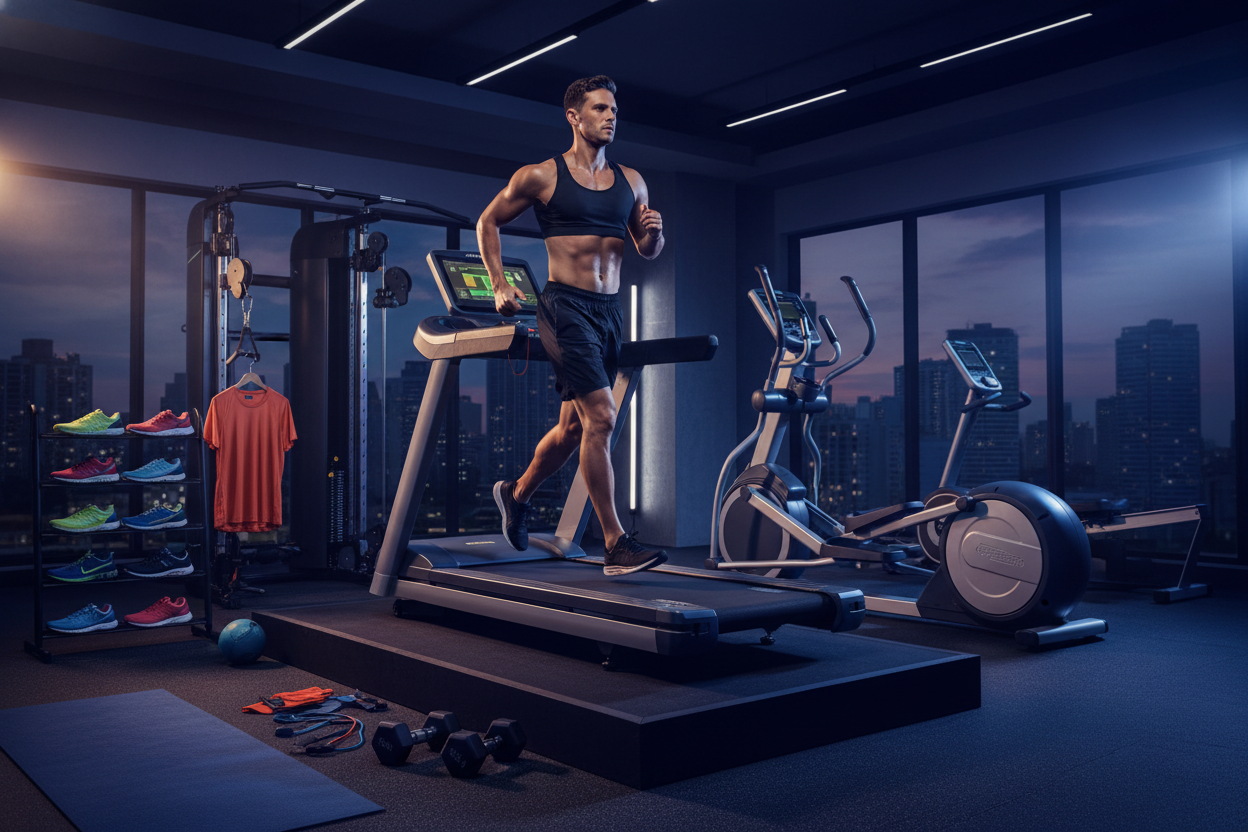
Finding the best treadmill for home isn't about buying the most expensive model; it is about matching the machine to your biomechanics. Prioritize the motor (CHP) and the belt size over the size of the screen. Your joints—and your downstairs neighbors—will thank you.
Frequently Asked Questions
What is the difference between a folding and non-folding treadmill?
Folding treadmills are designed for space-saving, allowing the deck to lock upright. Non-folding models (often found in gyms) generally offer superior stability and higher weight capacities, making them some of the best running machines for heavy training, provided you have the dedicated floor space.
How much maintenance do home treadmills require?
Even the best home treadmill needs care. You should lubricate the belt every 3 to 6 months depending on usage, vacuum the motor compartment to prevent dust buildup, and tighten the belt if you feel any slippage. Neglecting lubrication is the #1 cause of motor failure.
Is a curved manual treadmill better than a motorized one?
Curved treadmills are excellent for high-intensity interval training (HIIT) and improving running form, as you power the belt. However, for long-distance, steady-state cardio, a motorized version is generally considered the best home running machine because it forces you to maintain a consistent pace.